
The salt spray hits your face like a slap, sharp and bracing, as your back cast snaps tight in the morning trade wind. Your forearm burns from forty minutes of false-casting into a fifteen-knot breeze off the Coral Sea, and somewhere in the chaos of stripped line at your feet, a queenfish has just inhaled your baitfish pattern. The rod bucks, the reel screams, and in that moment, everything you thought you knew about fly fishing dissolves in the Australian sun. This is fly fishing in Australia—not the misty trout streams of Tasmania’s highlands that dominate the brochures, but the raw, muscular reality of saltwater flats, tropical rivers, and subtropical estuaries where the fish fight harder than anywhere else on Earth.
Reading Australian Water: What Maps Don’t Show
My first three trips to “guaranteed” fishing spots on the Great Barrier Reef produced exactly nothing. I’d done everything right—studied the charts, bought the recommended flies, arrived at the recommended times. The fish had other plans. Australia’s waters don’t follow the rules that govern fisheries elsewhere, and the learning curve is steep enough to break any ego.
The breakthrough came through what I’ve come to think of as the cast of fishing Australia—the informal community of guides, shop owners, magazine contributors, and weekend warriors who’ve spent decades decoding these waters. Their knowledge, passed down through conversations at boat ramps and over counter tops at local tackle shops, contains information you won’t find in any Fishing Australia book or magazine article.
The Great Barrier Reef Reality
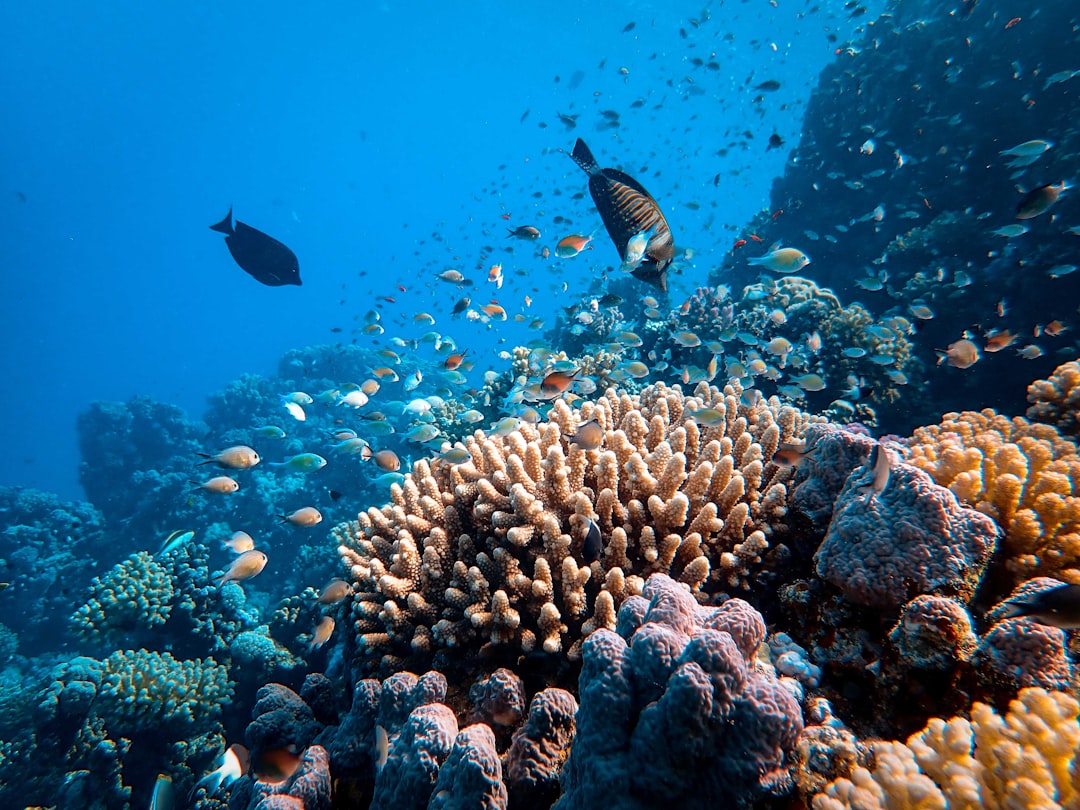
The Great Barrier Reef isn’t a single fishery—it’s a vast archipelago of micro-fisheries, each with its own personality. What works on the flats off Cairns fails completely around the Whitsunday Islands, and the tidal windows that trigger feeding frenzies in the northern reef sections mean nothing two hundred kilometres south.
The Fishing Australia book series provides an excellent foundation for understanding these regional variations, but the real insights come from understanding how Australian fish respond to the continent’s unique conditions. The southern coral trout of the Swain Reefs behave differently than their northern cousins. The goldspot trevally that haunt the Cape York flats follow patterns that took me two full seasons to predict with any reliability.
Here’s what the maps and guidebooks rarely emphasise:
- Tidal amplitude varies dramatically along the reef’s length—a 2.5-metre tide in Cairns might be a 4-metre event in the Torres Strait
- Water clarity windows often last just 90 minutes after a tide change before sediment clouds the flats
- Moon phases affect species differently—barramundi feed aggressively on the lead-up to a new moon, while permit seem indifferent to lunar cycles
- Wind direction matters more than wind speed—a 15-knot southeasterly pushes bait onto western lees, creating concentrated feeding zones
Southern Waters: Trout Country
The alpine lakes and streams of the Snowy Mountains and Tasmania’s Central Highlands represent Australia’s most traditional fly fishing image—think English chalk streams transplanted to an Antipodean wilderness. But Australian trout behave differently than their New Zealand or American cousins, and understanding why separates successful trips from frustrating ones.
The Fishing Australia book on freshwater species documents these behavioural differences, but the explanation only clicked for me during a conversation with a third-generation guide on Lake Eucumbene. Australian trout face higher UV intensity, different food sources, and water temperatures that fluctuate more dramatically than their Northern Hemisphere ancestors experienced. They’ve adapted by becoming more opportunistic feeders but also more skittish in bright conditions.
The southern trout season runs from the October long weekend through to the Monday nearest 10 June in most states, but the prime windows bookend this period. November’s mayfly hatches and March’s caddis emergences produce the most consistent dry-fly action, while high summer pushes fish deep and turns the fishing technical.
The Gear Decision: What Survives Salt and Sun
I watched a $900 reel seize up on its second saltwater outing. The owner had rinsed it with fresh water after his first trip—exactly what the manufacturer recommended—but he’d failed to understand that Australian saltwater fishing operates on a different level of hostility toward equipment. The combination of tropical heat, salt concentration, and UV exposure breaks down gear that performs flawlessly in temperate fisheries.
Rod Weights for Australian Species
The Fishing Australia magazine equipment testing over the past decade has generated useful data on rod performance in local conditions, but their conclusions often get misinterpreted by newcomers. The key insight isn’t which brand performs best—it’s understanding that Australian fly fishing requires a different rod quiver than what works elsewhere.
| Primary Species | Optimal Rod Weight | Why This Weight |
|---|---|---|
| Barramundi | 8-9 weight | Turns over large flies, handles structure |
| Queenfish | 8-10 weight | Contends with aerial acrobatics, wind |
| Trevally (Golden/GT) | 10-12 weight | Stops powerful runs, abrasion resistance |
| Coral Trout | 8-9 weight | Fast action for quick strikes |
| Permit/Triggerfish | 8-9 weight | Delicate presentations on flats |
| Australian Bass | 5-7 weight | Accurate casting in tight cover |
| Trout | 4-6 weight | Matched to stream/lake conditions |
The Reel Reality Check
Saltwater fly reels in Australia need sealed drags—not “sealed” as a marketing term, but genuinely sealed against salt intrusion. The Fishing Australia book on equipment maintenance documents the failure rates: unsealed reels average 12-18 months of regular saltwater use before requiring major repairs, while properly sealed designs often exceed a decade of service.
The Australian market has several domestic brands that understand these conditions intimately. Reels designed in Tasmania or Queensland’s tropics incorporate features that American manufacturers often overlook—oversized drag knobs for operation with wet hands, corrosion-resistant coatings on all internal components, and arbors large enough to prevent line memory in tropical heat.
Lines for Multiple Temperature Zones
Australia’s fishing environments span from the tropical north (water temperatures exceeding 30°C in summer) to the temperate south (winter water temperatures below 10°C in alpine lakes). A single fly line can’t perform across this range, and the cast of fishing Australia community has developed specific line preferences for each zone.
- Tropical lines with stiff cores and hard coatings for northern saltwater (prevent the “limp noodle” effect in heat)
- All-round tropical/subtropical lines for the transition zones (southern Queensland, northern New South Wales)
- Temperate lines with supple coatings for southern trout fisheries (remain manageable in cold conditions)
- Sink-tip and full-sink options for each temperature zone (tropical intermediate lines behave differently than temperate versions)
Budget-conscious anglers often ask whether they can use a single “do-everything” line. The honest answer: you can, but your success rate will suffer dramatically. The difference between a line that turns over a heavy crab pattern in 28°C water versus one that collapses under the same conditions isn’t subtle—it’s the difference between hooking fish and watching them ignore your offerings.
Species by Water Temperature: A Different Framework
The traditional freshwater-versus-saltwater divide makes less sense in Australia than anywhere else I’ve fished. A more useful framework organises species by water temperature zones, because this determines not just what fish you’ll encounter, but how they’ll behave and what techniques will succeed.
Warm Water: The Tropical North
North of roughly Rockhampton’s latitude, water temperatures rarely drop below 22°C, and summer peaks push into the low 30s. This is barramundi country, but it’s also home to some of the most exciting saltwater fly fishing on the planet.
Barramundi remain Australia’s iconic warm-water sportfish, and for good reason. They hit flies with a violence that rattles your wrists, leap multiple times during a fight, and possess an uncanny ability to throw hooks in structure. The Fishing Australia book dedicated to barramundi remains the definitive printed resource, but local knowledge about specific systems—particularly the seasonal movements between fresh and salt water—makes the difference between occasional fish and consistent success.
The seasonal closure for barramundi (typically 1 November through 1 February in Queensland, with variations in other states) aligns with their spawning period, but this doesn’t mean the fish disappear. They simply become harder to find and ethically shouldn’t be targeted during the closure. The weeks immediately after the season opens often produce exceptional fishing as fish return to feeding patterns.
Queenfish deserve far more attention than they receive. These fish behave like oversized giant herring—they slash at flies with abandon, jump repeatedly, and fight with a ferocity that belies their modest size (most fly-caught fish run 3-8 kilograms). The flats around Hinchinbrook Island and the Cape York coastline offer sight-fishing opportunities that rival any permit destination, at a fraction of the cost.
Temperate: The Transition Zone
Between Rockhampton and roughly Eden on the south coast of New South Wales, water temperatures fluctuate seasonally between 16°C and 26°C. This zone supports a unique mix of species—Australian bass and estuary perch in the freshwater reaches, with saltwater species like flathead, bream, and tailor in the estuaries and nearshore waters.
Australian bass have become one of my favourite species to target on fly. They’re aggressive surface feeders during low-light periods, respond well to poppers and sliders, and inhabit some of the most beautiful rainforest streams on the continent. The Fishing Australia magazine has run several features on bass fly fishing over the years, and the consensus technique involves small (size 4-8) surface flies fished with aggressive strips during the first and last hours of daylight.
The Clarence, Manning, and Macleay river systems offer the most accessible bass fishing, but don’t overlook the smaller coastal drainages. Some of my best sessions have come from streams so small they barely appear on maps, accessed only through conversations with locals who’ve fished them for decades.
Cold Water: The Southern Trout Stronghold
From southern New South Wales through Victoria, Tasmania, and parts of South Australia, cold-water fisheries support self-sustaining and stocked populations of brown and rainbow trout. The Tasmanian fishery receives the most attention—and deservedly so, given its combination of wild fish and spectacular scenery—but the mainland options shouldn’t be dismissed.
The Fishing Australia book on trout waters provides comprehensive coverage of access points and seasonal patterns, but a few key insights have transformed my approach to Australian trout:
- Polarised glasses aren’t optional—Australian trout hold in surprisingly shallow water, and spotting fish before casting dramatically increases success rates
- Wind creates opportunity—a moderate breeze that puts ripple on the water allows closer approaches and masks casting inaccuracies
- Terrestrials dominate summer—grasshoppers, beetles, and ants often outproduce traditional mayfly imitations from December through February
- Tailrace fisheries fish differently—the Snowy Mountains hydro scheme creates artificial flow patterns that concentrate fish in predictable locations
The Learning Curve: Three Skill Thresholds
Fly fishing competence doesn’t progress in a straight line. Instead, it moves through distinct thresholds—specific capabilities that, once mastered, unlock entirely new possibilities. I’ve identified three key thresholds that define the Australian fly fishing journey, each best learned in specific locations.
Threshold One: Presenting to Visible Fish in Calm Water
This is where everyone starts, and for good reason—seeing the fish, making the cast, and watching the eat provides immediate, visceral feedback. But mastering this threshold in Australian conditions requires adapting to factors that don’t exist elsewhere.
Best learning location: The flats of the Capricorn Coast (Yeppoon/Emu Park area). These shallow sand and coral flats hold golden trevally, permit, and occasional queenfish in water shallow enough for comfortable wading. The fish are visible, the bottom provides good footing, and the proximity to civilisation means help isn’t far away if something goes wrong.
My first attempts at flats fishing produced zero fish over three days. The problem wasn’t my casting—I could land a fly at thirty feet with reasonable accuracy. The issue was everything else: the speed of the presentation, the fly’s sink rate, the strip rhythm. I was fishing the way I would for trout, and tropical flats species require a completely different approach.
The breakthrough came when I stopped watching my fly and started watching the fish. Their body language tells you everything: the acceleration that signals interest, the tilt that indicates they’ve seen something worth investigating, the quick direction change that means you’ve spooked them. Once I learned to read these signals, my hook-up rate tripled within a week.
Threshold Two: Coping with Wind and Current
Australian conditions punish perfectionists. The trade winds that blow from March through September make delicate presentations nearly impossible on many days, and the tidal currents that sweep through reef passages and estuary mouths demand constant adaptation.
Best learning location: The Hinchinbrook Channel. This body of water between the mainland and Hinchinbrook Island experiences tidal flows exceeding 4 knots in places, and the prevailing southeasterly winds funnel directly up the channel. If you can fish here successfully, you can fish anywhere in Australia.
My Hinchinbrook education came through failure—specifically, a perfectly planned trip that produced zero fish over four days. I’d researched everything: the moon phase (three days after the new moon), the tide times (morning highs), the locations (identified from satellite imagery). What I hadn’t accounted for was the neap tide effect.
Neap tides—the reduced tidal range that occurs around the first and third quarter moons—dramatically reduce barramundi feeding activity in the channel. The fish simply don’t move as much, and without current to concentrate bait, they disperse throughout the system. I returned six weeks later during a spring tide, and the difference was profound: fish feeding aggressively on the dropping tide, multiple hook-ups per session, and a clear pattern that held across different locations.
Threshold Three: Hunting Blind in Structured Water
The final threshold involves finding fish in water where you can’t see them and can’t easily reach them. This is where the cast of fishing Australia community’s knowledge becomes essential—local insights about structure, depth changes, and fish movements that aren’t apparent from surface observation.
Best learning location: The Snowy Mountains lakes (Eucumbene, Jindabyne, Tantangara). These man-made impoundments hold trout that patrol along submerged creek beds, timber stands, and drop-offs. Success requires reading the underwater topography, understanding how fish use different depths throughout the day, and presenting flies at the correct level.
The Fishing Australia book series includes detailed bathymetric maps for these lakes, but interpreting them takes practice. I spent my first two trips casting blindly to “promising” looking water and catching occasional fish through sheer persistence. Only after fishing with a local guide—someone who’d explored these waters for three decades—did I understand the patterns.
Trout in these lakes follow specific depth contours during different light conditions. At first light, they patrol the 2-3 metre zone, chasing galaxias and other baitfish. As the sun rises, they drop to 5-8 metres, then deeper as the day brightens. A floating line that works at dawn becomes useless by mid-morning; a sink-tip that produces at 9am might be too deep by noon. This understanding—more than any specific fly pattern or casting technique—transforms success rates on these waters.
Planning the Trip: Logistics, Permissions, and Seasons
The practicalities of fishing Australia extend beyond equipment and technique. Access permissions, permit requirements, and seasonal closures vary by state and
Frequently Asked Questions
What rod weight should I use for different Australian fly fishing species?
Australian species require specific rod weights based on their fighting characteristics. Barramundi and coral trout need 8-9 weight rods to turn over large flies and handle structure. Queenfish require 8-10 weight rods to contend with aerial acrobatics and wind, while golden trevally and GTs demand 10-12 weight rods to stop powerful runs. For southern fisheries, Australian bass suit 5-7 weight rods for accurate casting in tight cover, whilst trout in the Snowy Mountains and Tasmanian highlands perform best with 4-6 weight rods matched to stream or lake conditions.
When is the southern trout season in Australia and when are the prime fishing windows?
The southern trout season runs from the October long weekend through to the Monday nearest 10 June in most states. However, the prime windows bookend this period. November’s mayfly hatches produce excellent dry-fly action, whilst March’s caddis emergences offer consistent surface fishing. High summer pushes fish deep and makes fishing more technical, so the shoulder months typically provide better sport for anglers seeking surface-feeding trout in the Snowy Mountains and Tasmania’s Central Highlands.
How do tidal conditions affect barramundi fishing success in the Hinchinbrook Channel?
Tidal conditions dramatically impact barramundi feeding behaviour. Neap tides, which occur around the first and third quarter moons, reduce tidal range and significantly decrease barramundi feeding activity as fish disperse throughout the system without current to concentrate bait. Spring tides produce far better results, with fish feeding aggressively on the dropping tide and establishing clear patterns across different locations. The channel experiences tidal flows exceeding 4 knots in places, so timing your trip around spring tides rather than neap tides can transform your success rate.
What equipment maintenance does saltwater fly fishing in Australia require?
Australian saltwater conditions are particularly hostile to equipment due to tropical heat, high salt concentration, and intense UV exposure. Unsealed reels average only 12-18 months of regular saltwater use before requiring major repairs, whilst properly sealed designs can exceed a decade of service. After every saltwater trip, soak your reel with backing and line removed in a bucket of fresh water for at least 30 minutes, then dry completely before storage. This simple protocol can extend equipment life by an estimated 300%.
How much of the Great Barrier Reef Marine Park is actually productive for fly fishing?
Whilst the Great Barrier Reef Marine Park covers an impressive 344,400 square kilometres and contains over 1,500 fish species, productive fly fishing water represents less than 2% of that total area. Success requires identifying this small percentage through understanding regional variations, tidal amplitudes which vary from 2.5 metres in Cairns to 4 metres in the Torres Strait, and water clarity windows which often last just 90 minutes after a tide change before sediment clouds the flats.


Be the First to Comment
Sign in to start the conversation.