

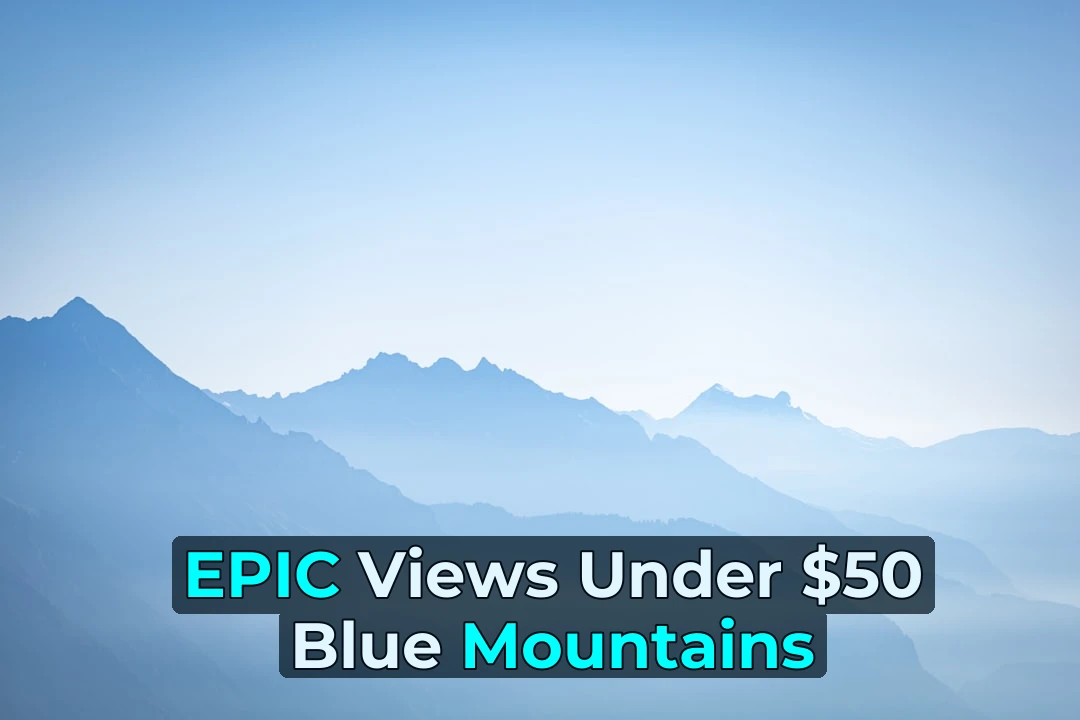
Is it worth driving two hours into freezing fog when you could be warm at Bronte? It’s the question every Sydney-sider asks themselves when the alarm goes off at 5am on a winter morning. Here’s the thing: that mist rolling through the valleys isn’t a problem to be avoided—it’s the entire point. Standing at Echo Point in July, watching the Three Sisters emerge from cloud like they’re being carved in real-time, you realise the Blue Mountains in winter aren’t despite the weather. They’re magical because of it.
The 5:30AM Calculation: Are the Blue Mountains Worth It From Sydney?
Let’s be honest about what you’re trading. That pre-dawn departure means sacrificing a warm bed for steering-wheel fingers and the very real possibility that you’ll see absolutely nothing but white. The train from Central takes roughly two hours to Katoomba—time you could spend sleeping. So why do photographers keep making this trip?
Because on the right morning, the Blue Mountains deliver something Sydney’s coastline simply can’t: atmospheric depth that turns a familiar landscape into something otherworldly. The temperature inversion trapped in the Jamison Valley creates layered mist that separates foreground from background in ways no sunny day ever achieves.
The maths works out like this: two hours each way, roughly $40-60 in fuel if driving (or $16.80 return on Opal), versus the possibility of capturing images you simply cannot get anywhere else in NSW. For serious photographers, that’s not really a calculation—it’s a given.
Driving Versus Training It
Driving gives you flexibility to chase conditions across multiple locations and haul more gear. The train forces discipline—you’re committing to one area, travelling lighter, and you can’t bail when the fog doesn’t lift. Both approaches have merit. The train also lets you scout the landscape without watching the road, which is how many photographers first notice potential shooting locations.
Where the Mist Lives: Blue Mountains Photography in Winter
Here’s what no one tells you: the Blue Mountains isn’t one climate—it’s a collection of microclimates that behave differently depending on elevation, aspect, and recent rainfall. Understanding this transforms your hit rate dramatically.
Govetts Leap in Blackheath holds fog longer than almost anywhere else. The lookout faces south-east into the Grose Valley, and cold air drains into that amphitheatre like water into a basin. On mornings when Katoomba has already cleared, Blackheath can remain socked in until 9am—perfect for moody, minimal compositions.
Wentworth Falls behaves differently. The National Pass walk (currently undergoing track work—check National Parks alerts before committing) positions you at waterfall level, which means you’re in the mist rather than above it. The cloud here burns off faster, but those transition moments when sunlight first penetrates create spectacular god-ray effects through the spray.
The Famous Spots Problem
Echo Point and the Three Sisters are iconic for a reason, but they’re also the worst choices for winter photography if you’re after unique images. Every man and their smartphone is there. Instead, try Lincoln’s Rock in Wentworth Falls—the rock shelf gives you foreground options, and the fog behaviour across the valley is more dynamic because you’re slightly lower than the Katoomba escarpment.
The Leura Cascades discovery changed how one local photographer approaches the area entirely. Taking what seemed like a wrong path in heavy mist led to a vantage point below the main tourist track where the cascade flows over a series of small drops before reaching the popular viewing area. That “wrong” turn produced the best waterfall shot of the trip—the famous main path is actually the inferior route in winter when mist obscures the wider valley views anyway.
The Sleep Situation: Blue Mountains Accommodation for Photographers
Where you stay should be determined by when you shoot. This sounds obvious, but you’d be surprised how many people book the cute B&B in Mount Victoria then wonder why they can’t reach Wentworth Falls by dawn.
Tier One: The “I Need to Be On Location at 5AM” Stays
If dawn shoots are your priority, base yourself in Katoomba. The caravan parks along the cliff edge offer budget cabins that let you wake up, boil a billy, and be shooting within fifteen minutes. The Katoomba YHA deserves special mention here—not glamorous, but the hostel has parking right outside, flexible checkout, and a community of fellow early-risers who won’t judge your 4:30am alarm. For photography trips where you’re barely in the room, this kind of practical setup outperforms luxury every time.
Motels along Lurline Street offer similar positioning with more privacy. Look for places that don’t lock their car parks overnight and won’t blink at pre-dawn departures.
Tier Two: The “I Want to Shoot Astro Then Sleep In” Options
Blackheath guesthouses are the pick here. You’re higher in elevation (better for astro, cooler for sleeping), and the vibe is quieter. The victory Theatre Café opens early for post-shoot breakfast, and you’re positioned perfectly for Govetts Leap without the Katoomba weekend crowds. The trade-off: you’re further from the southern lookouts if conditions are better there.
Tier Three: The Weekend Base Camp
For longer stays where photography is part of a broader trip, Leura offers the best balance. Good restaurants for evening meals, walkable streets for non-photographer partners, and central positioning between the major shooting locations. The accommodation prices reflect this, but if you’re making a weekend of it, the convenience factor is genuine.
The Gear You’ll Actually Use
Blue Mountains winter isn’t Sydney winter. The temperature difference can be 8-10 degrees colder, and that’s before wind chill on exposed lookouts. Dawn shoots in July regularly hover around 2-4°C, and sub-zero isn’t uncommon in Blackheath.
What this means for gear: batteries die faster than you think. Cold weather saps charge, and nothing kills a morning faster than a dead battery just as the light breaks. Carry spares in an inner pocket—body heat keeps them viable.
Lens cloths matter more in mist. Microfibre gets damp and stops working. Chamois-style cloths (the type swimmers use) clear condensation without leaving residue, and they work when wet. Several of them.
Tripod leg warmers aren’t just for comfort—aluminium legs conduct cold to your hands rapidly, and handling a tripod in sub-zero conditions without gloves compromises both warmth and dexterity. Foam pipe insulation from Bunnings works perfectly if your tripod didn’t come with dedicated wraps.
When to Call It: Reading Conditions Like a Local
Some mornings, the fog is simply too thick. No light will penetrate, visibility drops to metres, and you’ll get better shots in your backyard. Learning to read Bureau of Meteorology data saves wasted trips.
Look for the temperature and dew point spread. When they’re close (within 2-3 degrees), fog is likely. When the dew point is actually higher than the temperature, you’re almost guaranteed mist—the only question is whether it lifts or stubbornly stays.
Wind direction matters more than speed. Easterly winds push moisture up the escarpment and can hold fog against the cliffs for hours. Westerly winds tend to clear it quickly but can also strip any atmospheric interest entirely, leaving you with flat, cloudless skies.
The backup plan that saves trips: have a second location in mind that works in different conditions. If the valley is completely socked in, switch to intimate landscapes—waterfalls, rainforest details, fog-in-the-trees shots. The Grand Canyon track near Blackheath works when lookouts don’t, placing you inside the atmosphere rather than above it.
The Failed Sunrise That Worked
A completely clouded-over dawn at Lincoln’s Rock seemed like a write-off. No golden hour, no Three Sisters emerging from mist, no nothing. But working the fog itself—shooting silhouettes of trees against white, capturing the way cloud wrapped around rock formations—produced the trip’s most moody, distinctive images. The lesson: “bad conditions” are often just “different conditions” that most photographers are too disappointed to work with.
Key Takeaways
- The question isn’t really “are the Blue Mountains worth it from Sydney?”—it’s whether you’re the kind of photographer who needs to see fog roll through the Jamison Valley at first light
- Different microclimates behave differently: Blackheath holds fog longer, Wentworth Falls burns off faster, Leura positions you for sunset
- Book accommodation based on your shooting schedule: Katoomba for dawn access, Blackheath for astro and sleep-ins, Leura for weekend trips
- Cold weather gear management matters as much as camera gear—batteries, lens cloths, and tripod handling make or break winter shoots
- Learn to read weather data, and always have a backup plan that works in non-ideal conditions
The Mountains are there. Winter makes them strange. Your call. Check the weather window for this weekend—the Bureau’s detailed forecast updates around 4pm daily, and that’s when you’ll know if Saturday morning is worth that 5am alarm.
Frequently Asked Questions
How long does it take to get to the Blue Mountains from Sydney for winter photography?
The journey from Sydney to the Blue Mountains takes roughly two hours each way. If driving, expect to spend approximately $40-60 in fuel, while the train from Central to Katoomba costs $16.80 return on Opal. Most GPS systems route you via the Great Western Highway, but the Bells Line of Road through Bilpin offers better positioning for morning light at western lookouts like Govetts Leap, plus fruit stalls along the way.
Where are the best photography locations in the Blue Mountains during winter?
Different microclimates suit different conditions. Govetts Leap in Blackheath holds fog longer than anywhere else—often until 9am when Katoomba has already cleared—perfect for moody compositions. Wentworth Falls positions you inside the mist for god-ray effects through waterfall spray. Sublime Point in Leura is arguably the best winter sunset spot, facing west over the Jamison Valley without Echo Point crowds. Lincoln’s Rock in Wentworth Falls offers better foreground options and more dynamic fog behaviour than the busy Three Sisters lookouts.
What are the best accommodation options for Blue Mountains photography trips?
Base your choice on shooting schedule. For dawn shoots, Katoomba caravan parks and the Katoomba YHA offer budget cabins within fifteen minutes of lookouts, with flexible checkout and early-departure-friendly car parks. Blackheath guesthouses suit astro photographers wanting sleep-ins, with higher elevation and the Victory Theatre Café opening early for breakfast. Leura offers the best balance for weekend trips with good restaurants and walkable streets, though prices reflect this convenience. Book well ahead for winter weekends, especially during school holidays.
When should photographers decide if a Blue Mountains winter trip is worth it?
Learn to read Bureau of Meteorology data before committing. Check the temperature and dew point spread—when they’re within 2-3 degrees, fog is likely; when dew point exceeds temperature, mist is almost guaranteed. Easterly winds hold fog against the cliffs for hours, while westerlies clear it quickly but may leave flat, cloudless skies. The Bureau’s detailed forecast updates around 4pm daily, helping you decide if Saturday morning justifies that 5am alarm. Always have a backup location that works in different conditions, such as the Grand Canyon track near Blackheath when lookouts are socked in.

Be the First to Comment
Sign in to start the conversation.