
Understanding the Blue Mountains: A Photographer’s Geography
Australia’s Blue Mountains National Park spans over 2,690 square kilometres—roughly the size of Luxembourg—yet most photographers capture less than 2% of its accessible terrain. The majority cluster at Echo Point between 10am and 2pm, missing the geological formations that make this UNESCO World Heritage site genuinely extraordinary.
For photographers, this region presents a unique convergence of elements found nowhere else on Earth. The Jamison Valley’s sandstone stratification creates natural leading lines that change character with every shift in light. The eucalyptus forest density—over 90 different species—releases terpenes that react with sunlight to produce the famous blue haze. This atmospheric effect, while visually stunning, introduces specific exposure and colour balance challenges that can make or break an image.
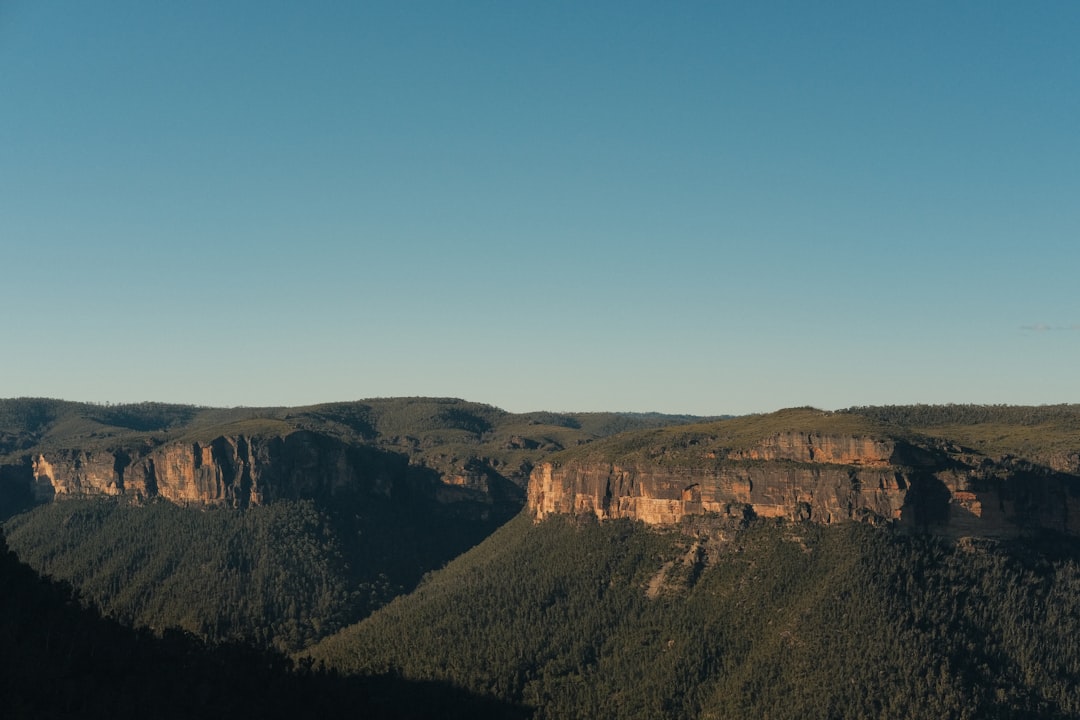
The sandstone cliffs here aren’t merely tall; they’re ancient. Formed over 250 million years from sediment deposited by ancient river systems, these rock faces exhibit colour variations from deep ochre to pale cream, depending on mineral content and moisture levels. Understanding this geology isn’t academic—it’s practical. Different rock faces catch light differently at identical times, meaning your choice of shooting location should be dictated by the sun’s angle relative to the cliff orientation, not merely by which lookout offers the “best view.”
The Photographic Zones
Rather than thinking in tourist terms—Katoomba, Leura, Blackheath—photographers should conceptualise the Blue Mountains in zones defined by lighting behaviour and subject type:
The Canyon Rim Zone encompasses all cliff-edge locations from Wentworth Falls through to Govetts Leap. These sites face predominantly south-east to south-west, meaning morning light sweeps across them while afternoon light creates dramatic backlit silhouettes. The sheer scale here demands wide-angle lenses, but the contrast between shadowed valley floors and bright sky challenges dynamic range capabilities.
The Rainforest Pocket Zone includes locations like the Grand Canyon track and sections of the Valley of the Waters. Here, the canopy filters light into soft, even illumination ideal for waterfall photography and fern details. The colour temperature runs cool, often requiring deliberate warming in post-processing or custom white balance in-camera.
The Plateau Expanse Zone covers the higher elevations around Blackheath and Mount Victoria. Open heathland and exposed rock formations dominate, creating opportunities for minimalist compositions and, crucially, unobstructed astrophotography. Light pollution here is minimal by NSW standards, though the glow of Sydney remains visible on the south-eastern horizon.
The Light Log: When to Be Where
Generic golden hour advice fails in the Blue Mountains. The canyon topography creates its own lighting rules, and understanding seasonal patterns will fundamentally improve your keeper rate. Here’s what actually works, broken down by season and specific conditions.
Summer (December–February)
Harsh midday light isn’t the enemy here—it’s a tool. The canyon depth means that between 11am and 2pm, while the plateau bakes in unforgiving sun, the valley floors remain in deep shadow. This creates dramatic opportunities for capturing light beams penetrating the canopy and for high-contrast black and white work.
- Best for: Canyon depth shots from Govetts Leap; shadow-play compositions at Leura Cascades; extended shooting windows due to long daylight hours
- Challenge: Extreme dynamic range between lit cliff faces and shadowed valleys; blue haze at its most intense
- Strategy: Embrace high contrast with intentional silhouette work, or shoot into shaded areas where the canopy diffuses light naturally
Autumn (March–May)
The valley mist season. As overnight temperatures drop, moisture trapped in the Jamison and Grose Valleys condenses into fog that can persist until mid-morning. This is when the Blue Mountains delivers those ethereal images of rock formations emerging from white clouds.
- Best for: Mist photography from cliff-edge lookouts; waterfall volume remains good from winter rains; the introduced deciduous trees around Leura and Mount Wilson provide colour accents
- Challenge: Unpredictable mist timing; can lose entire mornings to thick fog that obscures all canyon views
- Strategy: Monitor overnight temperatures and humidity. If the differential between evening and morning exceeds 10°C with humidity above 70%, mist is highly likely
Winter (June–August)
Low-angle light transforms the Blue Mountains in winter. The sun never reaches its summer zenith, meaning light rakes across the landscape at angles that emphasise texture in sandstone and bark. This is when the “blue” in Blue Mountains becomes most photographically pronounced—the cold, dry air intensifies the atmospheric effect.
- Best for: Textural rock photography; gum tree bark details; the clearest visibility of any season; weekday solitude at major lookouts
- Challenge: Short shooting windows; bitter morning temperatures at cliff edges (frequently below 0°C); accommodation fills quickly during school holidays
- Strategy: Focus on the hour after sunrise when low-angle light creates maximum texture; carry spare batteries as cold depletes them rapidly
Spring (September–November)
Waterfall volume peaks after winter rains, and the wildflower season transforms the heathland into a macro photographer’s paradise. Waratahs, mountain devils, and boronias bloom in succession, while migratory birds return to the canopy.
- Best for: Waterfall photography at Wentworth Falls and Katoomba Falls; wildflower macro work; bird photography (lyrebirds particularly active in early spring)
- Challenge: Unpredictable weather—spring storms can sweep through rapidly; weekend crowds as Sydney discovers the mountains again
- Strategy: Watch weather radars for clear windows after rain; the day following significant rainfall delivers peak waterfall flow without the storm danger
The Three-Tier Skill Progression: Equipment and Technique
Rather than prescribing gear by budget, this section addresses what you can achieve at different commitment levels—and honestly acknowledges what each tier cannot do. Your photographic intent should drive equipment decisions, not the reverse.
Tier 1: Smartphone Photography
Modern smartphones capture remarkable images in the Blue Mountains, but success requires working within their constraints rather than fighting them. The limited dynamic range means avoiding high-contrast scenes during harsh light, while the fixed aperture demands careful attention to composition since you cannot blur backgrounds artificially.
What works brilliantly:
- Cliff-edge panoramas during overcast conditions or soft evening light
- Rainforest details where even illumination suits the sensor
- Quick compositions when wildlife appears unexpectedly
- Sharing immediately to social platforms
What struggles:
- Sunrise and sunset shots with extreme contrast between sky and valley
- Long-exposure waterfall effects (though some phones now simulate this convincingly)
- Telephoto compression of distant formations
- Any image intended for large-format printing
Recommended apps: Use a camera app that allows manual white balance—the blue haze can trick auto-white-balance into overcompensating, creating unnatural warmth. Halide or similar apps that capture in RAW format provide significantly more latitude for correction.
Tier 2: Interchangeable Lens Cameras (DSLR/Mirrorless)
This tier opens creative control but introduces decision fatigue. The fundamental choice in Blue Mountains photography isn’t brand—it’s focal length strategy. The canyon scale tempts photographers toward ultra-wide lenses, but this often produces images with vast sky and tiny features.
Lens recommendations:
- 24-70mm equivalent: The workhorse range. Covers 80% of compositions without encouraging the “everything must be wide” trap
- 70-200mm equivalent: Essential for compressing layers of ridgelines and isolating formations from the visual clutter of forest
- Ultra-wide (16mm or wider): Use sparingly. Best for canyon interiors and enclosed waterfall environments where the scene genuinely demands it
Filter considerations: The Blue Mountains’ waterfalls rarely require extreme neutral density filters. A 6-stop ND handles most daylight long-exposure needs. More critical is a circular polariser—the haze contains significant polarised light, and a polariser can dramatically increase clarity and saturation, though overuse creates an unnatural, overly-dark sky.
Tier 3: Publication and Fine Art Quality
This tier isn’t about better equipment—it’s about access, patience, and working locations over multiple days. Publication-quality Blue Mountains photography often comes from positions most visitors never reach, captured during conditions that required pre-dawn hiking or overnight camping.
What this tier requires:
- Multi-day backcountry access via overnight hiking or remote camping
- Permit knowledge for commercial shooting in National Parks (required for any image that will be sold or used commercially)
- Familiarity with unmaintained trails that access formations invisible from main lookouts
- Time—returning to locations repeatedly until conditions align
The honest truth: A skilled Tier 2 photographer with good timing will outperform a Tier 3 photographer with better gear who arrives at the wrong time. The difference between tiers isn’t primarily equipment—it’s the investment in being positioned correctly when exceptional light occurs.
Where to Stay: Accommodation as Strategic Base Camp
Framing accommodation through photographic logistics rather than luxury reveals different priorities. Where you sleep determines what you can shoot, when you can arrive, and how efficiently you can work multiple locations.
Dawn Patrol Access
If sunrise photography matters, your accommodation location isn’t negotiable—it’s strategic. Katoomba, despite offering the most options, requires 20-40 minutes’ drive to reach the best dawn positions. In winter, when sunrise occurs before 7am, this means departing in darkness on unfamiliar roads.
Best positioned for first light:
- Blackheath: Govetts Leap and Perry’s Lookdown are 5-10 minutes away. The sacrifice is fewer dining options and limited late-opening cafes for post-shoot breakfast
- Wentworth Falls: The falls themselves are accessible within minutes, and the orientation means sunrise light hits the waterfall spray directly
- Mount Victoria: Positioned for both western canyon views and relatively quick access to Blackheath locations
Astrophotography Suitability
The Blue Mountains offers genuine dark sky access within two hours of Sydney—a rarity for a major city. Light pollution maps show the region around Mount Boyce and the Megalong Valley access points as suitable for Milky Way photography, though Sydney’s glow remains visible on the south-eastern horizon.
Considerations for astro shooters:
- Accommodation with outdoor space for tripod setup allows for polar alignment and composition testing before driving to remote locations
- Blackheath and Mount Victoria place you closer to genuinely dark sites
- Some cabins and cottages specifically cater to photographers with south-facing decks and minimal exterior lighting
Post-Shoot Workflow Needs
Photography generates data. A typical Blue Mountains dawn-to-dusk shoot can produce 50-200 RAW files requiring backup, review, and initial processing. Accommodation with a desk, reliable power outlets, and Wi-Fi sufficient for cloud backup transforms the post-shoot experience.
Beyond the Frame: Ethical and Environmental Considerations
Most photography guides omit this section. This one doesn’t, because the Blue Mountains faces genuine pressures from visitation, and photographers bear specific responsibilities.
Aboriginal Heritage Protocols
The Blue Mountains holds significant Aboriginal heritage sites, including rock art, grinding grooves, and ceremonial locations. Some are well-documented; others are known primarily to Traditional Owners and those with deep local knowledge.
Photography at certain sites is restricted or requires permission from the relevant Aboriginal Land Council. This isn’t bureaucratic box-ticking—it’s respect for ongoing cultural significance. If you encounter rock art or artefacts, photograph without flash (which damages pigments), don’t touch the surface (oils from skin degrade the rock), and don’t share specific locations publicly.
Sandstone Fragility
The sandstone that creates the dramatic cliffs is surprisingly fragile. Rock formations can crumble under weight, and once-compact surfaces erode rapidly when walked upon. The lookout barriers exist not merely to prevent falls but to protect soft rock edges from foot traffic.
For photographers, this means: never remove barriers or climb over safety railings for a better angle. The shot isn’t worth accelerating erosion, and penalties for damaging National Park features are substantial.
Wildlife Interaction
Crimson rosellas, king parrots, and sulphur-crested cockatoos at popular lookouts have become habituated to humans. They’re photogenic and approach closely—temptingly so.
Feeding wildlife for photography is never acceptable. It alters natural behaviour, creates dependency, and can cause malnutrition when inappropriate foods are offered. The close-up bird shot isn’t worth compromising animal welfare. Use appropriate focal length and patience instead.
The Geotagging Question
Social media geotagging has directed overwhelming traffic to previously quiet locations, causing erosion, disturbing wildlife, and degrading the experience for all visitors. Consider whether specific geotags serve the community or merely drive traffic to your post. Sometimes “Blue Mountains, NSW” is sufficient, leaving sensitive locations for those who do the research.
Getting There: Sydney to Blue Mountains Logistics
The journey from Sydney to the Blue Mountains is straightforward—approximately 100 kilometres west via the M4 and Great Western Highway. But photographer-specific considerations can make the difference between arriving stressed and arriving prepared.
By Car
Driving offers maximum flexibility for pre-dawn departures and multi-location shoots. However, weekend parking at popular sites has become genuinely problematic.
Parking realities:
- Echo Point: The main car park fills by 9am on weekends and public holidays. Arrive before 7am to guarantee a spot, or use the overflow parking and allow 15 minutes for the walk
- Wentworth Falls: National Park parking is limited; street parking in nearby residential streets is available but fills rapidly
- Govetts Leap: Smaller car park that fills early on clear winter mornings when serious photographers arrive
Fuel strategy: Fill up in Sydney or
Frequently Asked Questions
What are the best photography zones in the Blue Mountains?
The Blue Mountains divides into three distinct photographic zones. The Canyon Rim Zone (Wentworth Falls to Govetts Leap) faces south-east to south-west, offering morning light sweeps and dramatic afternoon silhouettes—ideal for wide-angle work. The Rainforest Pocket Zone (Grand Canyon track, Valley of the Waters) provides filtered, even light perfect for waterfall and fern photography, though colour temperature runs cool. The Plateau Expanse Zone around Blackheath and Mount Victoria features open heathland and exposed formations suited to minimalist compositions and astrophotography, with minimal light pollution by NSW standards despite Sydney’s glow on the south-eastern horizon.
When is the best time to photograph valley mist in the Blue Mountains?
Autumn (March–May) delivers the most reliable valley mist photography. Anzac Day weekend typically marks the start of consistent fog formation. For best results, position yourself at Echo Point or Eagle Hawk Lookout before 6am—the mist often burns off by 8:30am. Monitor overnight temperatures and humidity: if the differential between evening and morning exceeds 10°C with humidity above 70%, mist is highly likely. Cold nights followed by clear mornings create ideal conditions as moisture trapped in the Jamison and Grose Valleys condenses into ethereal fog.
How should I handle the blue haze when photographing the Blue Mountains?
The famous blue haze is caused by terpenes released from over 90 eucalyptus species combining with water vapour and dust particles, scattering short-wavelength blue light. This effect is most pronounced on still, warm days and significantly affects your camera’s white balance readings. Use a camera app with manual white balance control—auto-white-balance often overcompensates, creating unnatural warmth. A circular polariser can dramatically increase clarity and saturation by cutting through polarised light in the haze, though avoid overuse which creates unnaturally dark skies. Shooting RAW provides more correction latitude in post-processing.
Where should I stay in the Blue Mountains for sunrise photography?
For dawn photography, accommodation location is strategic rather than negotiable. Blackheath positions you closest to key locations—Govetts Leap and Perry’s Lookdown are just 5-10 minutes away, though dining options are limited. Wentworth Falls offers minute-access to the falls with sunrise light hitting waterfall spray directly. Mount Victoria works well for western canyon views and quick Blackheath access. Avoid Katoomba despite more options—it requires 20-40 minutes’ drive to reach prime dawn positions, meaning departing in darkness on unfamiliar roads for winter sunrises before 7am.
What are the parking costs and logistics for Blue Mountains photography locations?
Parking at popular Blue Mountains sites is free but increasingly competitive. Echo Point’s main car park fills by 9am on weekends—arrive before 7am to guarantee a spot, or use overflow parking and allow 15 minutes to walk. Wentworth Falls has limited National Park parking with street parking filling rapidly. Govetts Leap has a smaller car park that fills early on clear winter mornings when serious photographers arrive. Driving from Sydney takes approximately 100 kilometres via the M4 and Great Western Highway, with maximum flexibility for pre-dawn departures and multi-location shoots.


Be the First to Comment
Sign in to start the conversation.