


The car winds around the bend and suddenly, the grey suburban sprawl of Adelaide falls away, replaced by the violent gold of the late afternoon sun cutting through the canopy of the Mount Lofty Ranges. The light hits the stands of Stringybark and Red Gum, turning the dust into a shimmering haze, while beneath your shoes, the distinctive white crunch of dolomite gravel announces that you have left the city behind. In this suspended “Golden Hour,” the air smells dry and eucalyptus-sweet, a sensory signature unique to South Australia. It is here, on the undulating ridges that define the geography of the region, that the chaotic rhythm of modern life slows down to match the deliberate cadence of breath on dirt.
Trail running in Australia is more than just running off-road; it is a negotiation with a landscape that is ancient, abrasive, and surprisingly alive. From the compacted red earth of the interior to the sandy, coastal heathlands, the terrain dictates the terms of engagement. For residents of Adelaide and visitors alike, the accessibility of world-class trails—often just minutes from the city centre—creates a unique outdoor fitness culture. But transitioning from the tarmac to the track requires more than just buying shoes with knobbly soles. It demands an understanding of the geology beneath your feet, a physiological respect for the Australian climate, and a tactical approach to the local wildlife. This guide moves beyond the typical “top 10 trails” list to explore the mechanics of the movement, the science of the soil, and the specific skills required to progress from a weekend jogger in the parklands to a confident navigator of the peaks.
The Soil Beneath Your Feet: A Geological Guide to Adelaide’s Trails
Many runners view trails as interchangeable surfaces—simply “dirt” instead of “bitumen.” However, in Australia, and specifically within the Mount Lofty Ranges, the geology is the single biggest dictator of your running mechanics. Understanding the composition of the ground isn’t just for geologists; it is critical for injury prevention and energy management.
The Dolomite Issue
Unlike the granite-heavy trails found in Victoria or the deep sand of the Gold Coast, much of the Adelaide Hills is underpinned by quartzite and Cambrian limestone, but the surface trails are famously composed of crushed dolomite. This white, limestone-rich gravel is technically a sedimentary carbonate rock. For a trail runner, dolomite presents a double-edged sword.
Firstly, it is loose. Under dry conditions—which are frequent during the Australian summer—dolomite behaves like marbles. This forces the smaller stabilising muscles in your ankles and knees (the peroneals and tibialis posterior) to work overtime to maintain balance. Secondly, while it provides excellent drainage, meaning trails remain runnable soon after rain, it can be deceptively soft, absorbing energy that should be propelling you forward.
The Lofty Ranges Profile
The Mount Lofty Ranges themselves are a fault-block range, meaning they are characterised by steep escarpments on one side and gentler slopes on the other. This geological tilt creates a specific type of running fatigue: prolonged, grinding ascents followed by technical, quad-busting descents.
From Parklands to Peak: The “Progressive Load” of Trail Skills
Approaching trail running as a sport of “progressive overload”—the same principle used in strength training—can fast-track your development while minimising injury. We shouldn’t view the transition from road to trail as a binary switch, but rather as a spectrum of technical competencies. Here is how to map your physiological progression to specific Adelaide locations.
Phase 1: Proprioception and Flat Terrain
The Location: The River Torrens Linear Park
Before you tackle elevation, you must master instability. The Linear Park offers a compacted dirt surface that is relatively flat but contains enough tree roots, cambers (sloped edges), and occasional loose gravel to challenge your proprioception—your body’s ability to sense movement, action, and location.
In this phase, the goal is not speed, but connection. Focus on keeping your gaze down to spot obstacles about two metres ahead, but periodically lift your eyes to orient yourself. This trains the visual shift required for technical trails.
Phase 2: Elevation Gain and Cardiovascular Threshold
The Location: Waterfall Gully to Mt Lofty Summit
This is the litmus test for Adelaide runners. The climb from Waterfall Gully to the summit is roughly 2.5km of relentless stair climbing and steep fire trail. It introduces the “power hike”—a vital skill in trail running where the gradient becomes so steep that walking is actually faster and more energy-efficient than running.
Mechanically, this phase teaches you to engage your glutes and hamstrings, rather than relying solely on your quadriceps, which will fatigue quickly on the climb. It also forces you to manage your heart rate in a way that road running rarely does, pushing you into the anaerobic zone repeatedly.
Phase 3: Technical Rock and Endurance
The Location: Yurrebilla Trail Sections (Eagle Mountain to Mt Lofty)
This is the realm of the expert. The terrain here shifts from runnable fire trail to sharp, rocky single-track that demands absolute focus. Your proprioceptive training from the Linear Park pays off here. You must make split-second decisions on foot placement while maintaining forward momentum on uneven ground. This phase requires “strength endurance”—the ability of your muscles to repeatedly contract under load over a long duration.
The “Snake and Heat” Protocol: Safety Without the Fearmongering
Australian trails have two distinct characters: the physical landscape and the biological inhabitants. The standard advice to “be careful” is inadequate. You need a clinical protocol for managing the two primary hazards of the Australian bush: heat and snakes.
Thermal Regulation in the South Australian Climate
Adelaide summers are defined by dry heat, often pushing temperatures well above 35°C. Trail running in these conditions requires a strategy that goes beyond carrying water. The body cools primarily through the evaporation of sweat. In the dry Adelaide Hills, sweat evaporates instantly, which can deceive you into thinking you aren’t sweating much, leading to a rapid onset of dehydration.
The Protocol:
- Pre-hydration: Drink 500ml of electrolytes an hour before the run.
- The Wet Buff: Soak a neck buff or hat in water at the start. As it evaporates, it cools the blood passing through the carotid arteries.
- Shade Seeking: Plan routes that utilise the gullies and southern slopes of the ranges during the midday hours to maximise shade cover.
Serpentine Logic: A Flowchart for Snake Encounters
Eastern Brown Snakes and Red-bellied Black Snakes are common in the Hills. Fear often leads runners to panic, which is the most dangerous response. Instead, adopt a logical flowchart behaviour:
1. Spot: You see the snake.
2. Freeze: Snakes react to movement. Stop immediately.
3. Assess Distance: Is the snake within striking distance (about half the snake’s body length)?
4. Decision:
- If Yes: Stand ground. Wait. The snake wants to leave. Let it.
- If No: Slowly back away, keeping eyes on the snake. Do not turn your back until you are well clear.
The Magpie War: A Seasonal Tactical Retreat
While snakes command respect, the Australian Magpie commands a different kind of dread during spring (roughly August to October). I recall a run last September through a quiet section of the Cleland Conservation Park. I was in the zone, cresting a ridge, when I heard the distinctive *clack-clack* of beak snapping behind my helmet. A male magpie was on a dive-bomb trajectory.
The guidebooks tell you to stare at them, but on a steep technical descent, stopping to maintain eye contact is dangerous. I had to employ a “tactical retreat”—turning around, walking backwards while facing the bird, and slowly exiting his territory. It cost me five minutes, but it prevented a facial injury. Local Insight: Magpies rarely swoop outside their specific territory. If you are swooped once, note the exact tree or fence line. You can often bypass this specific zone in future runs by varying your route by just 50 metres.
Gear Audit: The “Desert Island” Pack List
Trail running gear marketing is a rabbit hole of expensive gadgets. To cut through the noise, apply the “Waterfall Gully Test.” Before putting an item in your pack, ask yourself: “Would I carry this 500g up Waterfall Gully?” If the answer is no, leave it. Here is the gear that passes the test.
Footwear: The Grip Equation
Road shoes have smooth soles designed for flat pavement. On Adelaide dolomite and clay, they are ice skates. You need a trail shoe with “lugs”—the deep indentations on the sole. For the Adelaide Hills, look for lugs that are at least 4-5mm deep. The sharp clay of the steep gullies can clog smaller lugs, rendering them useless.
Hydration: The Bladder vs. Bottle Debate
For the rolling hills around Adelaide, a hydration vest with soft flasks is superior to a backpack with a bladder. Vests carry the weight higher on your torso, reducing the jarring impact on your lower back. They also allow you to monitor your fluid intake levels by feel (squeezing the flask).
The Safety Layer
Even in summer, temperatures in the ranges can drop rapidly as the sun dips behind the peaks. A lightweight windbreaker or thermal shell (approx. 150g) is non-negotiable for runs extending over 90 minutes. It weighs little but prevents hypothermia if you twist an ankle and are forced to walk out in the dark.
The “Wineglass Bay” Oversight: When Guidebooks Fail
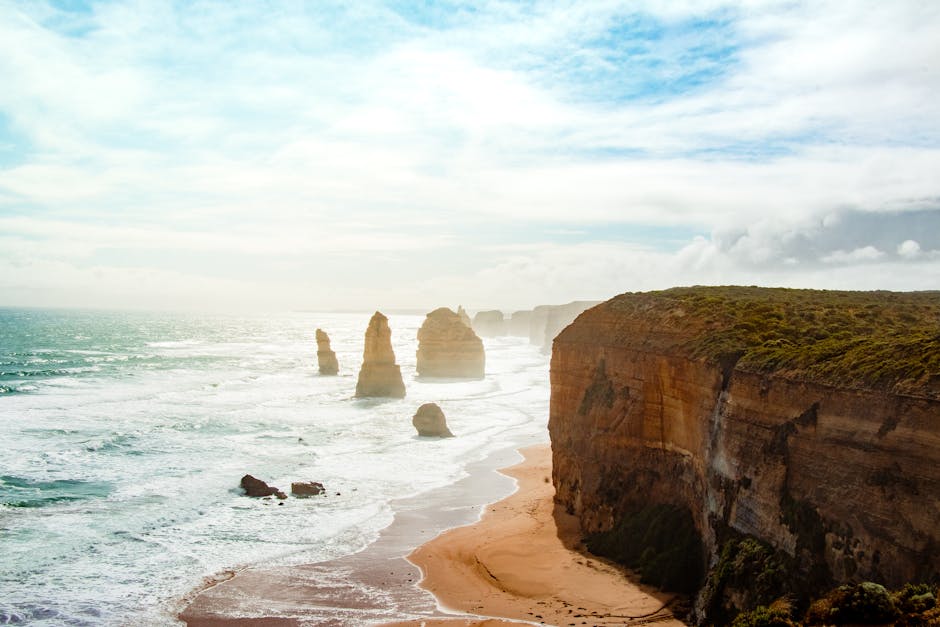
Before focusing specifically on South Australia, it is worth noting an “honest limitation” about Australian trail guidebooks. Runners often flock to iconic coastal routes, such as the track leading to Wineglass Bay in Tasmania. In photos, it looks like paradise: white sand, turquoise water, a runner’s dream.
The reality is often a logistical nightmare. The sand at Wineglass is deep, soft, and energy-sapping. Furthermore, the “trail” is often a high-tide zone. On more than one occasion, groups have found their return route cut off by rogue tides, requiring a dangerous scramble over coastal rocks. This highlights a crucial rule: visuals can be deceiving. Always research the substrate (sand, rock, dirt) and the tidal charts for coastal runs. In Adelaide, similar issues occur on parts of the coastal trail from Sellicks Beach to Maslin Beach, where loose shingle makes running nearly impossible at low tide.
Key Takeaways
- Read the Ground: Adelaide’s dolomite gravel is loose and draining; shorten your stride to maintain traction.
- Progressive Overload: Start with the flat, root-filled trails of Linear Park to build proprioception before attempting the steep ascents of Mt Lofty.
- Respect the Biology: Treat snakes with a logical “freeze and retreat” protocol, and map magpie nesting zones during spring.
- Audit Your Gear: If you wouldn’t carry it up the hardest hill on your route, don’t bring it. Prioritise aggressive lug soles and visible hydration.
Conclusion
Ultimately, trail running in Australia is not about conquering the summit or achieving a Strava segment personal best. It is about finding a “tempo”—a rhythm that exists between your own heartbeat and the pulse of the landscape. Whether you are crunching through the dolomite of the Adelaide Hills or navigating the rocky outcrops of the north, the run is a negotiation, not a conquest. The trail gives you passage, provided you respect its geology, its climate, and its inhabitants.
Don’t wait for the weekend to escape. Your next micro-adventure is likely closer than you think. This afternoon, instead of driving to the gym, find your nearest creek line or patch of native bushland. Leave the headphones at home. Run for twenty minutes, listening only to the sound of your breath and the scuttle of wildlife. Learn to read the soil under your feet in that small patch of nature. That is where the true adventure begins.
Frequently Asked Questions
What type of surface characterises the trails in the Mount Lofty Ranges?
The trails in the Mount Lofty Ranges are famously composed of crushed dolomite, a white, limestone-rich gravel. Unlike the granite trails found in Victoria, dolomite is loose and behaves like marbles under dry conditions, forcing stabiliser muscles in the ankles and knees to work harder to maintain balance.
How should I adjust my running mechanics when running on loose dolomite gravel?
To maintain traction on loose dolomite, you should shorten your stride and adopt a higher cadence with quick feet. A longer stride increases the time your foot spends in contact with the loose surface, whereas a higher cadence helps you ‘float’ over the gravel rather than pushing through it.
When is the best time to run in the Adelaide Hills to avoid heat stress, and what protocol should be followed?
Adelaide summers often exceed 35°C, so it is best to run during cooler parts of the day. A specific protocol should be followed: pre-hydrate with 500ml of electrolytes an hour before running, soak a neck buff or hat in water to cool the carotid arteries, and plan routes that utilise gullies and southern slopes for maximum shade cover during midday.
What is the ‘Waterfall Gully Test’ for auditing trail running gear?
The ‘Waterfall Gully Test’ is a simple rule to prevent overpacking: ask yourself, ‘Would I carry this 500g up Waterfall Gully?’ If the answer is no, leave it behind. This ensures you only carry essential gear, such as lightweight windbreakers and hydration vests, that justifies its weight on steep ascents.
What is the recommended progressive route for a beginner transitioning to expert trail running in Adelaide?
Beginners should start at the River Torrens Linear Park to master proprioception on flat dirt with roots and cambers. The next step is the Waterfall Gully to Mt Lofty Summit climb for elevation gain and power hiking. Finally, experts should tackle the Yurrebilla Trail sections, particularly from Eagle Mountain to Mt Lofty, for technical rock and endurance challenges.




Be the First to Comment
Sign in to start the conversation.