
The car winds around the final bend and suddenly Cradle Mountain’s jagged peaks pierce the dawn sky, their ancient dolerite columns catching the first gold light while Dove Lake below lies perfectly still, a mirror holding the entire world upside down. You step out into air so crisp it almost crackles, unfurling a yoga mat on a granite boulder that has watched this sunrise for millions of years. Your breath becomes visible mist, rising and dissolving into the alpine silence broken only by the distant call of a currawong. In this moment, the practice isn’t something you’re doing to the landscape—it’s something the landscape is doing with you. This is outdoor yoga in Australia: not merely exercise relocated beneath the sky, but an entirely different relationship between body, breath, and the ancient ground beneath your feet.
“Reading the Land” — Why Location Shapes Practice
There’s a fundamental truth about outdoor fitness Australia practitioners discover quickly: the land itself becomes your teacher. Not in some abstract, poetic sense, but in immediate, physiological ways that transform every pose and every breath. When you practise yoga on a studio floor, the environment is controlled, neutral, designed to disappear beneath you. When you practise on Australian granite that’s been weathering for 300 million years, on sand that shifts with each wave, or beneath a canopy of eucalypts whose oils scent each inhale, the landscape actively participates in your practice.
At Cradle Mountain-Lake St Clair National Park, this participation is unmistakable. The Tasmanian Wilderness World Heritage Area surrounding you represents one of the last temperate wilderness regions on Earth. Practising here means engaging with altitude that changes your lung capacity, uneven ground that demands constant micro-adjustments from your stabilising muscles, and a quality of light so clear it seems to sharpen your vision itself. The best outdoor fitness Australia experiences aren’t about finding a pretty backdrop for your usual routine—they’re about allowing the environment to reshape what practice means.
Consider what happens to your balance in Virabhadrasana III when the ground beneath your standing foot isn’t perfectly level. Your proprioception—the body’s internal GPS—switches from passive to active. Small muscles around your ankle fire in patterns studio practice never triggers. Your drishti (focal point) might land on a distant peak rather than a wall, fundamentally changing how your nervous system processes “balance.” This isn’t making do with imperfect conditions; it’s accessing a depth of practice that controlled environments literally cannot provide.
The Science of Place-Based Practice
Research into what Exercise & Sports Science Australia recognises as environmental exercise physiology confirms what practitioners have long known intuitively. Natural environments reduce perceived exertion—you can work harder while feeling like you’re working less. The variable terrain of outdoor settings engages more muscle groups simultaneously than flat, predictable surfaces. Perhaps most significantly for yoga practitioners, natural settings have been shown to lower cortisol levels and activate the parasympathetic nervous system more effectively than indoor practice, even when the physical movements are identical.
For those seeking the best outdoor fitness Australia can offer, this research reframes outdoor yoga not as a pleasant alternative to “real” studio practice, but as a distinct modality with unique benefits. The uneven rock, the changing light, the temperature variations that might seem like inconveniences become the very factors that make outdoor practice uniquely valuable.
The Seasonal Compass — Timing Your Practice to Country
Australia doesn’t operate on northern hemisphere yoga retreat logic. Our seasons invert everything the international wellness industry takes for granted, and understanding this timing is essential for anyone serious about outdoor fitness Australia experiences that are sustainable year-round.
At Cradle Mountain, seasonal awareness isn’t optional—it’s the difference between a transcendent practice and a genuinely dangerous one. Summer dawns break early here, with first light painting the peaks as early as 4:45am in December and January. This is alpine yoga at its most accessible: the famous “Cradle glow” when sunlight hits the dolerite columns, turning them orange-red against a turquoise sky. But summer also brings extreme UV radiation and the ever-present awareness of fire season. Your practice timing shifts earlier, your sunscreen routine becomes non-negotiable, and you learn to read the sky for smoke as attentively as you read your own breath.
Autumn transforms the practice entirely. March through May at Cradle Mountain brings stable high-pressure systems, crisp mornings perfect for vigorous vinyasa, and the famous “turning of the fagus” when Tasmania’s deciduous beech paints the mountainside in copper and gold. This is perhaps the sweet spot for outdoor yoga here—cool enough to generate heat through movement without overheating, stable enough to plan around, spectacular enough to make every practice feel like ceremony.
When Not to Practise
Winter practice at Cradle Mountain demands a different relationship with comfort. Sub-zero dawns, frost on every surface, the possibility of snow turning your practice space into something altogether more demanding. But this is also when outdoor yoga reveals its unique gifts. The cold becomes a teacher—each breath visible, each movement an act of generating internal heat. Sun salutations transform from gentle warm-ups into genuine survival strategies. The silence of snow-muffled landscape creates a stillness no studio can replicate. This isn’t for everyone, and it certainly isn’t for beginners still learning foundational alignment. But for experienced practitioners, winter alpine yoga represents something approaching the best outdoor fitness Australia offers its most dedicated participants.
Spring brings its own considerations. September through November means wildlife activity—wallabies and wombats grazing near popular practice spots, snakes emerging from winter torpor and basking on warm rocks you might have earmarked for your mat. It means unpredictable weather as winter and summer systems battle for dominance. It also means waterfalls at peak flow, wildflowers beginning their annual display, and the sense of the entire landscape waking up around you.
Practising on Country
For non-Indigenous practitioners, understanding that you’re practising on unceded Aboriginal land adds another dimension to seasonal awareness. The Traditional Custodians of Cradle Mountain—the Big River, North, North Midlands, and North West nations—have maintained relationships with this landscape for over 40,000 years. Their seasonal calendars, based on environmental cues rather than calendar dates, offer deeper guidance for when and how to engage with Country. Acknowledging this before practice—perhaps with a spoken acknowledgment of Country or simply a moment of gratitude—connects your yoga practice to the deeper story of the land beneath your mat.
The Minimalist’s Kit — What Actually Matters for Cheap Outdoor Fitness Australia Practice
Before we discuss what to pack, let’s address what you don’t need. The wellness industry has convinced many practitioners that outdoor yoga requires specialised equipment: travel mats, portable props, moisture-wicking everything. The reality? Some of the most profound outdoor yoga Australia has to offer happens with nothing but a towel and a flat patch of ground.
This matters because cheap outdoor fitness Australia options shouldn’t feel second-rate. Practising directly on granite (with a towel for hygiene and cushioning) connects you to the earth in ways a thick mat prevents. Smooth rocks become yoga blocks. A sturdy low branch becomes a strap for deepening stretches. Inclined ground becomes a prop for supported inversions that would require multiple studio bolsters. The land provides, if you learn to read what it’s offering.
For those building regular outdoor practice, strategic investments do earn their place in your pack:
- A quality travel mat — Not for cushioning, but for hygiene and defining your practice space. Look for closed-cell construction that won’t absorb moisture or odours, and consider biodegradable options from Australian sustainable fitness brands.
- Layered clothing system — Alpine conditions can shift 20°C between your first sun salute and savasana. Merino base layers from Australian brands like Icebreaker or Wilderness Wear offer temperature regulation without bulk.
- Sun protection — Beyond sunscreen (which needs reapplying during long sessions), consider a lightweight, wide-brimmed hat that won’t blow off during movement, and UV-protective clothing for exposed areas.
- Hydration system — A 1-2L capacity is minimum for alpine practice. In Tasmania’s clean wilderness, a filter bottle lets you refill from streams, reducing pack weight for longer sessions.
Transporting Gear to Remote Locations
For practitioners based in urban areas, building a home practice space before venturing into remote locations makes sense both physically and financially. Quality home outdoor gym equipment—simple items like yoga blocks, straps, and perhaps a portable pull-up bar for strength cross-training—lets you develop the foundational strength and body awareness that makes outdoor practice safer and more rewarding. Several Australian fitness equipment suppliers offer packages specifically designed for outdoor and travel use, bridging the gap between home practice and wilderness experience.
Movement Maps — Three Complete Sequences for Australian Terrains
Generic yoga sequences designed for climate-controlled studios often fail when translated to outdoor environments. The following sequences have been developed specifically for Australian conditions, with honest assessments of what works, what doesn’t, and how to adapt when the ideal pose becomes impossible.
Alpine/Ground Sequence: “Mountain Root”
Designed specifically for locations like Cradle Mountain’s Dove Lake circuit, this 45-minute sequence works with uneven, rocky terrain. It emphasises grounding and stability over flexibility, building the kind of proprioceptive awareness that prevents ankle injuries on variable surfaces.
Opening (5 minutes): Stand in Tadasana (Mountain Pose) with eyes soft. Instead of the usual internal focus, let your awareness expand to include the landscape—temperature on your skin, sounds near and far, the quality of light. Begin gentle breathing, visualising roots extending from your feet into the rock below.
Grounding Flow (15 minutes): Move through a modified Sun Salutation sequence, keeping feet wider than usual for stability. Replace single-leg balances with grounded alternatives—instead of Vrksasana (Tree Pose), practise a wide-legged standing forward fold with hands on a stable rock. Focus on poses where all four limbs contact the ground: tabletop variations, lizard pose, and wide-legged child’s pose.
Strength Building (15 minutes): Use the natural terrain for resistance. Practise warrior sequences facing uphill to increase quadriceps engagement, or downhill for balance challenges. Find a stable boulder for modified push-ups and tricep dips. Hold planks with hands on a slightly elevated rock to reduce wrist strain on hard surfaces.
Closing (10 minutes): Seated twists and forward folds, adapting to whatever flat-ish surface you can find. Final savasana can be done seated if lying down isn’t practical—visualise your body merging with the mountain rather than the usual “melting” imagery.
Coastal Sequence: “Ocean Breath”
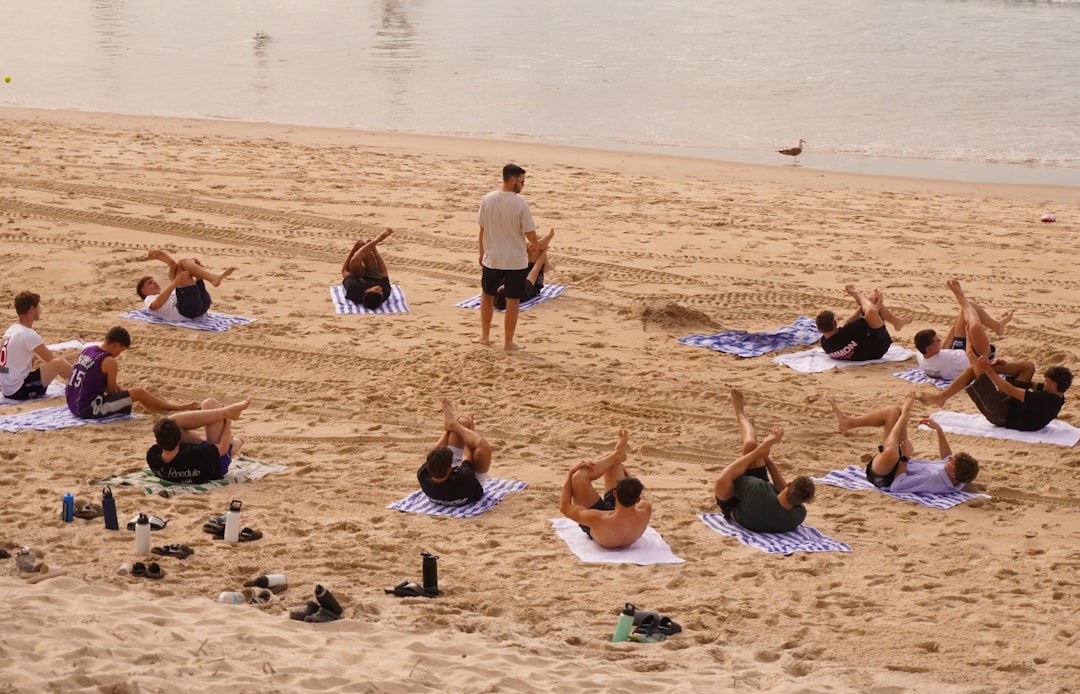
This sequence for Australia’s beaches and rocky coastlines uses sand’s unique properties for joint-friendly practice while syncing breath with wave rhythm. Best practised within two hours either side of low tide for maximum sand space.
Wave-Synced Breathing (5 minutes): Sit facing the ocean. Inhale as waves approach, exhale as they recede. This isn’t about matching timing perfectly—it’s about letting your nervous system entrain to the ocean’s rhythm.
Sand-Strengthening Flow (20 minutes): Sand provides instability similar to a wobble board, engaging core and stabiliser muscles throughout. Practise standing balances near the waterline where sand is firm but not hard. Walking lunges along the beach challenge balance differently than studio lunges. In downward dog, let hands and feet sink slightly, then press up—sand creates resistance throughout the movement.
Beach-Specific Modifications: Avoid poses requiring clean hand placement on the ground—inverted poses can wait for firmer terrain. Instead, practise dolphin pose (forearm dog) to keep faces away from sand. Use the slope of the beach: facing uphill in standing poses increases intensity; facing downhill creates opening through the back body.
Bush/Forest Sequence: “Canopy Connection”
Designed for Australia’s eucalypt forests, this sequence uses trees as props while respecting that these living beings deserve care. Always check for wildlife before touching trees—possums, gliders, and birds may be resting in hollows.
Tree-Incorporated Practice (30 minutes): Begin with standing balances using a tree trunk for light fingertip support—not leaning, but touching for proprioceptive feedback. Practise triangle pose with the back hand on bark for stability that lets you explore depth safely. Use low branches for supported deeper stretches in poses like half-moon.
Dappled-Light Adaptations: In forest light that shifts constantly, maintain soft focus rather than seeking a fixed drishti. This actually trains a more sustainable form of concentration than staring at a single point. Let your gaze rest on the play of light through leaves.
The Unspoken Curriculum — Safety, Ethics, and Stewardship
What separates casual outdoor practitioners from those who access the best outdoor fitness Australia sustainably offers isn’t physical ability—it’s awareness of the responsibilities that come with practising in wild places. This section addresses what most guides omit because it doesn’t fit the inspirational narrative. But this knowledge determines whether your practice enhances or harms the places you love.
Wildlife Awareness During Practice
At Cradle Mountain, wildlife encounters aren’t possibilities—they’re certainties. Wombats graze dawn and dusk, often wandering through what seemed like a perfect practice spot. Wallabies may hop through your sequence. In warmer months, snakes bask on the same sun-warmed rocks that call to you.
Your practice must include protocols for coexistence:
- Before settling, scan thoroughly. Check around and under any rocks or logs before placing your mat. Snakes often rest in the lee of boulders.
- If wildlife enters your space, pause. Remain still, avoid sudden movements, and let the animal move through. Your practice can wait; their survival can’t.
- Know your venomous species. In Tasmania, tiger snakes and copperheads require respect and distance. Mainland practitioners add brown snakes, death adders, and others to this list. Learn to identify them before practising outdoors.
- Practise snake-aware movement. In warm weather, avoid stepping over logs without checking the other side. Make some noise when walking through long grass—snakes will usually move away if they detect you.
Leave No Trace for Yoga Practitioners
The standard Leave No Trace principles apply, but yoga practice adds specific considerations:
- Mat placement matters. Repeatedly placing mats in the exact same spot can damage fragile alpine vegetation. Vary your location, and always check that you’re not setting up on cryptogamic soil crusts—those blackish, crusty growths that look like dirt but are actually complex communities of mosses, lichens, and fungi essential to the ecosystem.
- Sweat and sunscreen. Both can contaminate water sources and harm amphibian populations. Practise at least 50 metres from any waterway, and consider wiping down before entering streams or lakes after practice.
- Sound travels. In wilderness areas, your voice and music carry further than you realise. Many practitioners find silence deepens their practice anyway, but if you use music or chanting, consider whether it enhances or imposes on others’ experience.
Legal and Access Considerations
Different land tenures carry different rules. National parks have strict regulations about where you can and can’t go. State forests may allow more flexibility but require awareness of logging operations. Local council reserves often have their own frameworks. For outdoor fitness Australia practitioners, knowing which agency manages your practice location isn’t bureaucracy—it’s basic preparation.
Key Moments: Lessons from the Land
Practising outdoors means sharing space with living Country. The practice doesn’t stop when wildlife appears—it adapts. This isn’t disruption; it’s education in presence that no studio can provide.
The Wallaby Encounter
During a dawn session at a Cradle Mountain tarn, a wallaby hopped directly through the practice space. The instinct was to freeze, to feel disrupted, to lament the “perfect” practice being interrupted. Instead, we held the pause—literally freezing in a standing balance—and watched. The wallaby stopped,
Frequently Asked Questions
What makes outdoor yoga in Australia different from studio practice?
Outdoor yoga in Australia engages with the landscape in ways studio practice cannot replicate. The uneven terrain of locations like Cradle Mountain-Lake St Clair National Park triggers micro-adjustments from stabilising muscles, while natural environments have been shown to lower cortisol levels and activate the parasympathetic nervous system more effectively. Research from the University of Queensland found outdoor physical activity in natural environments resulted in 30% greater improvements in mental wellbeing compared to equivalent indoor exercise, with effects lasting up to 24 hours longer. The variable terrain, changing light, and temperature variations become factors that make outdoor practice uniquely valuable rather than inconveniences.
How should I time my outdoor yoga practice at Cradle Mountain across different seasons?
Each season at Cradle Mountain demands different timing and preparation. Summer dawns break as early as 4:45am in December and January, offering the famous ‘Cradle glow’ when sunlight hits the dolerite columns, though extreme UV radiation requires earlier practice times and diligent sun protection. Autumn (March through May) brings stable high-pressure systems and crisp mornings ideal for vigorous vinyasa, widely considered the sweet spot for outdoor yoga. Winter demands experience with sub-zero dawns and requires understanding that cold becomes a teacher, while spring (September through November) brings wildlife activity including snakes basking on warm rocks and unpredictable weather patterns.
What essential gear do I need for outdoor yoga practice in Australia?
Strategic gear for outdoor yoga includes a quality travel mat with closed-cell construction that won’t absorb moisture or odours, a layered clothing system capable of handling 20°C temperature shifts between your first sun salute and savasana, and merino base layers from Australian brands like Icebreaker or Wilderness Wear for temperature regulation. Sun protection is critical—beyond sunscreen, pack a lightweight wide-brim hat that won’t blow off during movement and UV-protective clothing. A 1-2L hydration system is minimum for alpine practice, and in Tasmania’s clean wilderness, a filter bottle lets you refill from streams. For remote locations requiring 30-60 minute hikes, pack your mat on the outside of your pack for easy access.
What wildlife safety considerations should I follow during outdoor yoga practice?
Wildlife encounters at locations like Cradle Mountain are certainties rather than possibilities. Before settling, scan thoroughly around and under rocks or logs before placing your mat, as snakes often rest in the lee of boulders. If wildlife enters your space, pause and remain still, avoiding sudden movements. In Tasmania, tiger snakes and copperheads require respect and distance, while mainland practitioners must also identify brown snakes and death adders. In warm weather, avoid stepping over logs without checking the other side, make noise when walking through long grass, and practise at least 50 metres from waterways to prevent sweat and sunscreen from contaminating water sources and harming amphibian populations.
What does it cost to practise outdoor yoga in Australian national parks?
Personal outdoor yoga practice in Australian national parks generally doesn’t require permits, making it an affordable fitness option. However, commercial outdoor fitness activities do require permits, and even informal gatherings of 15 or more people may trigger permit requirements in some jurisdictions. Park entry fees apply at most national parks—Cradle Mountain-Lake St Clair National Park requires a parks pass. The practice itself can be done cheaply with minimal equipment: some of the most profound outdoor yoga happens with nothing but a towel and a flat patch of ground, as the land itself provides natural props like smooth rocks for yoga blocks and sturdy branches for straps.

Be the First to Comment
Sign in to start the conversation.