


The car winds around the bend and suddenly the landscape opens up, revealing the glassy expanse of the Jindabyne shoreline under the pre-dawn grey. Mist rises in ghostly ribbons from the water’s surface, swirling around the submerged trunks of ancient snow gums that stand as silent monuments in the depths. The air is crisp enough to bite, carrying the distinct, earthy scent of damp eucalyptus and wet stone. Condensation clings to the cork grip of the rod, cool and slippery against the palm, as the line is stripped out with a rhythmic whisper. Then, without warning, the high-pitched mechanical “zip” of the drag tears through the silence—a violent, jagged sound that signals a wild Brown Trout has inhaled the lure. It is in this heart-stopping moment of connection that the true value of Australia’s freshwater systems reveals itself; this is not merely a pastime, but an immersion into a world-class aquatic diversity that rivals any international destination, yet remains surprisingly underappreciated by many locals.
The Headwaters: Decoding the Gear Matrix
Before you can navigate the diverse hydrology of Australian freshwater fishing, you must first understand the tools of the trade. Many anglers make the mistake of buying a “do-it-all” combo, only to find themselves under-gunned in the North or overpowering the delicate trout streams of the South. The key is to decode the gear matrix by matching your equipment to the specific environment and the physiology of the target species.
The Physics of Casting: Why Gear Works
Understanding the mechanics of your equipment separates the casual angler from the consistent catcher. It’s not just about spending more money; it’s about physics. A rod’s “action” determines where it flexes—slow action rods bend through the blank, protecting light tippets on big fish, while fast action rods hinge near the tip, providing the backbone needed for casting heavy lures into a stiff headwind.
Similarly, line weight is a measure of mass, not breaking strain. A 4-weight fly line carries enough energy to turnover a tiny dry fly in a mountain breeze, but it lacks the mass to punch a bulky Clouser Minnow into a 20-knot northerly on Lake Eildon. When selecting gear, you are essentially choosing a transmission for your car; you wouldn’t tow a boat with a hatchback, and you shouldn’t chase Golden Perch with a ultralight trout stick.
Contrasting Setups: High Country vs. The Tropics
The gear spectrum in Australia is vast. In the high country of the Snowy Mountains or the Tasmanian Central Highlands, you are dealing with clear, shallow water and spooky fish. Here, a 2-4kg spin rod matched with a 1000-2500 size reel is the standard. You need finesse. The leader material should be invisible—fluorocarbon in the 4lb to 6lb breaking strain category—to prevent the fish from seeing the line.
Conversely, travel north to the impoundments of Queensland, and the game changes entirely. Targeting Barramundi or Saratoga requires brute force. These fish live in snag-heavy structure and will wrap you around a sunken tree in seconds. A 6-8kg spin rod (often 7 feet or longer for casting distance) paired with a 4000 size reel and 30-50lb braid is the minimum recommendation. The “stop-and-go” nature of a barra strike demands a drag system that is smooth as silk; any stickiness in the drag will result in a thrown lure and a lost fish.
The Confluence: A State-by-State Hydrology
Australia is defined by its rivers and lakes. Each state possesses a unique hydrological fingerprint, offering distinct fisheries that require different approaches. Navigating this “confluence” of knowledge is essential for the travelling angler.
Queensland: The Tropical Impoundments
Queensland’s freshwater scene is dominated by massive dams built for irrigation but housing world-class sport fisheries. Lakes like Monduran and Awoonga are the Mecca for Barramundi, while the more remote dams like Lake Somerset hold populations of Australian Bass and Yellowbelly. The water here can be heavily stained or turbid, particularly during the wet season (November to April), which favours noisy, vibration-based lures. In the clearer months of the dry season, subtle presentations with soft plastics often outperform the noisy chuggers.
Western Australia: Tea- stained Gems
Western Australia offers a unique freshwater experience centred around the South West region. The lakes here are often “tea-stained”—tannins leaching from the native jarrah and marri forests create a dark, acidic environment. This limits the visibility but allows species like the Redfin Perch (an introduced species) and the iconic Trout to thrive in massive numbers. The Collie River and the Harvey Dam are prime locations where the black water reflects the surrounding forest, creating a moody, atmospheric fishing environment.
Tasmania: The Trout Capital
For the purist, Tasmania is the pinnacle. It is the only Australian state where Trout are self-sustaining in wild populations across vast catchments. From the shallow, lagoon-style waters of the Western Lakes to the deep, tannin-stained waters of the Huon River, the variety is staggering. The “Brumbys Creek” canals are particularly famous for offering easy access to large, captive-brown trout that have escaped from fish farms. However, the true draw is the remote wilderness—hiking into the Central Plateau to stalk trout in crystal clear pools that reflect the jagged peaks of Cradle Mountain.
Local Knowledge: Hidden Access Points
Knowing *where* to fish is often as valuable as knowing *how*. While the main boat ramps at Lake Eildon in Victoria are packed on long weekends, the dedicated angler looks for the dirt tracks less travelled. Near the Fraser National Park side of the lake, a hidden gravel track known locally as “The Arm” leads to a small, isolated bay. It requires a 4WD and a bit of bush bashing, but it rewards the adventurer with shallow water points that hold massive Yellowbelly (Golden Perch) away from the ski traffic.
Similarly, in New South Wales, the upper reaches of the Murray River near Albury hold a secret population of Murray Cod that many boat anglers bypass. By parking at the Wonga Wetlands and hiking the walking trails along the bank, you can access deep, snaggy holes that are inaccessible by prop-driven boats. These spots require casting precision, but the chances of hooking a “metre-plus” cod in complete solitude are significantly higher.
The Feeding Cycle: Reading the Subsurface World
Fishing is often perceived as a game of luck, but it is truly a science of biology and meteorology. The most successful anglers are those who can interpret the “feeding cycle”—the invisible variables that dictate when and why fish eat.
The Barometer and the Metabolism
Barometric pressure is the invisible hand that controls the underwater world. A rapidly falling barometer usually signals a storm approaching, which triggers a feeding frenzy as predatory fish like Murray Cod sense the pressure drop and instinctively know that prey will become disoriented. Conversely, a high-pressure system often pushes fish deep and makes them lethargic. During these high-pressure days, you need to slow your presentation down significantly. A Cod that might chase a fast-moving surface lure during a storm front will often ignore it completely during a high-pressure blue-sky day, requiring a slow-rolled plastic bumping along the bottom to trigger a reaction strike.
Temperature and Depth
Water temperature dictates the metabolic rate of freshwater species. Trout, being cold-water species, are most active when the water is between 10°C and 16°C. As the summer sun pushes water temperatures above 20°C, Trout seek thermal refuge—deep water, or the oxygenated inflow of a river mouth. Fishing a deep, slow-running line (like a sinking shooting head) is essential during the heat of February.
On the flip side, native fish like Murray Cod and Golden Perch love the heat. Their metabolism accelerates as the water warms into the mid-20s. This is why the “surface season” for Cod traditionally runs from November to March. The warm water allows them to expend the energy required to launch themselves out of the water to smash a surface lure.
Troubleshooting the Failure
Every angler faces days where the fish just won’t cooperate. Instead of random lure changes, use a logical troubleshooting approach:
| The Symptom | The Likely Cause | The Technical Fix |
|---|---|---|
| Getting bites but losing fish | Blunt hooks or poor hook set | Sharpen hooks with a file; ensure line diameter isn’t too thick (preventing hook penetration). |
| Following lures but not striking | Spooked by boat presence or lure speed | Make a longer cast; switch to a “pause-and-dart” retrieve to trigger a reaction. |
| Not getting a single touch | Wrong depth or wrong time | Check the sounder; if fish are deep, change to a sinking lure. If pressure is high, fish early morning or late evening. |
The Deep Pool: Uncomfortable Truths & Unexpected Discoveries
The glossy magazines often depict freshwater fishing as an endless parade of trophy fish and perfect sunrises. However, the reality is that fishing involves failure, complexity, and ethical dilemmas. Acknowledging these “deep pool” truths is part of becoming a mature angler.
The Native vs. Introduced Dilemma
In Australia, the history of freshwater fishing is complicated by introduced species. Trout and Redfin are beloved by many anglers, yet they are invasive predators that have devastated populations of small native fish and amphibians. Conversely, native species like the Murray Cod were nearly decimated by overfishing and habitat destruction in the 20th century.
Navigating this requires a nuanced perspective. Many anglers now practice a “mixed bag” ethic—targeting introduced Trout in the high country where they have established a stable ecosystem, while strictly practicing catch-and-release for natives like Cod and Bass. It is a difficult balance, enjoying the sport while acknowledging the ecological impact of the very fish we pursue.
The “Gear Failure” Confession
I learned my most painful lesson three years ago on the Macquarie River. I was targeting a pre-spawn Cod, a massive green ghost that was living under a willow snag. I had set the hook and the fight was on—the fish surged, I applied too much pressure, and “snap”. The line broke right at the knot. It wasn’t the line’s fault; in my excitement, I had tied a hurried clinch knot instead of my trusted FG knot. That fish swam away with my favourite lure, and I sat there staring at my rod, realizing that all the expensive gear in the world doesn’t matter if you skip the basics.
This “honest limitation” is a universal experience. Whether it is a snapped rod tip from closing the car door too quickly or a reel that jams because you skipped the service, gear failure humbles us. It reinforces the rule: check your knots, check your drag, and respect your equipment.
The Ghost of the Murray
There is a specific kind of madness that descends when chasing Murray Cod in the deep bends of the Victoria River near Nhill. I remember a session where the conditions were perfect—a humid twilight, a light breeze, and the water surface perfectly calm. I was working a large, black surface popper across a lily-pad bed. The water exploded, a massive boil of white water that looked like a depth charge had gone off. I set the hook, but the line was slack. The fish had smashed the lure from the side, not inhaling it. I missed the hook-up. That 100cm+ cod, the “Ghost of the Murray,” remained the master of its domain. It is these missed opportunities that haunt anglers, driving us back to the water time and time again.
Nature’s Intervention: The Wallaby
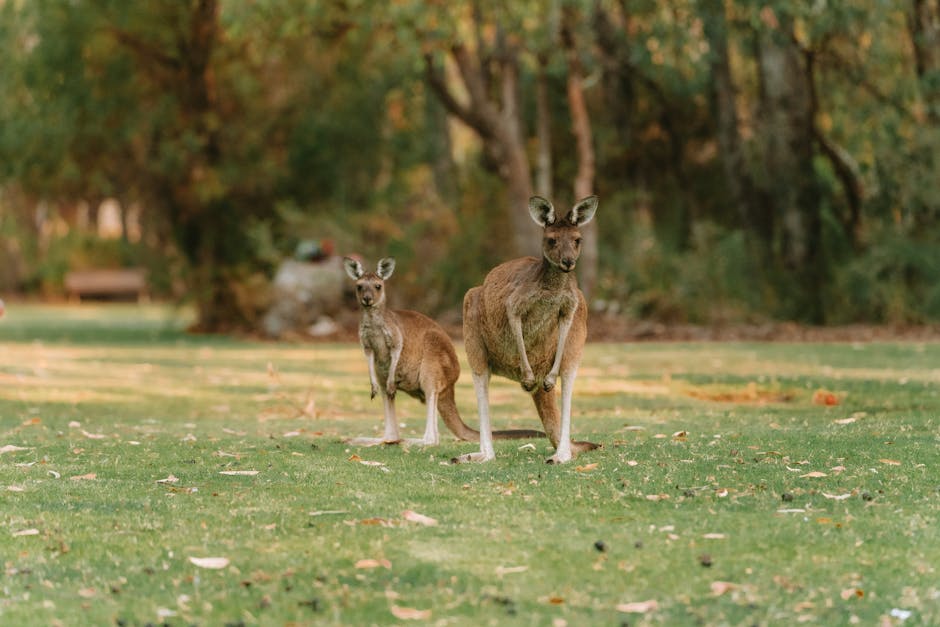
Sometimes, the best-laid plans are ruined by the wild nature of the Australian bush. I once hiked for two hours into a remote stream in Tasmania, expecting untouched water and rising trout. As I approached the best pool—the “honey hole”—I froze. A large Swamp Wallaby was standing in the shallows, drinking intently. It looked at me, twitched its ears, and slowly lapped up the water. I stood there for twenty minutes, waiting for it to leave. Eventually, it bounded off into the scrub. I cast my fly, but the moment had passed. The fish had gone down. It was an unexpected discovery—a reminder that we are visitors in their home, and the fish are secondary to the experience of being in the wild.
The Outflow: Ethics and the Angler’s Legacy
Just as a river eventually reaches the estuary and mixes with the sea, every angler must consider where their impact flows. The future of Australian freshwater fishing depends entirely on the ethics we practice today.
Catch-and-Release: The Australian Standard
In 2026, catch-and-release is not just a trend; it is a necessity, especially for our large native predators. A 100cm Murray Cod is likely a female over 30 years old. She is a broodstock essential for the future of the species. Killing such a fish removes a genetically superior, battle-hardened survivor from the gene pool.
However, catch-and-release must be done correctly. A Trout that is played to exhaustion on ultralight gear and then held out of the water for a photo for five minutes may die later from lactic acid build-up or lack of oxygen. Australian fish physiology is adapted to our specific water conditions.
Citizen Science: Anglers as Researchers
We are the eyes on the water. Anglers are uniquely positioned to gather data that scientists cannot. Programs like VicTag (in Victoria) and DPI NSW’s fish tagging programs rely on anglers reporting tagged fish catches. By simply noting the tag number, location, and length, and reporting it via the designated app or phone line, you contribute to data that tracks fish movement, growth rates, and survival. This information is vital for managing stocking programs and setting size limits.
Furthermore, participating in habitat restoration days—planting native trees along riverbanks to stabilize banks and provide shade—helps repair the damage of decades of cattle grazing and land clearing. The “Angler’s Legacy” isn’t about the biggest fish on the wall; it’s about leaving the river better than you found it, ensuring that in 2040, another angler can stand on that misty bank and hear the scream of the drag as a wild trout takes the line.
Key Takeaways
- Match the Gear: Use light finesse gear for Trout (2-4kg) and heavy gear for Northern Barramundi/Murray Cod (6-8kg+) to match the environment and species.
- State by State: Explore the tropical impoundments of QLD, the tea-stained trout waters of WA, and the wilderness streams of TAS for distinct fishing experiences.
- Read the Conditions: Barometric pressure and water temperature dictate fish activity; adjust your depth and lure speed accordingly.
- Practice Ethics: Prioritize catch-and-release for large native species and practice proper handling techniques to ensure survival.
- Contribute: Participate in citizen science by reporting tagged fish and supporting habitat restoration to secure the future of the sport.
The sun has dipped below the horizon now, and the sky has turned a deep, bruised purple. The fire is crackling at the campsite, casting long, dancing shadows across the grass. The rod is packed away in its tube, safe for the night. Down by the water’s edge, the silence is broken again—not by the zip of a drag this time, but by the subtle, rhythmic “slurp” of a Trout rising to a


Be the First to Comment
Sign in to start the conversation.