

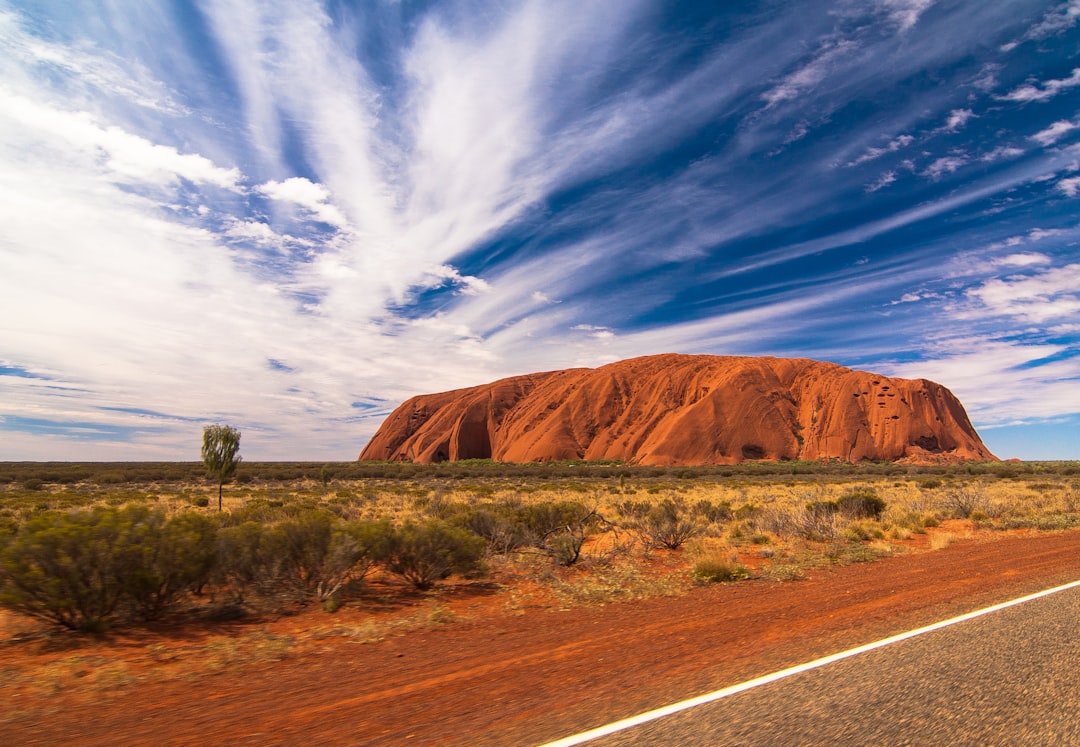
The red dust settles on your skin like a second layer, ochre and ancient, while the first light creeps across the face of Uluru. The air is so dry it almost crackles in your lungs, and the silence here—1,500 kilometres from the nearest coastline—is so complete you can hear your own heartbeat slow to match the rhythm of this place. And yet, standing at the spiritual heart of Australia’s Red Centre, you’ll hear the same question whispered by travellers from around the world: “So… where’s the best surf in Australia?” It makes no geographical sense. It’s like asking where to find snow in the Simpson Desert. But that paradox—that yearning for wave-riding knowledge even when you’re standing on the oldest, driest ground on Earth—is exactly where this guide begins. Because understanding Australian surfing isn’t just about coordinates and break names. It’s about reading Country, whether that Country holds water or stone. It’s about patience, respect, and the kind of deep environmental awareness that Indigenous Australians have practised for 65,000 years. And yes, it’s also about where to find the best waves when you finally make it to the coast.
Reading Water You Can’t See: The Inland Surfer’s Mindset
Before we talk about a single wave, we need to talk about something most surfing guides skip entirely: the philosophy that makes someone a true surfer, not just someone who stands on a board. The mindset that connects a Traditional Owner reading the subtle signs of desert Country to a lifelong surfer reading the nuances of a shifting sandbank.
Surfing in Australia isn’t a sport. It’s a relationship with the ocean that spans tens of thousands of years. The First Nations peoples of Australia’s coastlines—the Saltwater People—didn’t ride waves for recreation. They read the ocean as a living system, understanding currents, seasonal patterns, and the behaviour of marine life with a sophistication modern science is still catching up to. The Bunitj clan of the Northern Territory, the Yuin people of the New South Wales south coast, the Noongar of Western Australia’s southwestern reaches—all developed deep knowledge systems about when the ocean would provide, when it would threaten, and how to move through it safely.
This matters for you, whether you’re picking up a board for the first time or you’ve been surfing for decades, because the best surfers share this same quality: they’re readers. They don’t just look at a wave; they read the horizon for sets, read the water texture for currents, read the behaviour of other surfers for positioning. It’s the same skill that lets an Indigenous ranger read a landscape you’d see as empty and know exactly where the water sources are, where the animals will move, when the seasons are turning.
The Patience Principle
Here’s your first real lesson, and it has nothing to do with pop-up technique or board selection: surfing is mostly waiting. The average surfer spends perhaps 5% of their session actually riding waves. The rest is paddling, positioning, and sitting—watching, reading, anticipating. If you can’t find peace in that waiting, you won’t find it in the sport.
The ocean doesn’t run on human schedules. Learning to match its rhythm rather than forcing yours upon it—that’s not just good surfing practice. That’s the entire point.
This is why starting your surfing journey from the Red Centre isn’t as absurd as it sounds. If you can sit in the presence of Uluru as the light changes over hours, watching colours shift from rust to crimson to burnt orange to deep purple, you’ve already practised the core skill of surfing: patient attention to a force larger than yourself.
Where the Waves Actually Are: Australia’s Surf Geography, Honestly Told
Australia possesses over 25,000 kilometres of coastline, and here’s the honest truth: most of it offers rideable waves at some point during the year. But “rideable” and “world-class” aren’t the same thing, and the difference matters enormously when you’re planning your surfing journey. Let’s break this down by region, with the kind of honesty most tourism bodies won’t give you.
Queensland: The Gold Coast Reality
The Gold Coast deserves its reputation. Snapper Rocks, Kirra, Burleigh Heads—these names carry weight in the global surfing lexicon for good reason. The Superbank, when it’s working properly, produces rides that can stretch for over a kilometre. But here’s what the brochures don’t emphasise: everyone knows this.
On a good day at Snapper, you’ll share the lineup with 100+ surfers. The crowd factor here isn’t just about numbers—it’s about hierarchy. Local surfers who’ve put in decades of time have an unspoken priority, and tensions can run high when the waves are pumping. For beginners, the Gold Coast can be genuinely intimidating, even dangerous, primarily due to the social dynamics rather than the waves themselves.
Best windows: February to May for cyclone swells; September to November for consistent groundswells. Avoid school holidays if possible.
Honest assessment: World-class waves, world-class crowds. Come here once you’ve earned your stripes elsewhere.
New South Wales: The Variety Belt
From the Queensland border down to the Victorian line, NSW offers perhaps the most diverse surfing experiences in the country. Byron Bay combines point breaks with beach breaks and carries a vibe that’s more forgiving than the Gold Coast—though still crowded, especially during the autumn migration of surfers chasing north swells.
The Sydney region alone contains dozens of quality breaks. Manly, Bondi, Cronulla—each has its own character and crowd dynamic. Further south, places like Culburra, Gerroa, and the mighty Bells Beach (technically just across the Victorian border) offer powerful waves with slightly thinner crowds.
Victoria: Cold Water, Warm Soul
Victoria demands commitment. The water here is cold—genuinely cold, requiring a quality 3/2mm wetsuit at minimum, often thicker in winter. But what Victoria offers in exchange is something increasingly rare in Australian surfing: a community-oriented surf culture where the cold water serves as a natural crowd filter.
Bells Beach needs no introduction—the Rip Curl Pro has run here since 1962, making it the world’s longest-running professional surf contest. But the bells ringing aren’t just at Bells. Winkipop, Jan Juc, Torquay’s beach breaks, and the countless setups along the Great Ocean Road offer waves for every level. Mornington Peninsula adds another dimension entirely, with reef breaks that can handle serious size.
Best windows: March to May and September to November. Winter brings the biggest swells but also the harshest conditions.
Western Australia: Power Without Pretension
Margaret River region produces some of the most powerful waves in Australia. Main Break, The Box, North Point—these aren’t waves for the faint-hearted. But the WA coast also offers gentle beach breaks around Yallingup and countless setups that see a fraction of the traffic of east coast waves.
The isolation that defines Western Australia is both its greatest asset and its defining challenge. Swell consistency here is exceptional—the Indian Ocean delivers regular groundswell throughout the year. But you’re driving long distances between breaks, and services can be sparse.
Honest assessment: Margaret River itself is serious surf territory. Beginners should head to the protected corners and beach breaks rather than the main events.
Tasmania: The Final Frontier
If you really want to understand what “uncrowded” means in Australian surfing, Tasmania is your answer. Shipstern Bluff has entered global consciousness as one of the heaviest waves on the planet—big, cold, sharky, and spectacular. But Tassie also offers forgiving beach breaks, point setups that might see a handful of surfers on a good day, and a raw, wild coastline that rewards exploration.
The trade-off is obvious: it’s cold, remote, and requires serious commitment. For experienced surfers seeking genuine adventure, Tasmania represents perhaps Australia’s last frontier.
The Places We Won’t Name
Your First Year in the Lineup: A Skill-Progression Framework
Most surfing guides organise their instruction by skill level—beginner, intermediate, advanced. This is useless for someone just starting out, because you don’t know how long you’ll spend at each stage. A time-based framework is more honest and more useful. Here’s what your first year actually looks like.
Months 1-3: The Humbling
Your first three months of surfing will be spent mostly failing. This isn’t pessimism—it’s reality, and accepting it will serve you far better than false optimism. You’ll paddle into waves and miss them. You’ll catch waves and pearling (nosedive) immediately. You’ll spend sessions getting absolutely flogged by waves that look tiny from the beach.
This is normal. This is the process. Everyone who surfs went through it.
Realistic goals for this phase:
- Learn to read a surf report and understand what swell height, period, and wind direction mean for the break you’re surfing
- Develop the paddling fitness to get out past the break zone without exhausting yourself
- Catch whitewater waves consistently—riding the broken wave straight toward shore
- Understand and practise basic surf etiquette (don’t drop in, don’t snake, don’t ditch your board)
- Learn to identify rip currents and use them to get out, not panic when you’re in one
Equipment for this phase: A foam longboard (8-9 feet) is non-negotiable. Yes, you’ll see people on shortboards. No, you shouldn’t be one of them. The foam board’s volume helps you catch waves earlier, its stability gives you time to stand up, and its soft construction means you won’t injure yourself (or others) during the inevitable collisions.
Months 4-6: The First Clean Wave
Somewhere in this window, something will click. You’ll paddle for an unbroken wave, feel the ocean’s energy lift your board, and stand up before the wave breaks—and suddenly you’re not riding whitewater anymore. You’re surfing.
This moment is addictive. It’s also when many beginners make the mistake of thinking they’re ready for shorter boards, more challenging breaks, and bigger waves. Resist this urge. Your first clean wave is the beginning of learning, not its completion.
Realistic goals for this phase:
- Catch unbroken waves consistently (green waves, not whitewater)
- Angle your takeoff to ride along the wave face rather than straight toward shore
- Start generating speed by pumping the board—compressing and extending through turns
- Develop wave selection judgment: learning which waves to paddle for and which to let pass
- Build your paddling endurance to handle two-hour sessions
Months 7-12: Finding Your Style
The back half of your first year is where surfing becomes personal. You’ll start developing preferences—not just for wave types and break styles, but for how you want to ride them. Some surfers gravitate toward flowing, elegant lines on longer boards. Others want the aggressive vertical turns that shorter boards enable. Neither is superior; they’re just different expressions of the same relationship with the ocean.
Realistic goals for this phase:
- Complete basic bottom turns and top turns with control
- Start reading wave sections—understanding when a wave will wall up, when it will close out
- Manage yourself in crowds with confidence: positioning, priority awareness, catching waves without conflicts
- Handle yourself in overhead conditions (wave height exceeding your height)
- Consider board transitions: this is when moving from your foamie to a hard board becomes appropriate
The Equipment Trap: What to Buy, What to Skip, What to Borrow
The surfing industry would love to sell you thousands of dollars of equipment before you’ve caught your first wave. Resist this. Here’s the honest breakdown of what matters and what’s marketing.
The Three Boards That Serve 80% of Australian Conditions
1. The Foam Longboard (8-9 feet)
This is your first board, full stop. Not a hybrid. Not a fun shape. A foam longboard. Brands like Catch Surf and Torq offer quality options under $500 that will serve your entire first year. The soft construction means bumps and bruises instead of cuts and stitches. The volume means you’ll catch waves that shortboarders can’t. The stability means you’ll spend more time standing and less time falling.
2. The Mid-Length (7-8 feet)
Your second board, purchased around month 9-12 if you’re surfing regularly. Hard construction, but still substantial volume. This board bridges the gap between the stability you need and the manoeuvrability you’re ready for. It’ll handle most Australian conditions competently—small summer waves through to solid winter swells.
3. The Shortboard (5’8″-6’4″ for average adults)
Not until year two at minimum. The shortboard is for generating speed through turns rather than glide, for fitting into steeper sections of waves, for performance surfing. It’s also the board that humbled countless surfers who made the jump too early. When you’re ready, you’ll know—because your foam longboard will start feeling limiting rather than enabling.
Wetsuits: Why Your First Should Be Secondhand
Australia’s waters range from tropical (no wetsuit needed) in Queensland to genuinely cold (4/3mm required) in Victoria and Tasmania. A good wetsuit costs $300-600 new. Here’s the thing: wetsuits degrade over time, but they degrade from use, not from sitting in a closet. A two-year-old wetsuit that’s been worn five times is functionally new.
Check secondhand listings, surf shop consignment sections, and online marketplaces. Look for suits from reputable brands (Rip Curl, Billabong, O’Neill, Xcel) with minimal wear on the neoprene and intact seams. A quality used suit at $100-150 will outperform a budget new suit at the same price.
Safety Gear: Non-Negotiable vs. Nice-to-Have
Non-negotiable:
- A leg rope (surfboard leash). Always. Every session. No exceptions. Losing your board in surf means it becomes a projectile that can injure others, and you become a swimmer in conditions that demanded a floatation device.
- Sunscreen designed for surf use (zinc-based, won’t wash off). Australia’s UV index regularly exceeds 12 during summer. Skin cancer is real and preventable.
- Surf earplugs if you’re surfing regularly. Surfer’s ear (exostosis) is bone growth in the ear canal caused by cold water and wind exposure. It’s preventable and, once developed, requires surgery to fix.
Nice-to-have but not essential:
- Hooded rash guards for cold water
- Reef booties for breaks with urchins or sharp rock bottoms
- Board bags for travel protection
- GoPro mounts (capture memories after you’ve caught memories)
Pure marketing, avoid:
- Expensive traction pads (the grip on your board’s tail) until you’re doing turns that require them
- Board socks (offer minimal protection, mostly aesthetic)
- Any “beginner package” that includes a shortboard
- Electronic shark deterrents (effectiveness remains scientifically unproven, and your money is better spent elsewhere)
When Things Go Wrong: Safety, Etiquette, and Reading the Room
This
Frequently Asked Questions
What equipment does a beginner surfer actually need in Australia?
Beginners need a foam longboard (8-9 feet) as their first board, which should cost under $500 from brands like Catch Surf or Torq. This soft construction prevents injuries during collisions and provides the volume needed to catch waves easily. Essential safety gear includes a leg rope (mandatory every session), zinc-based sunscreen for Australia’s harsh UV conditions, and surf earplugs to prevent surfer’s ear from cold water exposure. Avoid the common mistake of buying a shortboard early—you’ll know you’re ready for one when your foam board starts feeling limiting, typically not until year two.
How long does it take to progress from beginner to catching unbroken waves?
Expect your first three months to involve mostly failing—missing waves, nosediving, and getting knocked around by surf that looks manageable from shore. This is normal. Somewhere between months 4-6, something clicks and you’ll catch your first clean ‘green’ wave (unbroken wave face) rather than whitewater. During months 7-12, you’ll develop basic bottom turns, top turns, and confidence in overhead conditions. Surfing’s learning curve is notoriously slow compared to sports like snowboarding—after a year of regular practice, you’re still very much a beginner. This can’t be rushed.
When is the best time to surf at Australia’s major breaks?
On the Gold Coast, target February to May for cyclone swells and September to November for consistent groundswells, avoiding school holidays. Victoria’s best windows are March to May and September to November, though winter brings the biggest swells with harsher conditions. New South Wales benefits from a dual swell window—Southern Ocean storms and Coral Sea cyclones mean somewhere is almost always working year-round. Western Australia’s Indian Ocean delivers consistent groundswell throughout the year, while Tasmania offers uncrowded waves for those willing to brave cold, remote conditions.
What should I expect to spend on wetsuits for different Australian regions?
A quality new wetsuit costs $300-600, but buy secondhand first—check surf shop consignment sections and online marketplaces for suits from reputable brands like Rip Curl, Billabong, O’Neill, or Xcel. A quality used suit at $100-150 outperforms budget new suits at the same price. Water temperatures vary dramatically: a 3/2mm steamer covers Sydney year-round, Victoria and Tasmania require 4/3mm or 5/4mm in winter, and Queensland north of Sunshine Coast often needs no wetsuit at all. Research your primary surfing location before purchasing.
How dangerous are rip currents compared to other Australian hazards?
Rip currents kill more people in Australia than sharks, crocodiles, and snakes combined. Learn to identify them before paddling out: look for darker channels of water moving seaward, disrupted wave patterns, and foam moving persistently toward the horizon. If caught in a rip, don’t fight it directly—paddle parallel to shore until you’re out of the current, then catch waves back in. Rips can actually help experienced surfers get out past the break zone quickly, but beginners should treat them with extreme caution and always practise identifying them from the beach before entering the water.



Be the First to Comment
Sign in to start the conversation.