
The car winds around the bend and suddenly the Murray River reveals itself, vast and glass-calm beneath the pre-dawn grey. The engine cuts, and in the ensuing quiet, the “gloop” of a surface lure hitting the tea-tree stained water sounds like a cannonshot in a cathedral. Mist rises in ghostly ribbons from the surface, blurring the line between the red gum-lined bank and the ink-black depths. For a moment, time seems to suspend, holding its breath—until the water violently explodes. A massive Murray Cod, a living fossil of the river system, breaches the surface with a primal splash, shattering the predatory silence and instantly anchoring you to the wild, prehistoric heart of Australia’s freshwater landscape.
The Ancient South – Targeting the Murray Cod (The Narrative Deep-Dive)
To target the Murray Cod (*Maccullochella peelii*) is to engage with a creature that has navigated the Murray-Darling Basin for millions of years. This is not merely fishing; it is a pursuit of Australia’s largest native fish, a species that can grow well over a metre in length and weigh more than a small child. However, the pursuit of the “green ghost” today is vastly different from the practices of the mid-20th century. The narrative has shifted from one of exploitation to one of rigorous stewardship and profound respect.
The Ecology of the Murray-Darling Basin
The Murray-Darling Basin covers more than a million square kilometres, draining about one-seventh of the Australian landmass. For the Murray Cod, this vast network of rivers, creeks, and anabranches is a kingdom that has seen dramatic changes over the last century. Historically, these fish were the apex predators, thriving in a complex ecosystem of snaggy fallen logs and deep, shaded holes.
However, the combination of overfishing, river regulation through weirs and dams, and habitat degradation saw populations crash to critical levels by the late 1900s. Today, thanks to extensive restocking programs and the buy-back of water for environmental flows, the Cod is making a resurgence. The modern angler is now a custodian. The thrill of catching a 100cm-plus specimen comes with a deep-seated understanding of its fragility. Catch-and-release is no longer just a trend; it is the ethical backbone of the sport in these southern waters.
Where to Find the Ghost
Fishing for Murray Cod is an exercise in patience and precision. They are ambush predators, relying on structure to conceal themselves before striking with lightning speed. This means you need to think like a log.
- The Structure: Focus heavily on “snags”—fallen red gums, submerged root balls, and rock walls. If it looks like a lure might get stuck, that is exactly where a Cod will be hiding.
- The Flow: In natural rivers, target the seams where fast water meets slow water, particularly near the outside of bends where the current cuts deep into the bank.
- The Impoundments: In dams like Lake Mulwala or Lake Burrinjuck, fish move shallower in the cooler months (May to August) to spawn, but during the heat of summer, they retreat to the deep, cooler thermoclines.
“The Murray Cod is a prisoner of its own habits. It loves structure, but it is also incredibly curious. If you can put a lure right on the nose of a snag without getting snagged yourself, you are in the game.”
Understanding the ecology isn’t just about finding fish; it is about understanding when to leave them alone. During the spawning season (typically spring and early summer, depending on water temperature), many anglers voluntarily cease targeting Cod to ensure the next generation thrives.
The High-Country Twitch – Trout and the Technical Edge (The Skill Breakdown)
Leave the heavy timber of the Murray behind and drive east into the alpine high country, and the game changes entirely. Here, in the crystal-clear streams of the Snowy Mountains and the wild rivers of Tasmania, the brute force of the Cod is replaced by the technical finesse required for Trout. This is the “High-Country Twitch,” where the water is so clear you can count the pebbles at the bottom, and the fish are skittish, educated, and wary.
The Puzzle: Matching the Hatch
Fly fishing in Australia is often described as “solving a puzzle.” The trout in these high-country systems—Rainbow, Brown, and Brook—feed selectively on insects. The key to success lies in “matching the hatch,” which means identifying exactly what insects are hatching at that moment and selecting a fly that imitates it perfectly.
In the early morning, you might see rising sips indicating fish feeding on mayflies. By midday, as the sun warms the banks, grasshoppers and beetles might be blown onto the water, triggering a terrestrial feeding frenzy. If you cast a heavy nymph when the fish are looking for delicate dries, you will be ignored all day.
“Fly fishing isn’t about perfection; it’s about observation. Spend the first twenty minutes just watching the water. Let the fish tell you what they want before you even thread the line.”
Reading the Riffles
Understanding the water mechanics is crucial for the lure angler and the fly fisher alike. In a high-country stream, the water is rarely uniform.
- Riffles: Fast, shallow, turbulent water. This oxygenates the water and houses aquatic insects. Fish will sit just downstream of the white water, waiting for food to drift to them.
- Runs: Deeper, faster channels. This is the “highway” where fish move but often don’t hold unless there is substantial cover.
- Pools: Slow, deep sections. Large Browns often hold in the tails of pools, facing upstream, waiting for prey to wash down.
Lure vs. Fly: Choosing Your Weapon
While fly fishing is often romanticised, casting hard-body lures or bladed spinners is incredibly effective, especially for beginners or when the wind makes fly casting impossible.
- Fly Fishing: Offers the ultimate experience. A 4-weight or 5-weight rod is standard for Australian streams. Leaders should be long and fine—often 9ft or longer with 4lb to 6lb tippet—to ensure a delicate presentation.
- Lure Casting: Lightweight tackle is key. A 1-3kg or 2-4kg spin rod, paired with a 1000 or 2500 size reel, spooled with 4lb braid and a fluorocarbon leader, will allow you to cast small minnows or Tassie Devils with accuracy.
An Unexpected Discovery: One of the most fascinating aspects of fishing the Tasmanian highlands is the volatility of the weather. It is not uncommon for a warm, sunny morning to turn into sleet within an hour. This rapid drop in barometric pressure can shut down a bite instantly—but it can also trigger a massive insect hatch as the insects attempt to mate before the storm hits. If the weather turns nasty, don’t pack up immediately; grab a warmer jacket and look for the rise forms. The fish might go on a feeding spree just as the rain starts to fall.
The Native Network – The Unsung Species (The Local Exploration)
As you travel north from the Victorian border, the freshwater ecosystem shifts. The cold, southern streams give way to the warmer, turbid rivers and vast impoundments of Queensland and New South Wales. Here, the spotlight falls on the “unsung species”—the native fish that lack the celebrity status of the Cod or the Trout but offer incredible sport and unique challenges.
The Golden Perch (Yellowbelly)
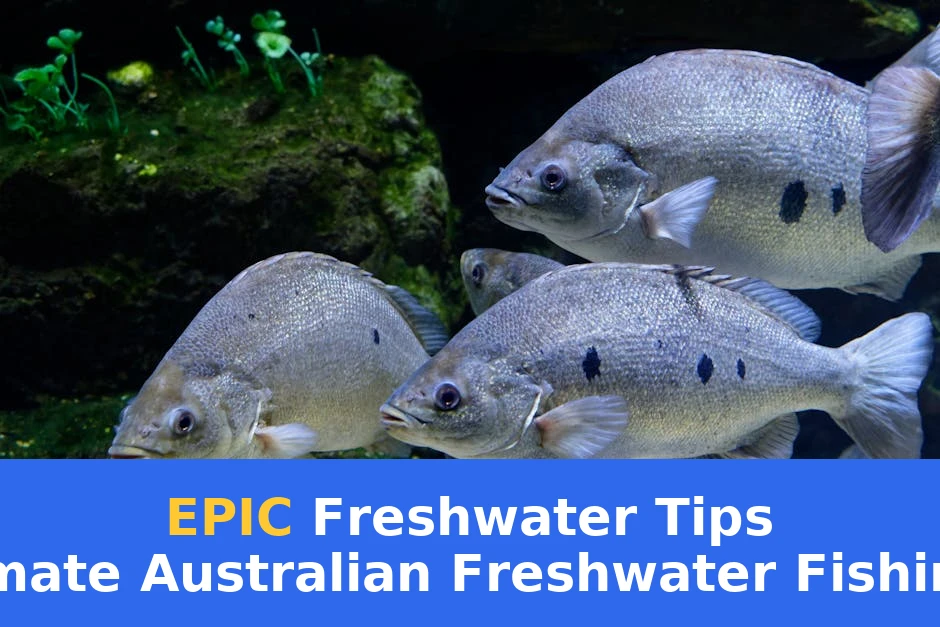
The Golden Perch (*Macquaria ambigua*), affectionately known as “Yellowbelly,” is the bread and butter of many inland anglers. They don’t grow quite as large as Cod, usually topping out around 5-8kg, but they are prolific fighters that pull hard and dive deep.
These fish are highly nomadic in river systems, often travelling hundreds of kilometres to spawn. In impoundments like Windamere Dam or Lake Keepit, they congregate around distinct structure—submerged points, standing timber, and rocky drop-offs. They are particularly responsive to vibration and sound. Blades (vibe lures), spinnerbaits, and deep-diving crankbaits are the weapons of choice here. The key is to keep the lure in the “strike zone”—usually within a metre of the bottom.
The Australian Bass
Found in the coastal rivers and estuaries from northern Victoria to Queensland, the Australian Bass (*Macquaria novemaculeata*) is a master of ambush. These fish are anadromous, meaning they live in freshwater but migrate downstream to the brackish estuaries to spawn during winter.
Fishing for Bass is a technical game of close-quarters combat. They inhabit snag-heavy, often overgrown sections of river where casting accuracy is paramount. Surface lures are particularly effective during the warmer months. There is nothing quite like the explosion of a Bass hitting a popper or fizzzer at dusk. They fight dirty, running immediately back into the snags to cut you off. You need to stop them instantly, meaning heavier gear (often 10-20lb braid) is necessary to muscle them away from the timber.
The Sooty Grunter
For those venturing into the tropical north of Queensland, the Sooty Grunter (*Hephaestus fuliginosus*) awaits. These fish are pure muscle, often found in the fast-flowing, rocky rivers of Cape York and the Wet Tropics. They are aggressive predators that eat almost anything—crayfish, insects, and smaller fish. They are renowned for their strength relative to their size. Fishing for “Sooties” often involves trekking into remote, rugged locations, making the catch feel earned. Small surface lures and shallow diving minnows are deadly here.
The “Snagged” Story (Honest Limitation)
I vividly remember a trip to Eildon Pondage a few years back. It was mid-winter, and I was convinced I had the Trout dialled in. I had rigged up exactly as I had three years prior—same leader length, same fly pattern. I spent three hours standing chest-deep in freezing water, casting until my shoulder ached. I didn’t get a single touch. Not even a nip. Meanwhile, the angler fifty metres down the bank was pulling them in one after another.
Eventually, I swallowed my pride and waded over to chat. He pointed out that the water level had been dropped significantly earlier in the week for maintenance, altering the thermal layers and pushing the fish into a completely different bay. I had relied on “memory” rather than current data. I was fishing water that the fish had vacated days ago. That trip was a humbling reminder that expertise is not a static state; it requires constant updating. Reading local fishing reports and checking real-time water levels isn’t just for tourists—it’s what keeps experts from getting skunked.
The “Paper Scale” Reference (Specific References)
In an age of digital apps and GPS, there is one resource that should never be far from your reach: the physical NSW Recreational Fishing Guide (or the equivalent for your state). This booklet, often available at bait and tackle shops or Service NSW centres, is the definitive “Paper Scale.” It lives in my glovebox.
It contains the legal size and bag limits that are strictly enforced, but more importantly, it outlines the specific gear restrictions for different waterways. For example, some sections of rivers may be designated as “Artificial Lure Only” or “Fly and Lure Only” to protect native species. Relying on a Google search that might be outdated is a risky gamble. The printed guide is your protection against unintentional poaching and a sign that you take the regulations seriously.
The Misty Morning Encounter (Personal Story)
Sometimes, the best moments on the water have nothing to do with the fish. I was once camped on the banks of a remote river in the Victorian highlands, waiting for the sun to rise enough to see my backcast. The mist was thick, clinging to the surface of the water like a blanket. The fishing was dead slow. I hadn’t had a touch in over an hour.
Just as I was about to reel in and move, a ripple broke the surface near the bank. I assumed it was a fish, but then a small, brown head popped up. It was a Platypus. It dove, popped up again, and proceeded to forage for crayfish not five metres from where I was standing. It seemed completely unaware of my presence. For ten minutes, I stood frozen in the water, watching one of Australia’s most elusive creatures go about its morning routine. When it finally dove and didn’t resurface, the magic of the moment lingered. I didn’t catch a fish that morning, but I connected with the environment in a way that no landing net could measure.
The Stewardship Promise (Closing)
The sun eventually sets over the water, painting the sky in hues of violet and burnt orange. The rod is stowed, the tackle is packed, and the silence of the evening returns. As you stand at the water’s edge one last time, the final act of the angler is not to count the catch, but to assess the impact left behind.
Freshwater fishing in Australia is a privilege granted to us by a fragile ecosystem. The rivers are lifelines, and the fish are indicators of the health of our land. To ensure these waters are teeming for the next season—and for the next generation—we must all make the Stewardship Promise. This means leaving no rubbish, picking up discarded line found in the reeds, and handling every fish with wet hands to protect their slime coat. It means respecting the regulations even when no one is watching. The true measure of a successful trip is not the weight of the esky, but the knowledge that when you drive away, the river is just as wild, just as beautiful, and just as pristine as it was when you arrived.


Be the First to Comment
Sign in to start the conversation.