
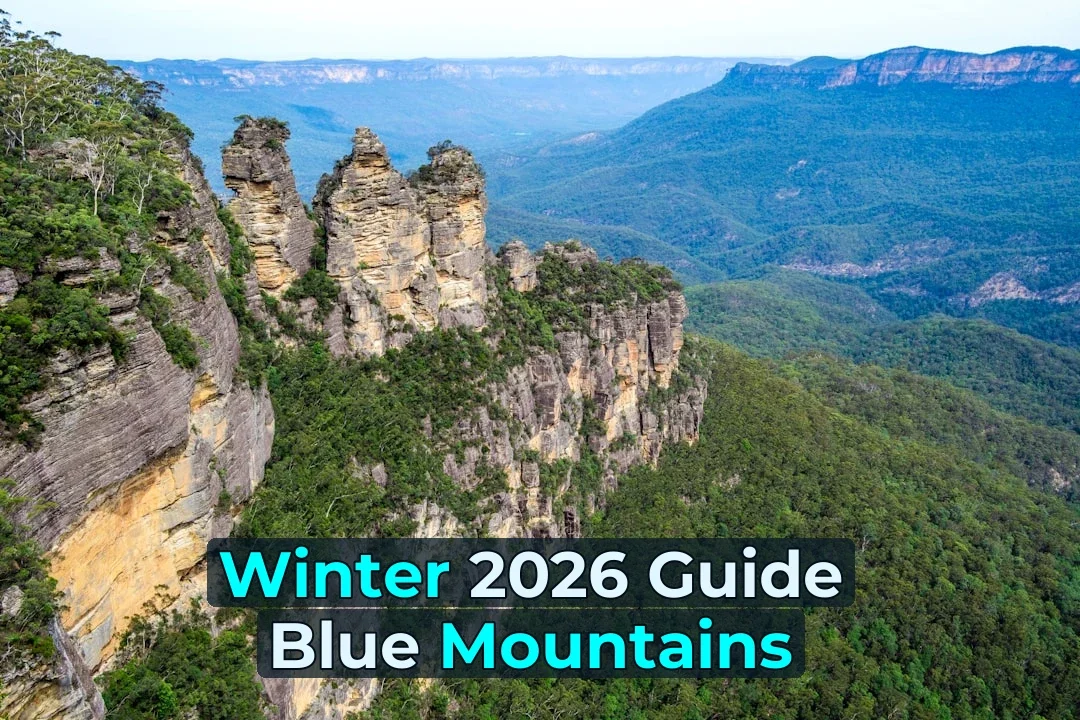
The car winds around the bend and suddenly, the world opens up into a sea of indigo. Standing at the edge of the viewing platform in Katoomba, you are greeted by the thick, eucalyptus-scented fog that clings to the jagged sandstone cliffs of the Three Sisters, a geological formation formed over 300 million years ago in the heart of New South Wales. The distinct silence is broken only by the crunch of boots on dry gum leaves and the distant cry of a kookaburra, as the first blinding burst of sunlight hits the valley floor below. This is not merely a backdrop for a photograph; it is the Blue Mountains, a vast, ancient landscape that demands respect and offers one of the most immersive hiking experiences in Australia. Whether you are seeking a gentle family stroll or a technical ascent to the summit of Mount Solitary, the preparation required for these trails is specific to this unique geological environment. This definitive guide breaks down the terrain, the ecology, and the logistics of hiking in this iconic region.
The Geology of the Trail: Understanding the Terrain
To hike the Blue Mountains effectively, one must first understand that you are walking on a foundation of Hawkesbury Sandstone. This geological reality dictates every aspect of trail difficulty and requires a specific approach to hiking trails in Australia’s most famous national park. The sandstone is layered, porous, and notoriously slippery when wet, creating conditions that can be deceptive for the unprepared.
The escarpment itself was formed by the erosion of a larger plateau, dropping roughly 900 metres down to the Nepean River system. This steep gradient is why the region is famous for its dramatic views, but it also means that many “moderate” trails involve significant elevation gain and loss over uneven surfaces.
Why Sandstone Matters for Your Feet
Unlike granite or basalt, which provide solid, predictable footing, sandstone can be friable (easily crumbled). This creates specific challenges:
* Loose Rocks: Steep sections often have loose scree that can shift underfoot, requiring constant ankle stability.
* Slippery When Wet: The porous nature of the stone holds water, making roots and rock surfaces treacherous long after rain has stopped.
* Root Systems: Eucalypt trees in this region have shallow, wide-spreading root systems that act as natural handrails but also create tripping hazards on the surface.
Safety Note: Do not underestimate the “moderate” rating of many Blue Mountains trails. A trail marked as 3-4 hours can easily take twice that time if you are navigating loose scree or dealing with sudden weather changes. Always hike with the mindset that the terrain is unstable until proven otherwise.
The Hierarchy of Access: From Family Strolls to Summit Pushes
The Blue Mountains offer a spectrum of hiking experiences tailored to different fitness levels and time constraints. Below is a practical breakdown categorized by physical exertion, ensuring you choose the right path for your group.
Tier 1: The Leisurely Lookout Walks (Family-Friendly)
These trails are less than 2km return and involve minimal elevation gain. They are ideal for families, beginners, or those with mobility restrictions (where accessible).
* Ellen Missy Reserve Lookout: A short, flat walk with stunning views of the Jamison Valley. The path is sealed and easy to navigate.
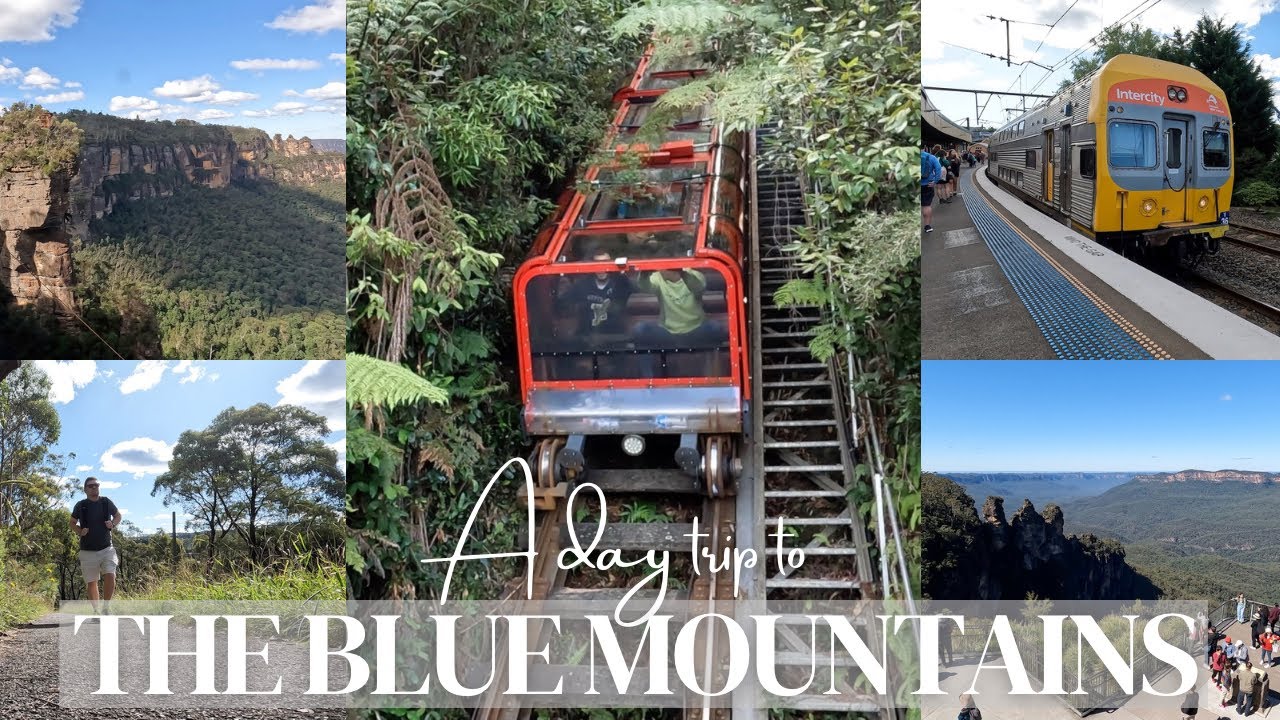
* Spectacular Point Walk: A 40-minute return walk from the Scenic Railway. It offers one of the best panoramic views of the Grose Valley without requiring any technical scrambling.
* Bulong Falls Circuit: A gentle 1km loop that takes you past a series of cascades. It’s particularly magical during the warmer months when vegetation is lush.
Tier 2: The Classic Day Hikes (Intermediate)
These hikes range from 8km to 14km return and involve significant elevation changes. They require good fitness, sturdy footwear, and at least 4-6 hours of time.
* Katoomba to Lakes (via Flooded Falls): This is the quintessential Blue Mountains hike. You start at Katoomba Falls, traverse along the cliff edge past Wentworth Falls, and finish at Lakes. The path is well-maintained but exposed to the elements.
* Grand Canyon Track: Despite its name, this is not a deep canyon but a narrow gorge between sheer cliff faces. The 4km return track features the “Balconies” and offers views of waterfalls plunging from great heights. It is steep in sections but manageable for fit hikers.
* Beehive Circuit: A 3km loop near Mount Keira (nearby) or similar circuits in the Blue Mountains like the Prince Henry Cliff Path. These involve metal ladders and chains to assist with steep descents, offering a thrilling but safe experience.
Tier 3: The Technical Ascents (Advanced)
For experienced hikers seeking solitude and challenge, these trails require navigation skills, proper gear, and often multi-day planning.
* Mount Solitary Circuit: A 10km return hike that involves scrambling over boulders and traversing ridges. The final ascent to the summit is technical and requires careful foot placement on loose rocks.
* Colongra Plateau Tracks: Less visited than the main escarpment, these trails offer dense rainforest pockets and remote waterfalls. Access requires 4WD for the final leg, making them truly “off the beaten path.”
* Mount Wilson to Mount Tomah: A multi-day or long single-day trek that traverses the deep gullies of the Nepean River system. It involves river crossings and dense bushwalking skills.
Expert Tip: Always check the NSW National Parks website for real-time track closures before heading out. Fire damage and erosion from severe storms have led to the permanent closure of several historic tracks in the Blue Mountains.
The Hidden Ecology: Beyond the Viewpoints
While the panoramic views are the primary draw, the true magic of hiking in the Blue Mountains lies in its biodiversity. This region is a refuge for rare species that have vanished from other parts of Australia. To truly experience the “unexpected discovery” of this landscape, you must look past the horizon and engage with the flora and fauna.
Seasonal Changes and Flora
The seasonal rhythm of the mountains dictates what you will see.
* Spring (September-November): This is when the waratahs (*Telopea speciosissima*) bloom. Keep an eye out for them along the edges of forested trails, particularly on the Colongra Plateau. The air is thick with the scent of eucalyptus oils released by the heat.
* Autumn (May-August): The eucalyptus leaves are most fragrant during this cooler period. The mountain ash trees shed their bark, creating a mosaic of white and brown that contrasts with the deep greens.
Wildlife Viewing: Ethical Observation
Hikers are often lucky enough to spot iconic Australian wildlife, but ethical viewing is paramount.
| Species | Habitat | Viewing Tip |
| :— | :— | :— |
| Regent Honeyeater | Dense dry sclerophyll forests | Look for them in flowering bloodwood trees. Listen for their distinct, flute-like calls. |
| Giant Burrowing Frog | Damp gullies and near waterfalls | Nocturnal; best observed during guided night walks. Do not handle due to skin-secretions. |
| Bare-nosed Wombat | Cave systems and steep slopes | Early morning or late evening. Do not feed them; they are wild animals. |
Did you know: The Blue Mountains are home to the largest population of threatened species in NSW, including the Regent Honeyeater and the Broad-shanked Bat. Your presence on the trail directly impacts their habitat, making quiet movement essential.
Note: When photographing wildlife, never use flash or bait. Keep a respectful distance and never alter the trail to get closer to an animal.
The Practical Toolkit: Gear, Safety, and Logistics
Hiking the Blue Mountains requires more than just enthusiasm; it demands specific preparation. The environment here is unique, with sudden weather changes and sporadic cell service in the valleys.
Essential Gear
1. Sturdy Ankle Support: Due to the loose sandstone and uneven roots, high-ankle boots are non-negotiable. Trail runners may suffice for Tier 1 trails, but for any ridge walking, boots are essential.
2. Layered Clothing: The weather in the mountains changes rapidly. A waterproof shell layer is crucial, even on sunny days, as fog and rain can roll in within minutes.
3. Navigation Tools: Cell service is unreliable in the deep valleys. Carry a physical map and a compass, or use offline maps on your phone (e.g., AllTrails or Gaia GPS) downloaded before you arrive.
4. First Aid Kit: Include blister treatment, antiseptic, and bandages. Snake bites are rare but possible; know the location of the nearest phone signal if hiking alone.
The Sunrise Protocol
For those aiming to capture the sunrise at Echo Point or Kanangra-Boyd, logistics are key.
* Arrival Time: Get to your viewpoint 45 minutes before dawn. Parking at popular spots like Echo Point fills up by 3am in peak season.
* Temperature: Valley floors can be 10-15 degrees cooler than the city. Wear thermal layers and windproof jackets.
* Photography Angle: To avoid crowds, position yourself to the side of the main viewing platform. The light hits the Three Sisters from the east, so early morning offers soft, diffused lighting ideal for photography.
Safety Protocols
* Sudden Weather Changes: Thunderstorms are common in summer. If you hear thunder, descend from ridges immediately. Avoid metal railings and large trees during lightning storms.
* Hydration: Carry more water than you think you need (minimum 2 litres for day hikes). The dry eucalyptus air can dehydrate you faster than you realize.
* Emergency Contacts: Save the National Parks Emergency Helpline number (1800 679 274) in your phone.
Warning: Do not attempt to swim in waterfalls without checking local signage. Many hidden pools have submerged rocks, strong currents, or sudden drops that can cause serious injury. Always respect the “No Swimming” signs.
The Mistake: False Summits and Mental Resilience
No guide to hiking in the Blue Mountains is complete without acknowledging a common pitfall: the false summit. Early in my hiking career, I underestimated this psychological challenge on a trip to Mount Solitary.
I had climbed what appeared to be the final ridge, my lungs burning and legs heavy with fatigue. I pushed through the last few metres of scrambling, only to crest the top and see another, higher peak looming ahead. The frustration was palpable. My group fell silent, the joy of the view replaced by the sheer effort required to continue.
This is a common experience in this region. The complex topography of the sandstone creates multiple ridges and peaks that can mislead even experienced hikers. The lesson learned was not about physical fitness, but mental resilience. When you encounter a false summit:
1. Pause and Breathe: Acknowledge the disappointment. It is valid.
2. Reassess: Look at your map. Is there a flatter traverse to the next point, or is a steep climb unavoidable?
3. Regroup: Use this time to hydrate and check gear before the final push.
Resilience is as important as stamina here. The mountains will test your determination, and the reward of reaching a true summit is far greater when you have persisted through deception.
The Secret Waterfall Spot: A Responsibility of Solitude
For those willing to venture off the main trails, there are hidden gems that offer solitude and raw beauty. One such spot is a lesser-known waterfall accessible via an unmaintained track near the Colongra Plateau.
Finding it requires a difficult, unmaintained descent through dense scrub. The track is not marked on standard maps and requires careful navigation using a GPS device. However, the reward is a moss-covered rock pool fed by a cascading waterfall, surrounded by ancient ferns and the sound of rushing water.
Expert Tip: This area is fragile. The moss and ferns are easily damaged by foot traffic. Stick to the existing path, even if it is overgrown, and do not create new shortcuts. Your desire for solitude comes with the responsibility of preserving this ecosystem for others.
Visiting such places is not about claiming them as “secret” but about respecting their fragility. Leave no trace, pack out all waste, and never collect plants or rocks as souvenirs.
Conclusion: Witnessing the Ancient Landscape
As you pack your bag for your next adventure in the Blue Mountains, remember that this is not just another hiking destination. It is an ancient landscape that has stood for millions of years, witnessing the rise and fall of species, the changing climate, and the arrival of humans.
Walking through these trails is a privilege. It connects you to the land in a way that driving or viewing from afar never can. The sensory details—the scent of eucalyptus, the crunch of sandstone, the cool mist—become part of your memory.
As you plan your journey, adopt a “Leave No Trace” ethic as your primary souvenir. Pack out all waste, stay on marked trails, and respect wildlife. By doing so, you ensure that these trails remain pristine for future generations of hikers.
The mountains are not waiting to be conquered; they are waiting to be witnessed. Choose your path wisely.
Frequently Asked Questions
What makes the Blue Mountains terrain unique and challenging for hikers?
The Blue Mountains are built on Hawkesbury Sandstone, which is layered, porous, and friable. Unlike solid granite, this sandstone creates specific hazards such as loose scree that shifts underfoot and surfaces that remain treacherous long after rain due to the stone’s porosity. Additionally, eucalypt trees have shallow, wide-spreading root systems that create tripping hazards. These factors mean ‘moderate’ trails often involve significant elevation changes and require constant ankle stability, demanding respect for the unstable ground until proven otherwise.
What are the best family-friendly hiking options in the Blue Mountains?
For families and beginners, Tier 1 trails offer less than 2km return distances with minimal elevation gain. Recommended walks include the Ellen Missy Reserve Lookout, which features a sealed, flat path with views of Jamison Valley. Spectacular Point Walk is another excellent choice, offering a 40-minute return from the Scenic Railway with panoramic views of the Grose Valley without technical scrambling. For a gentle nature experience, the 1km Bulong Falls Circuit provides a loop past cascades, particularly beautiful during warmer months when vegetation is lush.
What gear is essential for hiking in the Blue Mountains?
Due to loose sandstone and uneven roots, high-ankle boots are non-negotiable for ridge walking. You must wear layered clothing with a waterproof shell, as weather changes rapidly and fog can roll in quickly. Navigation tools are critical because cell service is unreliable in deep valleys; carry a physical map, compass, or offline maps via apps like AllTrails. Finally, pack a first aid kit including blister treatment and antiseptic, and ensure you know the location of your nearest phone signal for emergencies.
When is the best time to visit for specific flora and wildlife viewing?
Timing your hike with seasonal changes enhances the experience. Spring (September-November) is ideal for seeing blooming waratahs (*Telopea speciosissima*) along forested trails like the Colongra Plateau. Autumn (May-August) offers fragrant eucalyptus leaves and striking mountain ash bark contrasts. For wildlife, look for Regent Honeyeaters in flowering bloodwood trees and Bare-nosed Wombats during early morning or late evening. Remember to observe ethically, keeping distance and never using flash or bait.
What are the safety protocols and emergency contacts for Blue Mountains hikes?
Always check the NSW National Parks website for real-time track closures due to fire or storm damage. In summer, thunderstorms are common; descend ridges immediately if you hear thunder and avoid metal railings. Carry a minimum of 2 litres of water per day hike, as dry air causes rapid dehydration. Save the National Parks Emergency Helpline number (1800 679 274) in your phone. Never swim in waterfalls without checking signage, as hidden pools may have strong currents or submerged rocks.


Be the First to Comment
Sign in to start the conversation.