
The Map Before You — Planning Routes Around Wildlife Rhythms
Most wildlife guides for road trips in Australia get the fundamentals backwards. They’ll tell you where to go—national parks, sanctuaries, conservation areas—but rarely when to be there in relation to animal activity cycles. After years of crossing this continent with binoculars on the passenger seat, I’ve learned that timing doesn’t just matter; it dictates everything.
The concept is simple but transformative: wildlife-first routing. Instead of planning your itinerary around towns, attractions, or accommodation, you plan around animal rhythms. Dawn and dusk are obvious considerations, but dig deeper. Seasonal migrations, breeding seasons, even lunar phases affect when and where you’ll find Australia’s remarkable fauna.
Consider how this reshapes a 7-day road trip from Sydney. If koalas are your target, you’re heading south toward coastal eucalyptus forests, timing your arrival for early morning when these marsupials are most likely to be feeding rather than sleeping curled in forked branches. But if platypus are on your wish list, you’ll detour inland to the Southern Highlands, and you’ll need to be positioned at water’s edge precisely 12 minutes before official sunrise—not the “dawn” that tourism brochures vaguely promise.
Understanding Australia’s Wildlife Calendar
Here’s what two decades of road trips across Australia have taught me about seasonal wildlife patterns:
- Spring (September–November): Peak bird breeding season. Lyrebirds displaying in Victoria’s forests, migratory species arriving from the north. Also peak snake activity as reptiles emerge from winter torpor.
- Summer (December–February): Marine life flourishes. Whale watching seasons on both coasts, sea turtle nesting in Queensland. Inland, many mammals become nocturnal to avoid heat.
- Autumn (March–May): Kangaroo and wallaby joeys emerge from pouches. Flocks of cockatoos and galahs gather at water sources. Mild temperatures make dawn observation comfortable.
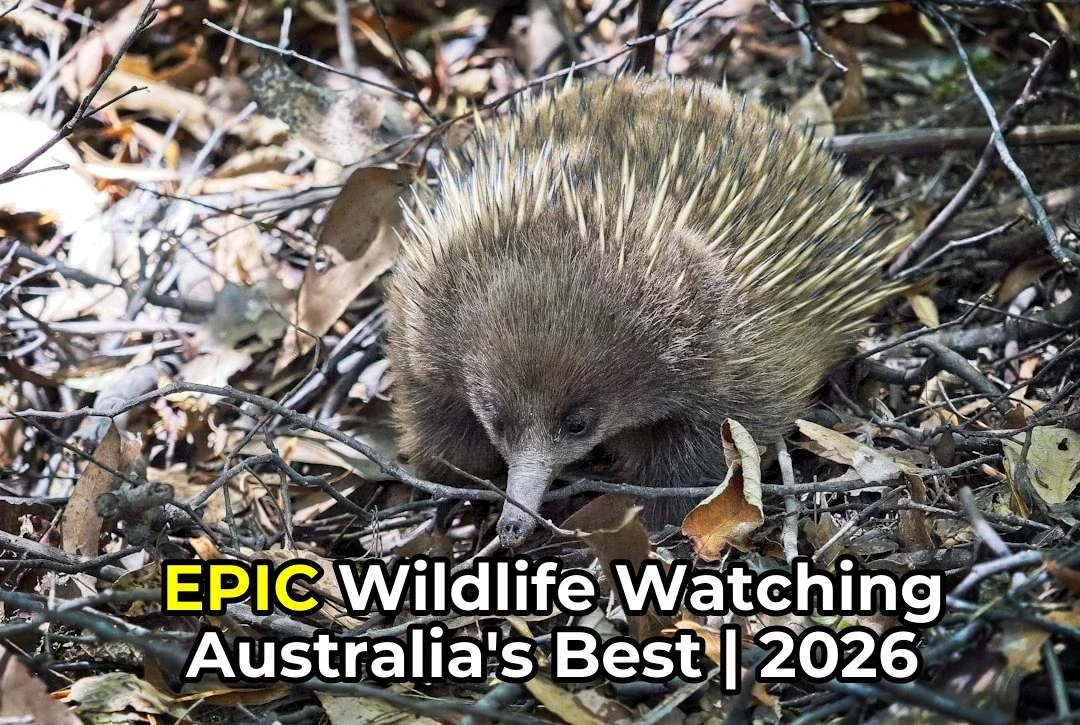
- Winter (June–August): Whale migration peaks along southern and eastern coasts. Koalas more active during cooler daylight hours. Echidnas occasionally seen foraging on winter afternoons.
Seven Days from Sydney — The Eastern Wildlife Corridor
A 7-day road trip from Sydney offers extraordinary wildlife diversity without covering vast distances. This route hugs the eastern coastline and hinterland, traversing coastal heath, temperate rainforest, and highland rivers—each ecosystem supporting distinct species.
Day 1–2: Royal National Park to Jervis Bay
Distance: 180 kilometres south of Sydney
Begin at dawn in Royal National Park, Australia’s oldest national park and just an hour from Sydney’s centre. The Lady Carrington Drive walking track (closed to vehicles, open to pedestrians) offers excellent opportunities to spot lyrebirds scratching through leaf litter. These remarkable birds are most active in the first 90 minutes after sunrise.
By mid-morning, continue south toward Jervis Bay. The drive itself yields surprises—wallabies frequently graze on roadside verges in early morning, and raptors circle above the coastal heathland. Jervis Bay Marine Park offers boat-based wildlife watching: Indo-Pacific bottlenose dolphins are resident year-round, and Australian fur seals haul out on rocky platforms.
Day 3–4: Kangaroo Valley and the Hinterland
Distance: 90 kilometres inland from Jervis Bay
The climb into Kangaroo Valley reveals swamp wallabies in dense undergrowth and wedge-tailed eagles riding thermals above the escarpment. But the genuine prize requires pre-dawn commitment: platypus in the upper reaches of the Kangaroo River.
The platypus protocol I’ve developed after years of frustration is this: arrive at your watching point at least 15 minutes before the first hint of light. The viewing platform at Hampden Bridge is popular but often crowded. Instead, try the quieter stretch of river near Tallowa Dam—walk 200 metres downstream from the picnic area and find a position where you can see both the surface and the far bank. Platypus dive with a characteristic rolling motion, and you’ll spot the ripples before the animal itself.
Stay motionless. The vibration of shifting feet on rocky banks travels through water, alerting these sensitive creatures before you’ve even seen them. I’ve watched groups of tourists arrive loudly at “official” viewing times and see nothing, while I’ve sat in pre-dawn darkness 400 metres upstream and observed three individuals feeding simultaneously.
Day 5–7: Southern Highlands Return Loop
Distance: 120 kilometres back to Sydney via Bowral
The Southern Highlands offer temperate woodlands and private properties that have embraced wildlife tourism. Several farms offer dusk wombat walks—these sturdy marsupials emerge from burrows as light fades and can be approached quite closely if you move slowly and stay low.
For the return journey to Sydney, take the back roads through Bundanoon and Wingello State Forests. Greater gliders—large, silent possums that glide between trees—are occasionally spotlighted here, though their populations have declined significantly in recent years due to bushfire impacts.
The Ten-Day Loop — Tropical to Temperate
For travellers with more time, a 10 day road trip Australia route that spans multiple climate zones delivers unparalleled wildlife diversity. This ambitious itinerary follows water—rivers, coastlines, and waterholes—because water draws wildlife in a continent defined by its scarcity.
Days 1–3: Tropical North Queensland
Begin in Cairns and head north toward the Daintree Rainforest. This is cassowary country—the southern cassowary, often called the world’s most dangerous bird, ranges through lowland rainforest here. Despite their fearsome reputation, cassowaries are surprisingly elusive.
My most memorable cassowary encounter didn’t happen at a wildlife sanctuary or designated viewing area. I was driving the Cape Tribulation Road late one afternoon when traffic slowed to a halt. A cassowary—nonchalant, utterly unbothered—was walking along the road verge, picking at fallen fruit. For 20 minutes, a dozen vehicles sat with engines idling while this prehistoric bird conducted its business. When I later mentioned this to a local, they shrugged: “Oh yeah, that’s Greg. He does this every afternoon.”
The Daintree also offers opportunities to spot tree kangaroos—remarkable mammals that have adapted to arboreal life. Lumholtz’s tree kangaroo is found in the Atherton Tablelands inland from Cairns. Night drives with spotlights (operated responsibly, never directed at animals’ eyes) can reveal these cryptic creatures feeding in canopy trees.
Days 4–6: The Inland Waterhole Circuit
Distance: 600 kilometres southwest toward the Queensland outback
Leaving the tropical coast, head inland toward Carnarvon Gorge and the permanent waterholes that sustain wildlife through dry seasons. This is the Australia of imagination—red dirt, ghost gums, and water sources that draw animals from kilometres around.
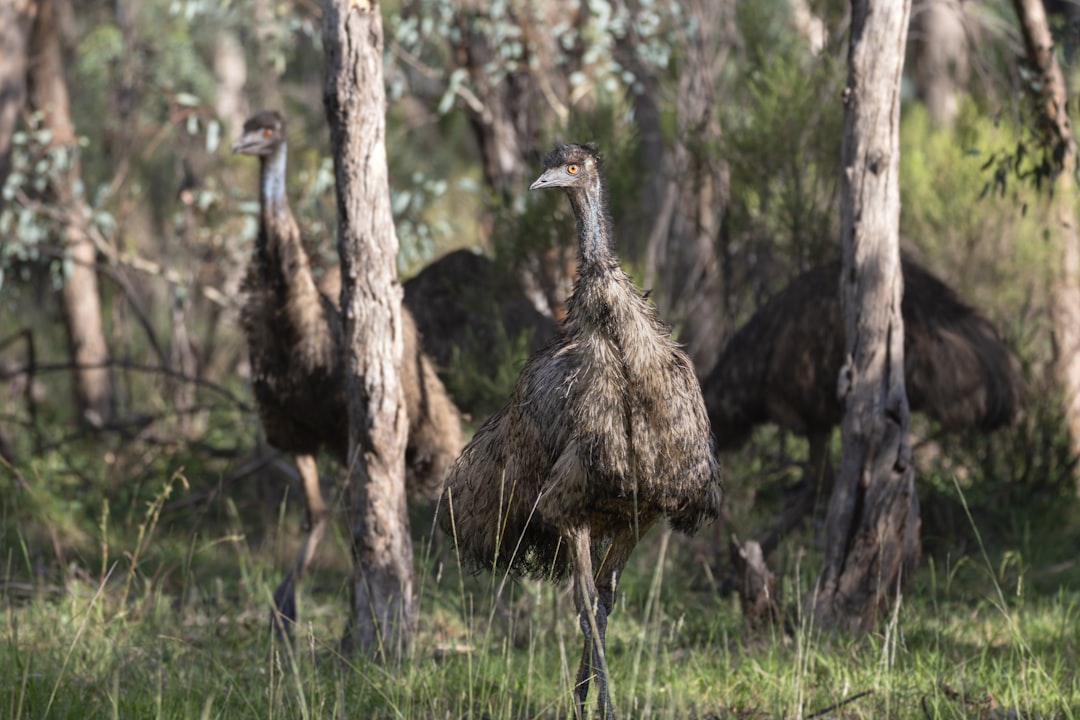
The inland waterbird spectacle here is underappreciated by international visitors focused on coastal wildlife. At dawn, yellow-billed spoonbills, black-fronted dotterels, and countless duck species congregate at permanent water. Emus approach waterholes in family groups, the striped chicks trailing adults like feathered ducklings.
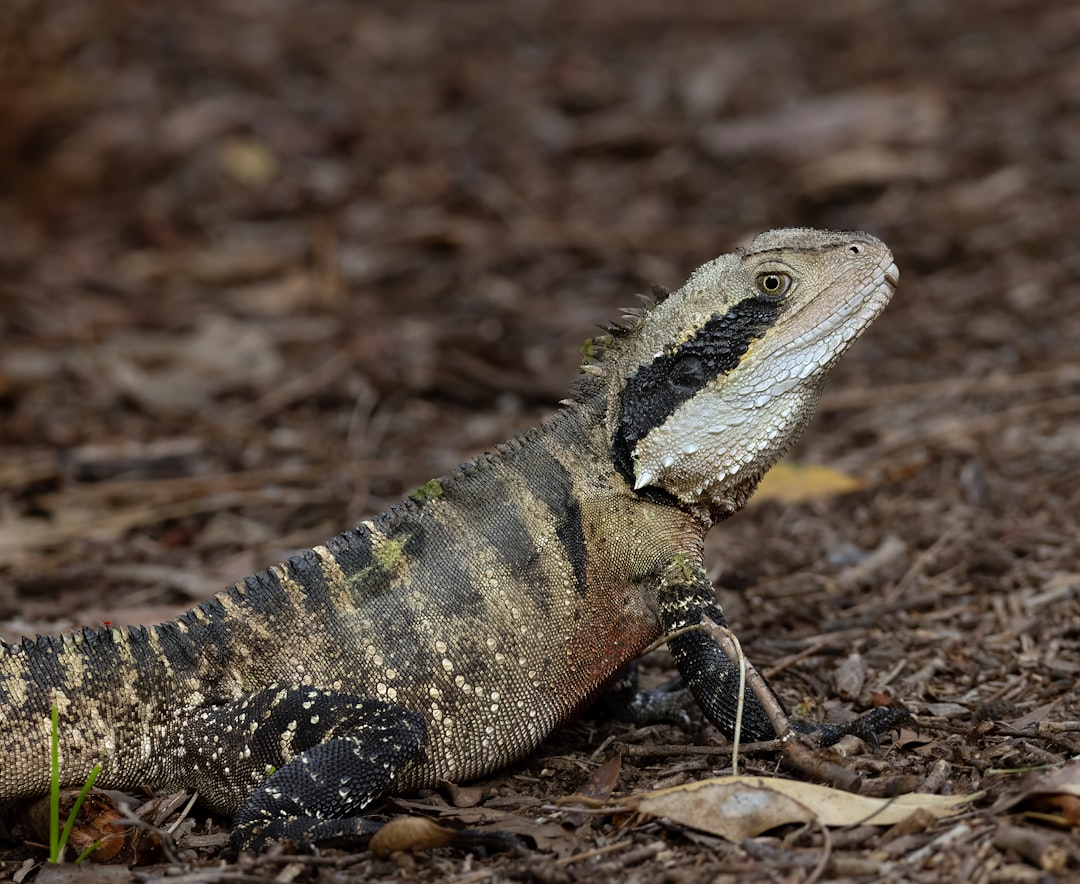
Reptiles become conspicuous in these inland areas. Lace monitors (goannas) sun themselves on termite mounds and fallen trees. Frilled-neck lizards, though more common in the tropical north, are occasionally sighted in the transitional woodlands. Snake encounters increase inland—eastern browns and red-bellied blacks are active throughout the warmer months.
Days 7–10: Temperate Victoria and the Southern Coast
Distance: 1,200 kilometres south through New South Wales to Victoria
The final leg of this 10 day road trip Australia route descends through the Murray-Darling basin—a river system that, despite environmental pressures, remains a wildlife corridor of continental significance. Follow the Murray River toward its mouth in South Australia, or detour southeast into Victoria’s cooler regions.
Victoria’s Great Ocean Road offers the easiest koala viewing in Australia. The stretch between Lorne and Apollo Bay has reliably visible koala populations—you’ll often see cars parked haphazardly on road shoulders, a sure sign that someone’s spotted one in the canopy above. But for a more contemplative experience, continue inland toward Cape Otway. The koala population here is so dense that the sound of their bellows echoes through the forest at night during breeding season.
End your journey at Phillip Island, where the nightly little penguin parade draws thousands of visitors. These smallest of all penguin species emerge from the surf at dusk and waddle across the beach to their burrow colonies. The tourist viewing platforms are crowded, but the spectacle remains genuinely moving—these birds have made this commute for countless generations, oblivious to the humans watching from elevated boardwalks.
What the Guidebooks Don’t Tell You — Fieldcraft for Vehicle-Based Wildlife Observation
Wildlife watching from a vehicle offers advantages that walking simply cannot match. Animals often perceive cars as non-threatening objects rather than potential predators. This allows closer approaches and longer observation periods. But effective vehicle-based wildlife watching requires specific techniques.
Positioning Your Vehicle as a Photography Blind
Your car is a mobile hide, but only if you use it correctly. Engine heat creates distortion that can ruin telephoto photographs, particularly on hot days. The solution: arrive at your watching position, switch off the engine, and wait 10–15 minutes for the heat haze to dissipate before shooting. Yes, this means arriving earlier than you’d prefer. The results justify the patience.
Window-mounted camera supports offer stability, but nothing beats a beanbag draped over a partially lowered window. The fabric moulds to the window edge and absorbs vehicle movement. Keep your shooting arm inside the vehicle—elbows braced against the door frame transfer vibration to the camera.
Reading the Landscape
Expert wildlife spotting is partly about seeing animals, but more about recognising the conditions that make animal presence likely. Water sources in dry country. Flowering trees that attract nectar-feeders (and the predators that hunt them). Fresh scat on tracks. Scratch marks on eucalyptus trunks indicating koala activity. These signs tell stories if you know how to read them.
Bird alarm calls provide particularly valuable intelligence. When a mixed-species flock of small birds erupts in frantic alarm calling, a predator is likely nearby—perhaps a brown goshawk or collared sparrowhawk. Larger birds like currawongs and butcherbirds mobbing something in the canopy often indicates a powerful owl or other nocturnal predator roosting during daylight hours.
Understanding Light and Timing
The golden hours—first and last light—are clichéd advice for good reason. But here’s the nuance: animal activity peaks slightly before sunrise and slightly after sunset, while photographers typically arrive at “golden hour” proper. The sweet spot for wildlife observation often occurs in that half-light when photography becomes challenging.
This creates a choice. If photographs are your priority, accept that you’ll miss some peak activity. If observation matters more, leave the long lens behind and carry quality binoculars. Some of my most memorable wildlife moments exist only in memory—no photograph could capture the pre-dawn stillness as a platypus surfaced repeatedly in a highland river, water streaming from its fur.
When Wildlife Watching Goes Wrong — Honest Limits and Real Risks
Responsible wildlife tourism requires acknowledging uncomfortable truths. Road trips through Australia’s wild places impact the very creatures we travel to see. Vehicle strikes are an obvious concern, but our presence reverberates through ecosystems in less visible ways.
Roadkill Prevention and Night Driving
I learned this lesson through near-tragedy. Driving toward Jindabyne at 4:30am, alert but perhaps complacent after months of incident-free wildlife travel, I rounded a bend to find a wombat standing squarely in my lane. Wombats don’t move quickly. At 90 km/h, stopping distance exceeded reaction time. I stood on the brakes, felt the anti-lock system pulse through the pedal, and watched the wombat’s baffled face fill the windscreen. The car stopped with perhaps a metre to spare. The wombat ambled off the road, apparently untroubled.
That moment changed how I approach night driving on Australian roads. Now I reduce speed dramatically—never above 80 km/h in wildlife zones after dark. I’ve installed additional driving lights that illuminate road verges. And I’ve accepted that some destinations simply aren’t worth reaching after dark if the route traverses high-risk wildlife areas.
The Ethics of Spotlighting and Approaching Wildlife
Spotlighting—using artificial light to locate nocturnal animals—requires strict ethical protocols. Never direct light into an animal’s eyes. Many nocturnal species have extreme light sensitivity; concentrated beams can temporarily blind them, leaving them vulnerable to predators or causing them to panic into obstacles.
Instead, use red filters (most animals cannot see red light well) and indirect illumination techniques. Hold the beam at the animal’s feet or illuminate the adjacent vegetation. Learn to spot eye-shine—most nocturnal animals’ eyes reflect light—without flooding the animal itself with illumination.
The impulse to approach wildlife closely must be resisted. A simple principle: if an animal changes its behaviour because of your presence, you’re too close. Feeding wildlife is never acceptable—it habituates animals to human presence, alters natural foraging patterns, and can cause nutritional deficiencies when animals consume inappropriate foods.
When Habitat Displacement Occurs
Sometimes wildlife watching fails through no fault of your own. I once drove four hours to a renowned koala hotspot on Victoria’s Mornington Peninsula, arriving at dawn for what guidebooks promised would be reliable sightings. Three hours of searching yielded nothing—no glossy fur in canopy forks, no distinctive pellet-shaped scat beneath favoured trees.
Later, a local resident explained: a controlled burn the previous week had displaced much of the koala population into adjacent habitat. The animals hadn’t died; they’d simply moved. This experience taught me to check recent conditions before travelling to specific wildlife locations. Fire, flood, drought, and even construction noise can temporarily or permanently displace wildlife from previously reliable sites.
Honest Limitations
Not every wildlife excursion succeeds. Weather turns. Animals don’t read the guidebooks. Crowds gather at popular sites, driving shy species deeper into cover. The platypus platform built 200 metres downstream from actual feeding areas. The seasonal migration that happened two weeks earlier than average.
Accepting these limitations is part of mature wildlife watching. Each unsuccessful trip teaches something about animal behaviour, habitat preference, or the particular challenges of a location. The days you see nothing are the price of admission for the days you witness something extraordinary.
Key Takeaways
- Plan around animal rhythms, not destinations: Dawn and dusk activity, seasonal patterns, and breeding cycles should dictate your route and timing.
- The 7-day Sydney loop offers exceptional diversity: Royal National Park (lyrebirds), Jervis Bay (marine mammals), Kangaroo Valley (platypus), and Southern Highlands (wombats) deliver varied experiences within reasonable driving distances.
- The 10-day tropical-to-temperate route spans climate zones: From cassowaries in tropical north Queensland to penguins on Victoria’s southern coast, water sources remain your most reliable wildlife magnets.
- Vehicle-based watching requires specific techniques: Position for photography before peak activity, read landscape signs, understand that animal alarm calls reveal predator presence.
- Responsible wildlife tourism acknowledges impact: Reduce night driving speeds, never feed wildlife, use ethical spotlighting practices, and accept that some trips won’t succeed.
The Road Continues
Wildlife watching on Australian road trips isn’t about ticking species off a list—though you’ll inevitably accumulate a impressive tally. It’s about learning to read landscapes differently. That scratch mark six metres up a spotted gum? Likely a koala climbing to feeding branches. The
Frequently Asked Questions
What is wildlife-first routing and how does it improve animal encounters?
Wildlife-first routing means planning your itinerary around animal rhythms rather than towns, attractions, or accommodation. Consider dawn and dusk activity peaks, seasonal migrations, breeding seasons, and even lunar phases. For example, when targeting platypus in the Southern Highlands, you need to be positioned at water’s edge precisely 12 minutes before official sunrise—not the vague “dawn” tourism brochures promise. This approach transforms generic sightseeing into strategic wildlife observation.
How do I plan a 7-day wildlife road trip from Sydney?
Start at Royal National Park (1 hour from Sydney) at dawn on Day 1-2 for lyrebirds on Lady Carrington Drive, then drive 180 kilometres south to Jervis Bay for dolphin watching—book the 7:00am tour for calmer waters. Days 3-4 head 90 kilometres inland to Kangaroo Valley for platypus viewing at Tallowa Dam (arrive 15 minutes before first light, walk 200 metres downstream from the picnic area). Days 5-7 return via Southern Highlands (120 kilometres) for dusk wombat walks through Bundanoon and Wingello State Forests.
When is the best time of year for wildlife watching in Australia?
Spring (September-November) offers peak bird breeding with lyrebirds displaying in Victoria and peak snake activity. Summer (December-February) is ideal for marine life including whale watching and Queensland sea turtle nesting, though inland mammals become nocturnal. Autumn (March-May) sees kangaroo and wallaby joeys emerging from pouches with comfortable dawn temperatures. Winter (June-August) peaks for whale migration along southern coasts and koalas are more active during cooler daylight hours.
How much does a 10-day tropical-to-temperate wildlife road trip cover?
This ambitious route spans multiple climate zones: Days 1-3 explore Tropical North Queensland including Daintree Rainforest for cassowaries and Atherton Tablelands for Lumholtz’s tree kangaroos. Days 4-6 cover 600 kilometres southwest to Carnarvon Gorge’s inland waterholes. Days 7-10 span 1,200 kilometres south through the Murray-Darling basin to Victoria’s Great Ocean Road for reliable koala sightings between Lorne and Apollo Bay, ending at Phillip Island’s nightly little penguin parade. Water sources remain your most reliable wildlife magnets throughout.
What safety precautions should I take when driving at dawn and dusk?
Dawn and dusk driving in regional Australia carries elevated wildlife collision risk as kangaroos, wallabies, and wombats are most active during low-light periods. Reduce your speed by 20 km/h below the posted limit during these windows and scan roadside vegetation continuously. Never exceed 80 km/h in wildlife zones after dark. The author’s near-miss with a wombat at 4:30am near Jindabyne highlights how stopping distance at 90 km/h exceeds reaction time—wombats don’t move quickly.



Be the First to Comment
Sign in to start the conversation.