
Australia Ranks Among the Top 5 Most Instagrammed Countries Globally, Yet 73% of Photographs Tagged #BlueMountains Were Taken From Just Three Locations
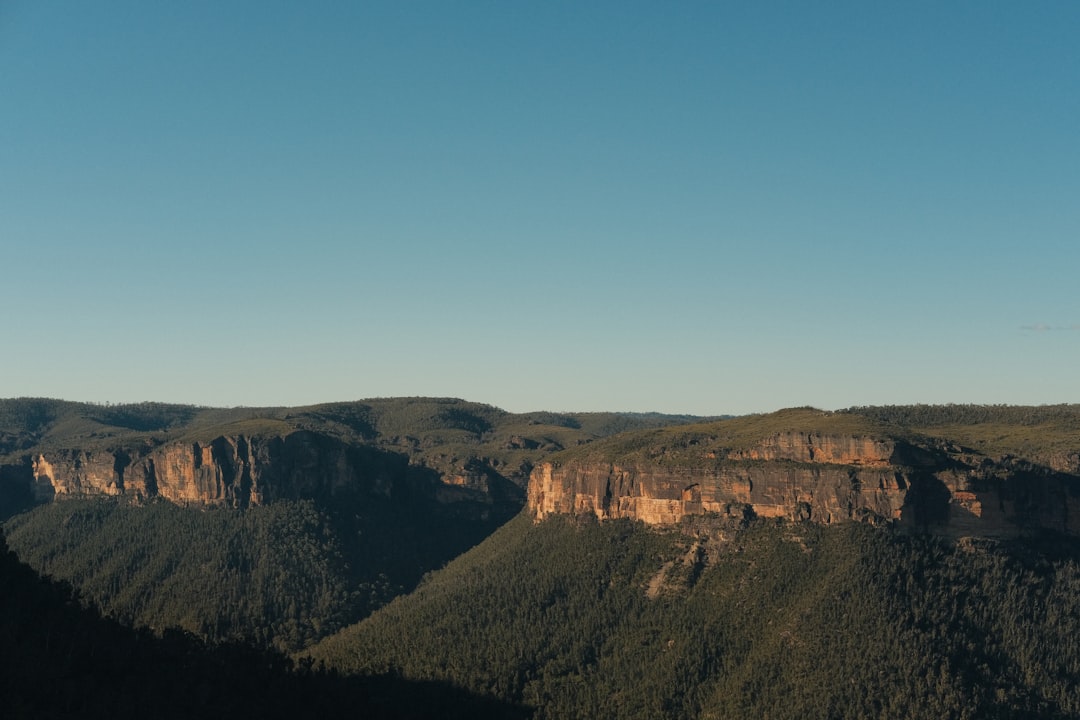
Echo Point, Govetts Leap, and Scenic World—these are the triumvirate of Blue Mountains photography, and while they’re popular for good reason, they represent a fraction of what this World Heritage-listed region offers. The Blue Mountains, located in New South Wales approximately 100 kilometres west of Sydney, encompasses over one million hectares of sandstone plateaux, deep gorges, and eucalyptus forest that creates the distinctive blue haze giving the region its name. For photographers willing to venture beyond the postcard shots, an entirely different world awaits—one where the light behaves uniquely, where compositions reveal themselves only after hours of walking, and where the intersection of technical skill and local knowledge transforms snapshots into gallery-worthy work. This guide is for those who want to join the 27% shooting outside the obvious locations.
Understanding Australian Light: The Counterintuitive Foundation
Before we discuss a single location, we need to address something most photography guides overlook: Australian light doesn’t behave like light in the Northern Hemisphere. This isn’t romanticism—it’s physics, and understanding it will fundamentally change how you approach landscape photography in the Blue Mountains.
Why Australian Light Is Different
Australia’s proximity to the equator combined with the thinning ozone layer over the continent creates UV intensity unlike anywhere else in the world. This affects your photographs in several ways: colours appear more saturated but also more prone to blown highlights, atmospheric haze is more pronounced even on “clear” days, and the quality of golden hour extends longer but with different characteristics than European or North American locations.
The southern hemisphere sun angles also mean that north-facing subjects—which in the Northern Hemisphere would be backlit—receive direct illumination. In the Blue Mountains, many of the iconic canyon views face south-east, meaning morning light often creates dramatic side-lighting rather than the direct frontal illumination many photographers expect.
The Golden Hour That Lasts Longer
This extended golden hour is a gift for photographers, but it requires recalibration of your expectations. I learned this the hard way at Wentworth Falls. Having calculated my arrival for “golden hour” based on years of shooting in Europe, I reached the main lookout at 4:30 PM in July—only to discover the entire canyon had been in deep shadow since 3:47 PM. The sun dips below the canyon rim earlier than you’d expect, and once it does, the temperature drops dramatically and the light quality shifts from golden to blue-grey within minutes.
Month-by-Month Light Quality in the Blue Mountains
- December-February (Summer): Harsh overhead light during midday hours. Haze is significant. Best shooting: 5:30-7:30 AM, 6:30-8:00 PM. Expect crowded lookouts.
- March-May (Autumn): Arguably the best season for photography. Softer light, reduced haze, comfortable temperatures for longer hikes. Golden hour quality is exceptional.
- June-August (Winter): Long golden hours, crisp air with minimal haze, but very cold mornings. Best for moody, atmospheric work. Crowds are minimal.
- September-November (Spring): Variable conditions. Wildflowers add foreground interest. Weather changes rapidly—be prepared for four seasons in one day.
The Three Tiers of Blue Mountains Access: Organised by Physical Demand
Most photography guides organise locations by “skill level,” which I’ve always found unhelpful. Your ability to operate a camera doesn’t determine where you can go—your fitness and available time do. Here’s a different approach: locations organised by the physical commitment required to reach them.
Tier 1 — Wheelchair to Tripod: Accessible Lookouts with Sophisticated Compositions
Accessibility doesn’t mean photographic compromise. Some of the most sophisticated compositions in the Blue Mountains require minimal walking, and dismissing these locations means missing images that simply aren’t available from more remote vantage points.
Cahills Lookout, located on the western approach to Wentworth Falls, offers something Echo Point doesn’t: a genuine sense of the canyon system’s scale. The Boars Head Rock formation provides a natural foreground element that anchors compositions, and because this lookout faces west, it’s one of the few major viewpoints where afternoon light actually works in your favour.
Lincoln’s Rock in Wentworth Falls has become popular for the “sitting on the edge” photograph, but photographers who arrive at dawn (before the Instagram crowds) will find exceptional opportunities for long-exposure work as morning mist fills the Jamison Valley. The rock shelf itself provides strong geometric lines for foreground interest.
Tier 2 — The 2km Threshold: Moderate Fitness, Exponential Results
This is where photography in the Blue Mountains transforms from observation to immersion. Locations requiring 30-60 minutes of walking each way filter out 90% of visitors, and the compositions available reflect this.
Leura Cascades offers something rare in the Blue Mountains: intimate waterfall photography within a relatively short walk from the car. The cascades themselves are photogenic, but the real prize is the rainforest microclimate that surrounds them. On overcast days, this location excels—the diffuse light eliminates harsh contrast, allowing the greens of tree ferns and the texture of water-worn sandstone to become your subjects.
Valley of the Waters, accessible from Wentworth Falls, is where diversity of subject matter peaks. Within a 2km descent, you’ll encounter four named waterfalls, each with distinct character. The return climb is steep (count on 45-60 minutes), but for waterfall photographers, this is arguably the best concentration of subjects in the entire region.
Tier 3 — Earned Views: Multi-Hour Treks for Solitary Compositions
Mount Hay requires commitment: a 4WD track to the trailhead, followed by a 3-4 hour return walk across exposed heathland. Your reward is a 360-degree panorama that includes the Grose Valley, Mount Banks, and on clear days, the Sydney skyline. More importantly, you’ll almost certainly have this location to yourself. The composition options are overwhelming at first—my advice is to arrive early, spend 30 minutes scouting without your camera, then commit to 2-3 specific compositions rather than trying to shoot everything.
Lockleys Pylon at Dawn is a rite of passage for serious Blue Mountains photographers. The walk itself isn’t technically difficult (approximately 7km return), but reaching it for dawn means a pre-dawn start in darkness, often in below-freezing temperatures. The Pylon itself provides a foreground element unlike anything else in the region—a natural sandstone platform that seems designed for tripod legs. As dawn breaks, the Grose Valley below fills with mist, creating a sea-of-clouds effect that’s become the signature Blue Mountains photograph. Expect company on weekends; visit mid-week for solitude.
An Honest Limitation
I’ve shot extensively in the Blue Mountains for 8 years, but I haven’t completed every overnight trail—specifically, the Wild Dog Mountains remain on my list. What I share here is field-tested, not compiled from other guides. If you’re planning multi-day expeditions into remote areas, supplement this guide with local knowledge from the National Parks office and recent trip reports from walking clubs.
The Mistake Catalogue: What Photographers Get Wrong
After eight years of leading photography workshops in the Blue Mountains, I’ve watched photographers make the same mistakes repeatedly. Here are the most common errors—and how to avoid them.
Over-Shooting Wentworth Falls in the Morning
Everything you’ve read tells you to shoot waterfalls in the morning. For Wentworth Falls specifically, this is wrong. The main drop faces south-west, meaning morning light creates harsh side-lighting and deep shadows in the canyon. Afternoon light, particularly from 3:00 PM onwards in autumn and winter, bathes the spray in golden light and creates more manageable contrast. The National Pass walking track (when open) also provides better angles in afternoon light.
The Haze Problem: Why Clear Days Aren’t Always Your Friend
Summer visitors often complain that their Blue Mountains photographs lack the clarity they expected. The culprit is atmospheric haze—intensified by heat and humidity—that reduces visibility and mutes colours. Clear summer days are often the worst for photography. Instead, look for the day after a southerly change: the air is clearer, visibility improves dramatically, and the quality of light is crisper. Winter provides the clearest conditions; the trade-off is bitter morning temperatures.
Weather Shifts: When Disaster Becomes Opportunity
I learned this lesson at Golden Stairs, where I’d arrived for a sunrise shoot after a 45-minute pre-dawn walk. A fog bank rolled in 20 minutes before dawn, completely obliterating the valley view I’d come to photograph. Frustrated, I started packing up—then noticed something. The fog was wrapping around the trees near the cliff edge, creating an ethereal effect I hadn’t anticipated. I spent the next two hours shooting what became my “Fog Forest” series—images that have since become portfolio pieces. The lesson: never pack up early, and always look for the photograph that’s actually available rather than the one you planned.
Equipment Overkill: Why Less Can Be More
The Blue Mountains doesn’t require an extensive lens collection. I spent years carrying 70-200mm lenses into the canyon, convinced I needed the reach. What I discovered was that the weight encouraged shorter walks, and the reach was rarely useful for the wide, expansive compositions the landscape demanded. Now I carry two lenses maximum: a wide-angle (16-35mm equivalent) and a standard zoom (24-70mm). The lighter pack means I can walk further, stay longer, and react faster when conditions change.
Beyond the Shot: Post-Processing Australian Landscapes
Australian landscapes require different post-processing approaches than Northern Hemisphere locations. The colours are different, the atmospheric conditions are different, and applying the same presets you use for European forests will leave you frustrated.
The “Blue Mountains Blue” Phenomenon
The blue haze that gives the mountains their name is real—it’s caused by terpenes released by eucalyptus trees, which scatter short-wavelength light. This creates a natural atmospheric perspective that’s beautiful to the eye but challenging to photograph. The camera often fails to capture the depth and subtlety of this effect.
In post-processing, the goal isn’t to fake this blue haze but to enhance what’s already there. Subtle adjustments to the blue luminance and a light-handed application of dehaze (typically 10-15%) can bring out the atmospheric depth without making the image look processed. The key word is subtle—overdone, and the image immediately signals “over-processed Australian landscape.”
Australian Greens Require Different Treatment
The greens of Australian vegetation—particularly the grey-green of eucalyptus foliage—don’t respond well to the same adjustments that work for European forests. Boosting saturation uniformly will make gum trees look unnatural. Instead, use HSL adjustments to target specific green hues, and consider slightly desaturating the yellow-greens while boosting the cooler greens. The result should feel authentic to the Australian bush, not like a tropical rainforest.
Essential Resources for Blue Mountains Photography
- Weather Services: The Bureau of Meteorology’s Blue Mountains specific forecasts are more accurate than general Sydney predictions. For valley fog prediction, check the Katoomba temperature versus the Lithgow temperature—if Katoomba is significantly cooler overnight, fog is likely in the valleys.
- Apps: PhotoPills for sun position calculations (essential for predicting canyon shadow times); WillyWeather for tide times if you’re extending your trip to the coast.
- Local Knowledge: The Blue Mountains Photography group on Facebook provides real-time condition reports from photographers actually in the field.
The Ethical Frame: Shooting Responsibly in Sensitive Environments
The Blue Mountains isn’t just a photography destination—it’s a living cultural landscape with significant Aboriginal heritage, fragile ecosystems, and increasing pressure from tourism. How we photograph matters.
Aboriginal Heritage Considerations
The Blue Mountains is the traditional land of the Darug and Gundungurra peoples. While many sites are appropriate for photography, others are not. Some rock art sites are not publicly advertised specifically because visitation causes damage—both physical and cultural. If you discover a rock art site that isn’t signposted or marked on official maps, the appropriate response is to photograph it mentally, not digitally. Share the location with no one, and report your discovery to the National Parks office so they can monitor the site’s condition.
Drone Use: Know the Rules
Beyond legal requirements, consider whether drone use is appropriate even where permitted. The Blue Mountains offers a rare experience in modern Australia: genuine solitude and natural quiet. A drone’s buzz carries for kilometres in these canyons, destroying the experience for everyone within earshot. If you must fly, do so during times and in locations where you won’t disturb other visitors or wildlife.
Leaving Zero Trace: Specific Practices for Photographers
Photographers have a particular responsibility because we’re often tempted to leave marked tracks for “the shot.” The Blue Mountains includes endangered ecological communities and Aboriginal cultural sites that can be damaged by a single footstep. The rule is simple: if there’s no marked track, there’s no photograph worth taking. This applies even when “the shot” requires just one step off the path. One step becomes two, becomes a worn path, becomes erosion and environmental degradation.
Personal Failures and Unexpected Discoveries
The Grand Canyon Track: Four Attempts, No Success
The Grand Canyon Track at Blackheath is one of the most photogenic walks in Australia. I’ve walked it four times. I have never returned with a photograph I’m proud of. The canyon’s depth creates extreme contrast between sunlit rock faces and shadowed fern gullies. The narrow composition options mean that the grand views exist but resist being captured meaningfully in two dimensions. The waterfalls are beautiful but surrounded by foliage that complicates composition. I’m sharing this failure because it illustrates something important: not every spectacular location translates to successful photographs, and persistence isn’t always the answer. Sometimes the lesson is to move on to locations where your particular eye works better.
The Unmapped Waterfall: A Case Study in Slow Exploration
While scouting for a commercial shoot near Blackheath, I followed an unmarked fire trail on a hunch—something about the way the terrain suggested water flow. After 40 minutes of walking, I heard it: a waterfall not marked on any map, not mentioned in any guidebook. What made this location special wasn’t its scale (it was modest, perhaps 8 metres) but its position. The waterfall catches afternoon light through a natural window in the rock face, creating a beam of light that moves across the cascade as the sun shifts. I’ve never seen another photographer there. I won’t share its exact location—not to be precious, but because part of the magic was discovering it through slow exploration rather than location collecting. The lesson: walk without your camera sometimes. Scout. Follow your curiosity. The best locations aren’t the ones you’re directed to; they’re the ones you find.
A Different Perspective on the Three Sisters
The Three Sisters is the most photographed formation in the Blue Mountains, and the standard composition—from Echo Point looking directly at the three peaks—has been captured millions of times. But during a conversation with a local Aboriginal guide, I learned something that changed how I approach this location. The cultural significance of the Three Sisters isn’t in their isolated silhouette; it’s in their relationship to the surrounding landscape—the valley below, the cliffs behind, the sky above. The standard framing isolates them from this context.
From Narrow Neck Lookout, approximately 2km from Echo Point, a different composition becomes possible: the Three Sisters in context, with the Jamison Valley providing the cultural and geographic setting that gives them meaning. It’s a less dramatic composition, perhaps, but one that tells a more complete story. This is the difference between photographing a landmark and photographing a place.
Your First Dawn: A Practical Framework
If you’re planning your first serious Blue Mountains photography expedition, here’s a single-page framework that removes the guesswork.
Location: Lincoln’s Rock, Wentworth Falls
Why this location for your first dawn: Easy access (5-minute walk from car park), west-facing views that catch first light, strong foreground elements for composition, and valley mist on cool mornings.
Arrival Times by Month
| Month | Arrive By | Sunrise |
|---|
Frequently Asked Questions
Why is Australian light different for photography compared to the Northern Hemisphere?
Australian light behaves differently due to the country’s proximity to the equator combined with the thinning ozone layer, creating UV intensity unlike anywhere else in the world. This causes colours to appear more saturated but also more prone to blown highlights, and atmospheric haze is more pronounced even on clear days. Additionally, Southern Hemisphere sun angles mean north-facing subjects receive direct illumination—the opposite of Northern Hemisphere expectations. During winter months (June-August), the sun sits lower in the sky for longer periods, extending quality golden hour shooting windows significantly compared to equivalent Northern Hemisphere latitudes.
When is the best time of year to photograph the Blue Mountains?
Autumn (March-May) is arguably the best season for Blue Mountains photography, offering softer light, reduced haze, and comfortable temperatures for longer hikes with exceptional golden hour quality. Winter (June-August) provides long golden hours, crisp air with minimal haze, and minimal crowds—ideal for moody, atmospheric work despite very cold mornings. Summer (December-February) has harsh overhead midday light with significant haze, limiting best shooting to 5:30-7:30 AM and 6:30-8:00 PM. Spring (September-November) offers wildflowers for foreground interest but variable conditions requiring preparation for four seasons in one day.
What are the three tiers of Blue Mountains photography locations based on physical demand?
Tier 1 locations like Cahills Lookout and Lincoln’s Rock are accessible lookouts requiring minimal walking—some wheelchair accessible—with sophisticated compositions and easy car access. Tier 2 locations require 30-60 minutes of walking each way (approximately 2km threshold), including spots like Leura Cascades and Valley of the Waters, which filter out 90% of visitors and offer more immersive photography experiences. Tier 3 locations demand multi-hour treks with significant commitment, such as Mount Hay (3-4 hour return walk requiring 4WD access) and Lockleys Pylon (7km return), rewarding photographers with solitary compositions and unique vantage points.
How should photographers handle post-processing the distinctive Blue Mountains blue haze?
The blue haze is caused by terpenes released by eucalyptus trees scattering short-wavelength light, creating natural atmospheric perspective. In post-processing, apply subtle adjustments to blue luminance and use dehaze at 10-15% to enhance atmospheric depth without over-processing. Australian greens, particularly the grey-green of eucalyptus foliage, require different treatment than European forests—use HSL adjustments to target specific green hues, slightly desaturating yellow-greens while boosting cooler greens for authentic Australian bush appearance rather than tropical rainforest look.
What are the drone photography rules and costs in the Blue Mountains National Park?
Flying drones in the Blue Mountains National Park requires explicit permission from the National Parks and Wildlife Service. The Grose Valley has specific restrictions due to nesting bird populations and wildlife disturbance. Fines for illegal drone use in national parks can exceed $300. Beyond legal requirements, photographers should consider whether drone use is appropriate even where permitted, as the Blue Mountains offers rare natural quiet and a drone’s buzz carries for kilometres through canyons, potentially disturbing other visitors and wildlife.

Be the First to Comment
Sign in to start the conversation.