
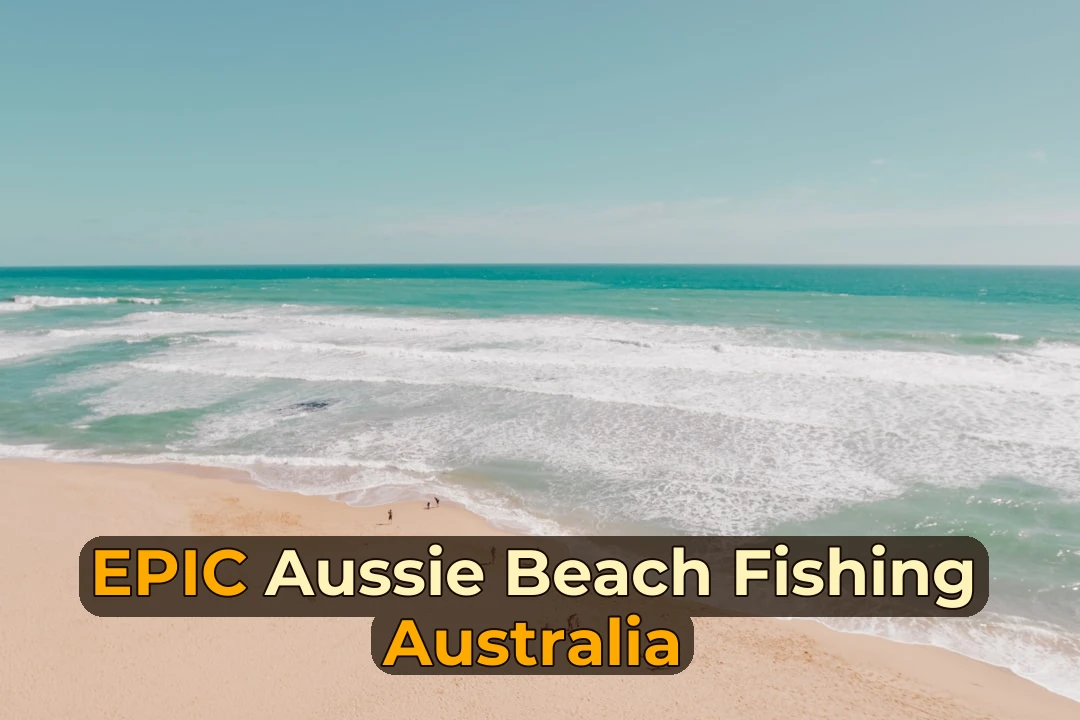
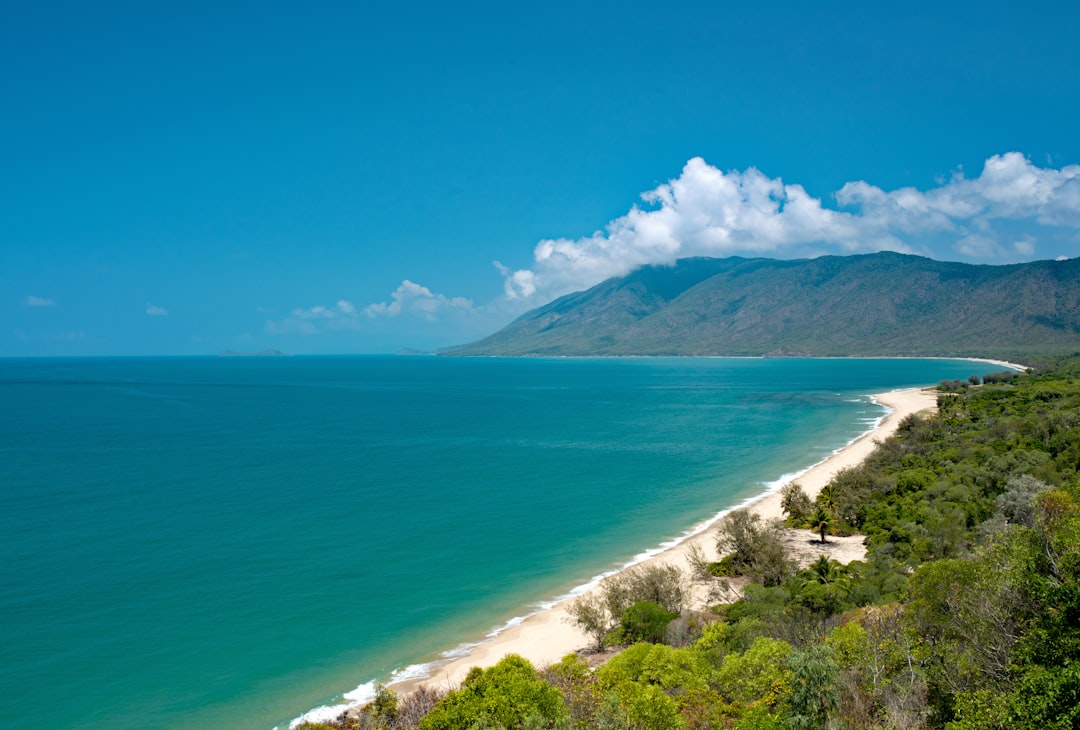

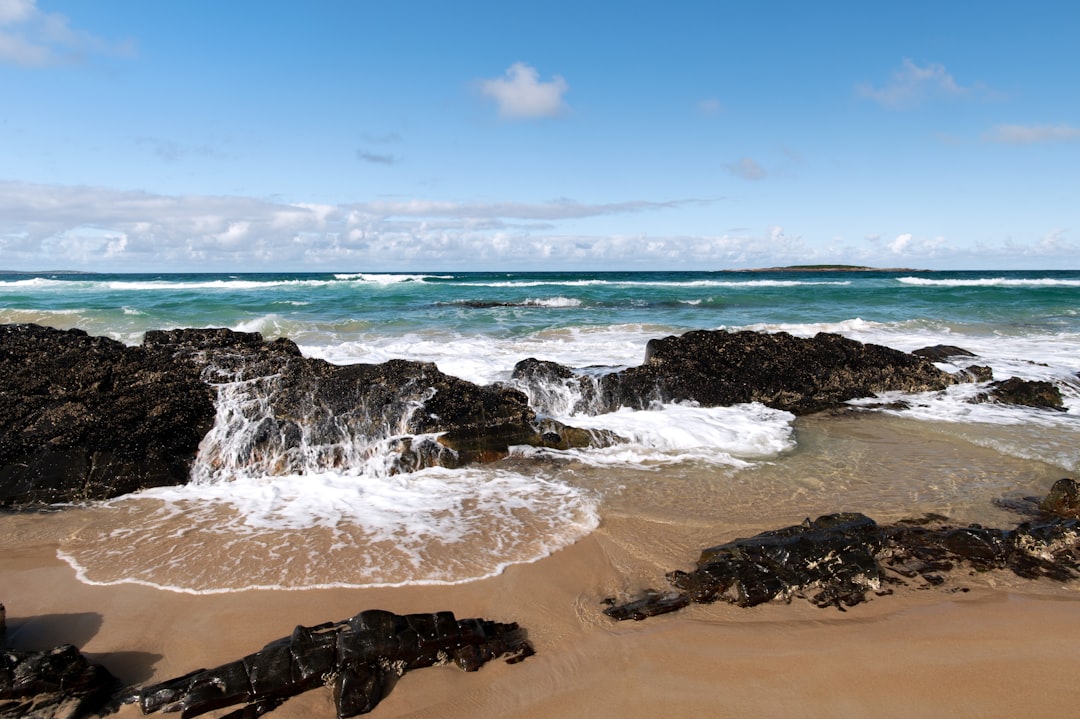
The first grey light bleeds across the Southern Ocean as you step onto the sand, boots crunching over shells and dried seaweed left by the night’s high tide. The air carries that familiar blend of salt and kelp—the smell that hooks you deeper than any fish ever could. Behind you, the dune grass whispers in the offshore breeze; ahead, lines of swell roll in from Antarctica, stacking and feathering as they feel the rising seafloor. Your rod is already in hand, the weight of the reel familiar and reassuring. The water looks perfect—wrinkled with current, scattered with baitfish dimpling the surface. But you’ve been here before, standing on beaches that promised everything and delivered nothing. Looking perfect and producing fish are different things entirely. This gap—between promise and result—is what separates casual casters from those who’ve learned to truly read Australia’s coastlines.
This guide exists to close that gap, drawing from decades of documented wisdom found in the Fishing Australia book series, Fishing Australia magazine archives, and the collective knowledge of the cast of Fishing Australia who’ve spent careers decoding our coastlines. What follows isn’t a collection of lucky stories or secret spots—it’s a methodology. A way of seeing beaches that transforms featureless sand into readable water.
Reading Water You’ve Never Seen Before
The single most valuable skill in beach fishing isn’t casting distance or knot-tying prowess—it’s observation. Before a line ever hits the water, successful anglers are already reading the beach like a map. The cast of Fishing Australia have demonstrated this principle across countless episodes: the ability to stand on an unfamiliar stretch of sand and identify where fish are likely to hold.
The Beach Scan Methodology
Start high. Before walking onto the sand, find a vantage point—a dune crossing, a set of stairs, the roof of your vehicle if it’s high enough. From elevation, the beach’s structure becomes visible in ways that standing at water level simply cannot reveal. What you’re looking for are the gutters—deeper channels running parallel to shore or cutting diagonally through the surf zone.
Gutters are fish highways. They provide depth for security, current for food delivery, and ambush points for predatory species. From your vantage point, gutters reveal themselves as darker bands of water—sometimes obvious, sometimes subtle as a slightly different shade of green in an otherwise uniform sea.
Visual Markers That Signal Prime Territory
- Colour changes: Any shift from light to dark water indicates a depth change. The more dramatic the shift, the more significant the structure beneath.
- Foam lines: Where white foam collects and travels, current is moving. Foam lines that hold steady parallel to shore often mark the edge of a gutter—fish sit on the deeper side, waiting for food to wash past.
- Wave shape: Waves that stand up suddenly and break hard are hitting shallow sandbars. Waves that maintain their shape longer before crumbling are passing over deeper water. A beach with uniform breaking waves across its width often indicates featureless, fishless sand.
- Bird activity: Terns diving persistently in one area aren’t sightseeing—they’re on baitfish, which means predatory fish are likely below. This is perhaps the most reliable visual marker available to shore-based anglers.
- Current seams: Where two bodies of water moving at different speeds meet (often visible as a texture change or foam line), food concentrates and fish gather.
Why Australian Beaches Fish Differently
Anglers who’ve fished extensively overseas often arrive in Australia with techniques that work brilliantly in other contexts—only to find themselves baffled by our coastlines. The difference isn’t the fish; it’s the environment. Australian beaches are shaped by different forces:
Our tides in most locations are relatively modest compared to the dramatic swings of northern Europe or parts of North America. A 2-metre tide range is significant here; in some parts of the world, 5-metre swings are normal. This means our gutters and holes don’t dramatically appear and disappear with tidal movement—they’re more permanent features, which means fish can establish reliable holding patterns.
Our currents are dominated by systems like the East Australian Current (EAC) and the Leeuwin Current, which bring warm water and tropical species far south of their expected range. This creates fishing opportunities that simply don’t exist at equivalent latitudes elsewhere in the world.
Our species have evolved different behaviours. Australian salmon (Arripis trutta), for instance, are not true salmon at all—they’re a unique family found only in Australasian waters. Their schooling behaviour, their response to lure presentation, their fighting characteristics… all of it requires Australian-specific knowledge that can’t be imported from overseas experience.
The Honest Truth About Reading Water
What water-reading does guarantee is this: you’ll spend less time casting into dead water and more time presenting to fish that are actually there. Over a season, that translates to significantly more success. Over a lifetime, it transforms fishing from a luck-based pursuit into a skill-based craft.
The Australian Species Decoder: Fishing Australia’s Big Five
Walk into any coastal tackle shop in Australia and you’ll see the same species appearing in photos on the walls, the same names on leaderboards, the same targets discussed with reverence. The Fishing Australia book series has documented these species extensively, and understanding each one’s preferences is essential for consistent beach success.
Australian Salmon
Despite the name, these are not salmon. They’re a uniquely Australian (and New Zealand) species that grows to 10kg+, fights with explosive power, and schools in numbers that can turn a bay white with splashing bodies. For beach fishers, they’re arguably our most accessible quality sportfish.
Seasonal timing: Autumn and winter see the famous salmon runs along Australia’s southern coastlines, particularly in Western Australia from Albany to Esperance where enormous schools migrate through. Spring can also produce excellent fishing as fish disperse along the coast.
Preferred structure: Salmon patrol gutters and the edges of sandbars, often in breaking surf where they corral baitfish against the white water. They’re not structure-oriented in the way bream or snapper are—they’re open-water hunters that use current and turbulence as hunting tools.
Bait and lure preferences: Salmon are aggressive and rarely subtle. Whole pilchards on ganged hooks, metal lures retrieved at speed, surface poppers when fish are visible in waves—anything that suggests a fleeing baitfish can draw explosive strikes. The Fishing Australia magazine has extensively documented the effectiveness of “high-speed spinning” with metal lures for salmon, a technique that remains underutilised by many beach anglers.
Fighting characteristics: Powerful first runs, often with aerial acrobatics. Salmon fight hard but rarely fight dirty—they don’t typically seek to cut you off on structure. The challenge is surviving that initial explosive period without pulling hooks or snapping line.
Tailor
Another uniquely Australian name for what the rest of the world calls bluefish. But Australian tailor have their own quirks, and targeting them effectively requires local knowledge.
Seasonal timing: Winter along the east and west coasts sees tailor schools moving into beach and rock environments. The famous “tailor run” is a phenomenon that’s been documented in Fishing Australia magazine for decades, with fish entering surf zones to chase baitfish that are themselves seeking warmer shallow water.
Preferred structure: Tailor love white water. Unlike salmon, which patrol the clear water adjacent to turbulence, tailor actively hunt in the foam and broken water of breaking waves. This makes them accessible to anglers who can accurately cast into the impact zone where waves are actively crashing.
Bait and lure preferences: Tailor have teeth that will slice through light line cleanly—wire trace or heavy mono leader is essential. They respond well to surface lures (poppers, stickbaits) worked aggressively through white water, and to cut baits like mullet strips or garfish fished on ganged hooks. The key word is “aggressive”—a slow presentation will be ignored.
Fighting characteristics: Fast, slashing runs and a tendency to throw hooks with head-shakes. Tailor don’t fight as powerfully as salmon metre-for-metre, but they fight messier. Landing rate is typically lower than with salmon.
Mulloway
The holy grail for many Australian beach anglers. Mulloway (known as jewfish in some regions) are large, powerful, and notoriously difficult to pattern. Catching them consistently requires dedication that borders on obsession.
Seasonal timing: Mulloway can be caught year-round, but the best beach fishing typically occurs after significant rain events when freshwater runoff stimulates feeding activity. Summer and autumn evenings, particularly around the new and full moon phases, are traditional “jewie time.”
Preferred structure: Deep holes at the back of gutters, the mouths of coastal creeks and estuaries, and any significant depth change along the beach. Mulloway are structure-oriented—they hold in specific locations and ambush prey that passes by, rather than actively hunting across open water.
Bait and lure preferences: Live baits are the gold standard—live mullet, live yellowtail, live pike. Large dead baits (whole squid, fillets of mullet or tailor) also work. In recent years, large soft plastics and swimbaits have proven effective, as documented extensively in Fishing Australia book chapters dedicated to mulloway. The common thread is size: mulloway are big predators that eat big meals.
Fighting characteristics: Heavy, powerful, and stubborn rather than flashy. A big mulloway won’t run like a salmon or jump like a tailor—it will simply power toward the nearest structure and dare you to turn it. This is where quality drag systems and strong arms earn their keep.
Bream
Often overlooked by anglers chasing “sportfish,” bream are intelligent, technically challenging, and available along virtually every Australian beach that has adjacent rocky structure or estuary influence.
Seasonal timing: Bream can be caught year-round from beaches, but winter is traditionally prime time as fish school before spawning. Beaches adjacent to estuary mouths often see bream moving in and out with tidal cycles.
Preferred structure: Bream love structure—rocks, reef, weed beds, and any “messy” bottom that provides shelter and food sources. They’re less likely to be found on clean sand than the other species discussed here. Beaches with rocky headlands at either end, or with patches of reef within casting distance, are prime bream territory.
Bait and lure preferences: Bream are notorious for being selective and “bite-shy.” Light line (4-6kg), small hooks, and natural baits (pipis, beach worms, small strips of fish) are standard. Lure fishing for bream from beaches is possible but demanding—small soft plastics worked slowly along the bottom in gutters adjacent to structure can be deadly.
Fighting characteristics: Don’t let their size fool you—bream fight disproportionately hard. They use their body shape to leverage against the current and will head for structure aggressively when hooked. Light tackle bream fishing is technical, demanding, and deeply satisfying.
Whiting
The bread-and-butter beach species that’s anything but ordinary. Quality sand whiting are delicious, accessible to anglers of all skill levels, and available along almost the entire Australian coastline.
Seasonal timing: Summer is prime whiting season on most Australian beaches, though they can be caught year-round in many regions. Warm water sees them actively feeding in shallow gutters and along the edges of sandbars.
Preferred structure: Shallow water. Whiting are one of the few species that actively feed in water shallow enough that their dorsal fins sometimes break the surface. The “shallow gutter”—that depression just behind the first breaking wave—is prime whiting territory.
Bait and lure preferences: The humble pipi is Australia’s secret weapon for beach whiting. These small bivalves are gathered from many of the same beaches where whiting are caught, and when fresh, they’re irresistible. Beach worms are equally effective. Lure fishing is possible with small surface poppers and flies, but bait fishing is the dominant and most reliable approach.
Fighting characteristics: Whiting don’t fight hard—they just fight fun. Their habit of feeding in shallow water means you’re often sight-casting to visible fish, and their willingness to take baits in crystal-clear water makes them an excellent species for introducing newcomers to beach fishing.
Gear That Survives Salt and Sand: The Fishing Australia Equipment Philosophy
Walk into any large fishing tackle store and you’ll be confronted with walls of equipment—rods of every length and action, reels from dozens of manufacturers, terminal tackle in configurations you’ve never imagined. The Fishing Australia book series has addressed equipment extensively over the years, and the consistent message is this: most of it won’t survive Australian beach conditions.
Salt and sand are equipment killers. Salt infiltrates reel mechanisms, corrodes exposed metal, and weakens line. Sand grinds into moving parts, abrades guides, and turns lubricants into abrasive paste. Equipment that performs beautifully in freshwater or protected inshore environments can fail catastrophically after a single beach season.
Rod Selection for Australian Beaches
Australian beaches demand longer rods than many overseas anglers expect. The reasons are practical:
- Wave clearance: A longer rod keeps your line above breaking waves, reducing the “belly” that forms as waves push your line toward shore and reducing the chance of your bait being washed back onto the beach.
- Gutter penetration: Many prime fishing gutters lie 60-100 metres from shore. A 3.6m-4.5m rod (12-15 feet) matched with appropriate technique can reach water that shorter rods simply cannot access.
- Fish-fighting leverage: A longer rod provides the parabolic bend necessary to keep pressure on powerful fish in turbulent water, where a short, stiff rod might pull hooks or break line.
For general beach fishing, a rod in the 3.6m-4.2m range rated for 6-10kg line is a versatile starting point. This length handles most casting requirements while remaining manageable during extended sessions. Graphite composite rods offer the best balance of sensitivity and durability—full graphite can be brittle when subjected to the knocks and drops that beach fishing inevitably delivers.
Reel Considerations: Salt Protection Above All
For beach work, reel selection comes down to one question: How well is this reel sealed against salt intrusion? A reel that isn’t designed for saltwater will fail—maybe not this session, maybe not this season, but inevitably. The salt always wins.
Look for reels with:
- Sealed drag systems (salt in your drag is a reel-killer)
- Corrosion-resistant materials (anodised aluminium, stainless steel, or modern composites)
- Minimal external ports or openings where salt can enter
- A proven track record in Australian conditions (search forums, ask at local tackle shops)
Line capacity matters more than many anglers realise. A quality beach reel should hold at least 300 metres of your chosen line. This isn’t about casting distance—it’s about having reserve line when a quality fish makes an extended run, and having enough line that you’re not constantly respooling as the outer layers wear from casting abrasion and UV exposure.
Terminal Tackle: The 10 Essentials
The following items belong in every beach angler’s kit. They’re not glamorous, but they’ll solve 90% of the problems you’ll encounter:
- Ball sinkers in various sizes — The simplest and most versatile sinker design for beach fishing. Ball sinkers allow fish to run with bait without immediately detecting resistance.
- Star sinkers — For fishing in strong current where holding bottom is essential. The prongs dig into sand and reduce drift.
- Ganged hooks (sets of 3-4 hooks)
Frequently Asked Questions
What are the key visual markers for reading Australian beach fishing spots?
The five essential visual markers are: colour changes (light to dark water indicating depth changes), foam lines (showing current movement and gutter edges), wave shape (waves standing suddenly indicate shallow sandbars, while waves maintaining shape longer indicate deeper water), bird activity (terns diving persistently signal baitfish and predatory fish below), and current seams (where water bodies moving at different speeds meet). Start from a high vantage point like a dune crossing or vehicle roof to identify gutters—darker bands of water that serve as fish highways—before walking onto the sand.
How should I target Australian salmon when beach fishing?
Target Australian salmon during autumn and winter when famous runs occur along southern coastlines, particularly in Western Australia from Albany to Esperance. Focus on gutters and sandbar edges where salmon corral baitfish against breaking surf. Use whole pilchards on ganged hooks, metal lures retrieved at speed, or surface poppers when fish are visible. High-speed spinning with metal lures is particularly effective but underutilised. Be prepared for powerful first runs and aerial acrobatics—these fish grow to 10kg+ and fight explosively without typically seeking to cut you off on structure.
When is the best time to catch mulloway from Australian beaches?
Mulloway can be caught year-round, but prime beach fishing occurs after significant rain events when freshwater runoff stimulates feeding. Summer and autumn evenings are traditional “jewie time,” particularly around new and full moon phases. Focus on deep holes at the back of gutters, coastal creek and estuary mouths, and significant depth changes. Live baits like mullet, yellowtail, or pike are the gold standard, though large soft plastics and swimbaits have proven effective. Mulloway are structure-oriented ambush predators requiring dedication to catch consistently.
What gear specifications do I need for Australian beach fishing?
Australian beach fishing demands rods between 3.6m-4.2m (12-15 feet) rated for 6-10kg line for wave clearance, gutter penetration (reaching gutters 60-100 metres from shore), and fish-fighting leverage. Graphite composite rods offer the best sensitivity-durability balance. Choose reels with sealed drag systems, corrosion-resistant materials like anodised aluminium or stainless steel, and minimal external ports. Line capacity of at least 300 metres is essential—not for casting distance, but for reserve when quality fish make extended runs. Salt and sand are equipment killers, so prioritise salt protection above all else.
What makes Australian beach fishing different from fishing in other countries?
Australian beaches have relatively modest tides—2 metres is significant here compared to 5-metre swings elsewhere—meaning gutters and holes are more permanent features where fish establish reliable holding patterns. Our currents, dominated by the East Australian Current and Leeuwin Current, bring warm water and tropical species far south. Our species have evolved unique behaviours: Australian salmon (Arripis trutta) are not true salmon but a unique Australasian family requiring local knowledge for their schooling behaviour and lure presentation. These environmental differences mean overseas techniques often need adaptation for Australian conditions.


Be the First to Comment
Sign in to start the conversation.