
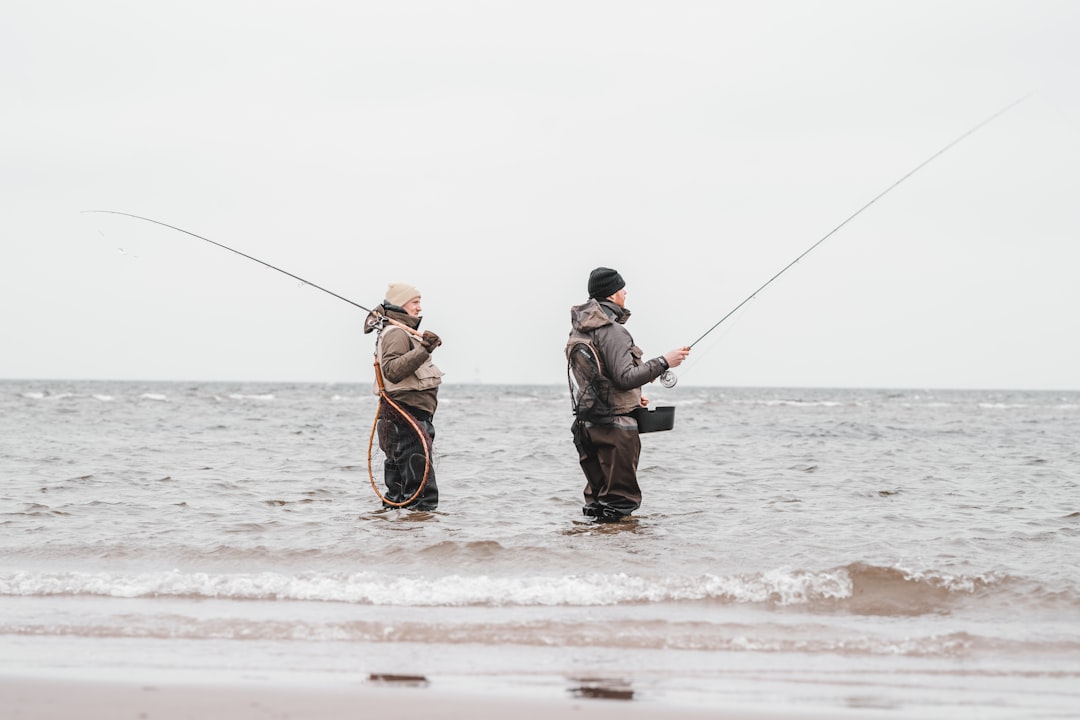
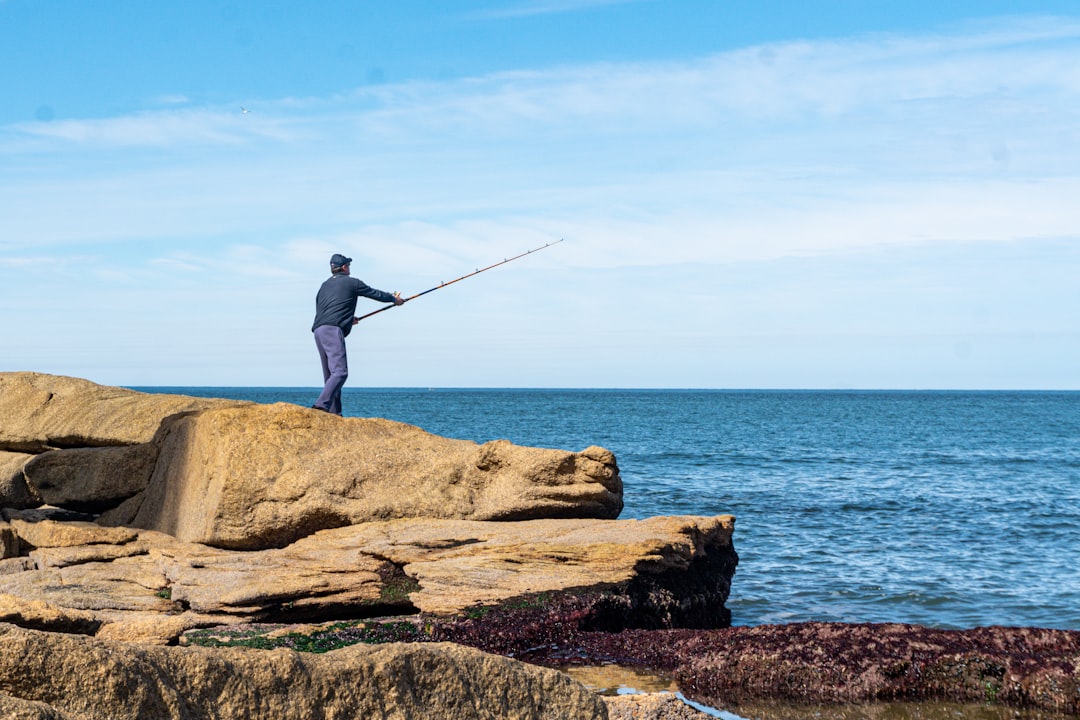

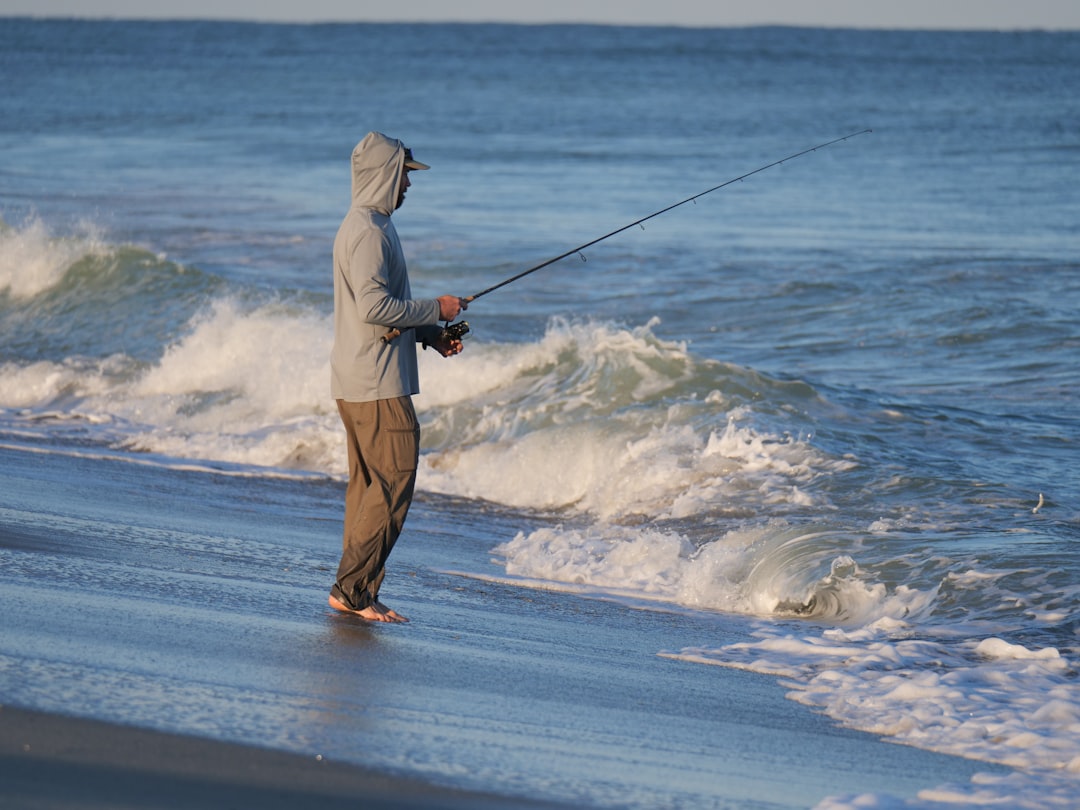
The tide is receding, exposing a jagged landscape of wet sand and hidden rocks. The air smells of salt spray and decaying kelp, a pungent mix that clings to your skin and hair. In the dim blue light of pre-dawn, you are standing ankle-deep in cold surf, rod in hand, waiting for the first hint of orange on the horizon. Your waders are soaked, your fingers are numb from the biting wind, and you have been standing still for forty-five minutes. This is not relaxation; this is anticipation.
Beach fishing in Australia is not merely a hobby; it is an engagement with one of the most dynamic and unpredictable environments on Earth. The vast Australian coastline, stretching over 58,000 kilometres, offers a playground for the determined angler. However, unlike lake fishing or sheltered river trolling, beach casting demands a respect for the ocean’s raw power. You are not just waiting for a bite; you are negotiating with the current, reading the wind, and positioning yourself against the elements. This article serves as your comprehensive guide to navigating this challenge, moving from the anxiety of the empty hook to the adrenaline of the fight.
The Ocean’s Clock – Reading the Tide and Current
To understand beach fishing in Australia, you must first abandon the idea that bait choice is the primary driver of success. While a fresh squid or prawn certainly helps, it is the movement of water that brings fish to you. The tide is your map, and without understanding it, you are casting blindly into a void.
Sliding Tide vs. Turning Tide
Australian fishermen often divide the tidal cycle into two distinct phases: the sliding tide and the turning tide.
* The Sliding Tide: As water moves over the sandbars and through channels, it stirs up sediment, dislodging crustaceans, worms, and baitfish. This movement triggers feeding frenzies. The best beach fishing occurs during the “mid-tide” or late sliding phase, where water is still moving but starting to slow.
* The Turning Tide: As the tide stops and reverses, water settles. Fish often stop feeding or move to deeper holes. This is the “dead zone” where many anglers pack up, missing the brief window when fish make a desperate last feed before moving with the next flow.
The Moon Phase Factor
The moon’s gravitational pull dictates tidal height. A “King Tide” (spring tide) creates massive movement, often churning up nutrients and bringing large predator species closer to shore. A “Neap Tide” (neap tide) has less water movement, requiring you to cast further out or target different species that prefer calmer conditions.
> Warning: Do not rely solely on your buddy’s fishing diary. Every beach has a unique response to tides based on its shape and depth. A bay that works perfectly during an ebbing tide might be completely unproductive during a flooding one.
The “Golden Hour” Failure: An Honest Limitation
I learned this the hard way on a crisp morning at Burleigh Heads, Queensland. I had checked every variable: perfect spring tide, excellent moon phase, and high-quality soft plastics. The sun was just breaking the horizon—the “Golden Hour”—when fish are supposed to be most active.
I cast into the deep channel, expecting trouble. Nothing. I switched to a topwater lure to cover water quickly. Still nothing. After three hours of casting into cold water, I caught only a few small whiting.
The lesson was humbling: Tide and light do not guarantee fish; they only dictate where they might be. On that day, the water was too cold for the tailor I targeted. I had failed not because of my gear or technique, but because I ignored the “holding pattern.” The fish were there, suspended in a thermocline layer that my lure never reached. This experience taught me patience. Sometimes, you have to wait for the environment to align perfectly with your presentation.
The Spectrum of Sand – Habitat Identification
Not all beaches are created equal. Identifying the type of beach you are fishing is crucial for selecting your target species and technique. Australia’s coastline offers distinct habitats, each with its own rules.
1. The Open Surf Beach
* Characteristics: Wide, open sand with heavy surf and strong currents. Common on the East Coast (e.g., Byron Bay, Margaret River).
* Target Species: Salmon (Tailor), Bream, Flathead, and Snapper.
* Strategy: You need to cast *far*. These fish patrol the deep gutters beyond the breakers. Use heavy surf rods and sinkers that hold bottom against the current.
2. The Estuary Mouth
* Characteristics: Where a river meets the ocean. A mixing zone of fresh and salt water, often with rocky outcrops and deep channels.
* Target Species: Bream, Flathead, Salmon, and occasionally Marlin or Tuna in deeper waters.
* Strategy: Precision casting is key. Look for structure—rocks, jetties, and drop-offs. The “Unexpected Discovery” here is often bird activity. If you see gannets or terns diving, they are driving baitfish to the surface, attracting predators. Follow the birds; they are your best sonar.
3. Sheltered Bays and Sandbars
* Characteristics: Calmer waters, often protected by headlands or islands. Common in Western Australia and parts of Queensland.
* Target Species: Whiting, Bream, Trevally, and Snapper.
* Strategy: Lighter tackle is often sufficient. These areas allow for delicate presentations of bait or small lures.
> Expert Tip: Always look at the water surface before you cast. Darker water often indicates depth or structure (rocks/seagrass), while lighter water is shallow sand. Target the edges where these colours meet—the “flats” to the “drop-offs.”
The Gear Matrix – From Junk to Precision
Your gear must match your intent. A mismatch here is the most common reason for lost fish and broken rods.
The “Throw and Hope” Setup (Beginner)
For those new to the game, simplicity is your friend.
* Rod: A 2.7m to 3.0m medium-action casting rod. Avoid ultra-heavy surf rods initially; they are exhausting and hard to cast accurately.
* Reel: A 3000-4000 size spinning reel with a smooth drag.
* Line: 12-14lb braid mainline with a 15lb fluorocarbon leader. Braid offers sensitivity, while fluoro resists abrasion from rocks and shells.
* Terminal Tackle: Slip sinkers (30-50g) and a simple ball swivel. This setup allows you to fish various baits (prawns, sandhoppers) and small lures.
The “Precision Strike” Setup (Expert/Advanced)
When targeting large Snapper or Salmon in heavy surf, you need power and precision.
* Rod: 3.6m to 4.2m heavy surf rod with a fast action tip for sensitivity but backbone for fighting large fish.
* Reel: 5000-6000 size with a high gear ratio for quick retrieval and strong drag.
* Line: 20-30lb braid with a 30lb fluorocarbon leader.
* Terminal Tackle: Egg sinkers (75g-150g) for maximum distance. Lead core lines for heavy surf casting.
Calculating Line Strength
Many beginners lose good fish because their line is too light for the current. When you cast a 100g sinker into a strong cross-current, the drag on your line can exceed 2kg instantly. If you are fishing in strong currents (common on the East Coast), ensure your main line has a breaking strain of at least 15lb, regardless of the fish size. You can always downsize the leader; you cannot easily replace a broken main line mid-cast.
> Important: Check the latest recreational fishing regulations for your specific state (NSW, QLD, VIC, etc.). Size and bag limits change regularly to protect spawning stocks. For example, Snapper size limits vary significantly between Sydney and Perth. Ignorance of these laws can result in heavy fines.
The Art of the Cast and Retrieve
Knowing how to cast is as important as knowing where. Beach casting involves distance, accuracy, and safety.
Casting Techniques
1. Overhead Cast: The standard cast. Swing the rod back and release at the 11 o’clock position for maximum distance. Best for long, open beaches.
2. Sidearm Cast: Lowering the rod to a horizontal position reduces air resistance and is better for windy conditions. It also keeps your lure closer to the water surface, reducing splash.
3. Pendulum Cast: Using a heavy sinker or bait as a pendulum to generate momentum. Useful for short-range precision casting in estuaries.
Dealing with Wind
Wind is the beach fisherman’s enemy. A crosswind from 9 o’clock will push your lure miles off target.
* Correction: If the wind is from the right, cast slightly to the left of your target (compensating for drift).
* Presentation: In heavy headwinds, use a heavier sinker to punch through the air. In tailwinds, rely on your reel’s drag and retrieve faster to keep tension.
Retrieval Methods
Your retrieve should mimic the local prey.
* Bottom Bouncing: Let your bait sink to the bottom and retrieve slowly, dragging it through the sand. Ideal for Flathead and Whiting.
* Swimming Retrieval: Retrieve at a steady pace to imitate a fleeing baitfish. Use for Salmon and Trevally.
* Stop-and-Go: Pause frequently to allow bait to settle, triggering strikes from lethargic Bream.
> Did you know? The “safety zone” around you when casting is critical. Never cast closer than 3 metres to another angler. A loose hook or sinker can cause serious injury. Always call “casting!” loudly when in a crowded spot like Bondi Beach or Torquay.
Ethics, Safety, and the Future
Beach fishing is a privilege, not a right. The ocean environment is fragile, and your actions impact its health.
Safety Hazards
* Rip Currents: These are the leading cause of beach drownings. If caught in a rip, do not fight it. Swim parallel to the shore until you are out of the current, then angle back in.
* Marine Stingers: Irukandji and Blue Rattlesnake snakes are present in Northern Australia during warmer months. Wear protective boots if wading in shallow, weedy areas.
* Broken Glass and Shells: Beaches can be littered with sharp debris. Sturdy boots are non-negotiable for comfort and safety.
Responsible Release
If you practice catch-and-release, do it correctly:
1. Wet Your Hands: Never handle fish with dry hands; their slime coat protects them from disease.
2. Minimize Air Time: Keep the fish in the water as much as possible.
3. Use Barbless Hooks: They are easier to remove and cause less damage to the fish’s mouth.
4. Revive Gently: If releasing, hold the fish upright in the water and move it gently back and forth to flow oxygen over its gills until it swims away under its own power.
The Mental Benefit: Does Fishing Reduce Cortisol?
Recent studies suggest that fishing, particularly in natural settings, can lower cortisol levels (the stress hormone). The repetitive motion of casting, the rhythmic sound of waves, and the focus required create a meditative state. However, this benefit is only realized when you feel safe and connected to the environment. Fear of rips or frustration at empty hooks can spike stress instead. By respecting the ocean and preparing adequately, you transform a day on the beach into a therapeutic reset.
> Key Takeaways:
> * Read the Tide: The sliding tide is your best friend; turning tides are often dead.
> * Match Habitat to Species: Surf for Salmon, Estuaries for Bream.
> * Gear Up for the Current: Line strength must handle current drag, not just fish weight.
> * Cast with Care: Distance is good; accuracy and safety are better.
> * Respect the Environment: Follow regulations, release responsibly, and leave no trace.
Conclusion: The Steward’s Pledge
When you walk out onto that sand tomorrow, you are not just a fisherman; you are an observer of the tide, a student of the wind, and a guardian of the coast. The goal is not just to fill a bucket, but to understand the rhythm of your specific stretch of coastline.
Beach fishing in Australia is a conversation with nature. It asks for your attention, your preparation, and your respect. Check the tide. Respect the weather. Release what you do not need. And when that fish finally hits, let it be a reminder of the wild, untamed beauty you have chosen to engage with. The beach does not owe you a catch; it offers you an experience. Take it seriously, and it will reward you with more than just fish.
Frequently Asked Questions
What is the difference between a sliding tide and a turning tide in Australian beach fishing?
The tidal cycle is divided into two phases: the sliding tide and the turning tide. The sliding tide occurs as water moves over sandbars and channels, stirring up sediment and triggering feeding frenzies; the best fishing happens during the mid-tide or late sliding phase. Conversely, the turning tide is when water stops and reverses, often creating a ‘dead zone’ where fish stop feeding. However, there is a brief window when fish make a desperate last feed before moving with the next flow.
How should I choose my fishing gear for different Australian beach types?
Gear must match the habitat and target species. For open surf beaches like Byron Bay or Margaret River, use heavy surf rods (3.6m to 4.2m) with large reels and egg sinkers (75g-150g) to cast far beyond breakers for Salmon or Snapper. In sheltered bays, lighter tackle is sufficient for Whiting and Bream. For estuary mouths, precision casting near rocks or jetties is key; follow diving birds like gannets to locate baitfish and predators.
What line strength is recommended to handle strong currents on the East Coast?
When fishing in strong cross-currents common on the East Coast, your main line must handle current drag, not just fish weight. Casting a 100g sinker into strong water can exert over 2kg of drag instantly. Therefore, ensure your main line has a breaking strain of at least 15lb, regardless of the fish size. You can always downsize your leader for finesse, but replacing a broken main line mid-cast is difficult.
When is the best time to cast for fish on the beach?
The ‘Golden Hour’ at dawn is often ideal, but tide movement is more critical than light. The best beach fishing occurs during the mid-tide or late sliding phase when water movement stirs up food sources. Avoid relying solely on the moon phase; for example, a King Tide brings nutrients closer to shore, while a Neap Tide requires casting further out. Always check local tide charts for your specific beach shape, as a bay productive during an ebbing tide may be unproductive during flooding.
What safety precautions and ethical practices are essential for beach fishing?
Safety is paramount: always wear sturdy boots to avoid broken glass, check for rip currents (swimming parallel to shore if caught), and wear protective footwear in Northern Australia to avoid marine stingers like Irukandji. Ethically, practice responsible catch-and-release by wetting your hands to protect the fish’s slime coat, using barbless hooks, minimizing air time, and reviving fish by moving them gently in water. Always adhere to state-specific size and bag limits to avoid heavy fines.




Be the First to Comment
Sign in to start the conversation.